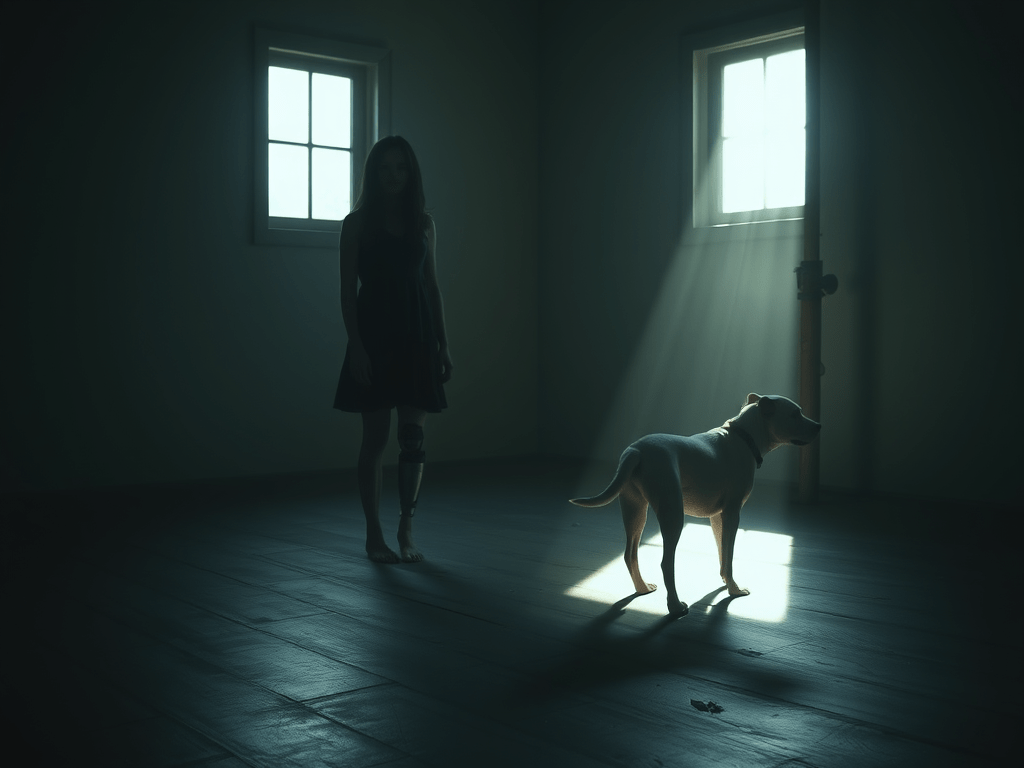
Today I’m writing about kodokushi—a Japanese term that translates to “the lonely death.” It refers to a phenomenon in Japan in which someone dies alone in their home and isn’t discovered for days, weeks, or even months. These deaths are most often linked to social isolation, and Japan experiences an estimated 10,000 of them each year.
I had never heard the word kodokushi until after my amputation, when—late one night—I Googled “dying alone.”
Before proceeding, I want to clarify something important, as the words’ alone,’ ‘lonely,’ and ‘isolated’ are often used interchangeably. They are not the same.
Isolation is objective. It’s a measurable social condition defined by a lack of contact, relationships, or support. It can be caused by physical barriers, health issues (mine), geography (also mine), or circumstance (again—mine). It can be chosen, imposed, or—like in my case—a little of both.
Loneliness is subjective. It’s an emotional state: a feeling of emptiness or disconnection. You can feel lonely in a crowded room. This is not something I struggle with. I genuinely enjoy spending time alone.
Being alone is simply a physical state—being by yourself. For many people, including me, it’s often a choice. Solitude can be restorative, reflective, even joyful.
But here’s the complicated truth: being alone is a choice for me—and it also isn’t.
What I miss is belonging. Not abstract belonging, but the everyday kind—the quiet knowing that you’re connected to someone in the rhythm of daily life.
I have people I love deeply. My favorite person lives 1,300 miles away. Others live even farther. They care about me, check on me, and visit when they can. And yes, I live in “vacation land,” which helps. I belong to them. But in my day-to-day life, that sense of belonging is absent.
When I look back over my 52 years, I realize I’ve only experienced that kind of belonging during a few limited chapters. I had it with my Grammy— and her house—for the first 14 years of my life; she was always a soft place to land. Later, I had it with my second husband, his family, and the children I raised and loved as my own. Altogether, those years add up to less than half of my life.
Now I’m an amputee living in Maine—a state that lacks the diversity I grew up with in Washington, D.C.—and that disconnect feels sharper. My interests and beliefs don’t appear to align easily with the surrounding culture. I haven’t found the social connections I’m looking for. I rarely leave the house. I don’t socialize. I don’t go to bars. I don’t drink the way I once did.
I drank just about daily from age 14 until about 41. That stopped when I lived at a yoga retreat center—and it stopped pretty much altogether after my amputation. I rarely drink anymore, and I certainly don’t get blacked out drunk anymore. Being drunk on a prosthetic leg is, frankly, just stupid. Period. That’s a blog post in and of itself.
These days, I mostly leave the house to be in nature with my dog, Honey Bea, or to do necessary shopping, which feels more like a chore than an outing.
I also don’t trust many men, primarily because of amputee devotees. For the first seven years after my amputation, my prosthetic was always visible. I had to cut my pants to accommodate it, which meant anyone who flirted with me felt suspect as hell. Is he interested in me, or does he have a fetish?
That distrust kept me from dating.
In 2023, I finally got a cosmetic cover for my prosthetic that matches the shape of my intact leg. I no longer have to cut my pants. Most people don’t realize I’m an amputee—especially in winter, with boots and jeans. Even in summer, when I wear long skirts or dresses (I don’t wear shorts), people often don’t notice. It still amazes me. And now, if someone flirts, I don’t immediately feel distrustful. That has been really nice. Even though I still haven’t dated anyone.
I don’t work anymore. My last job was in 2019 at Wolfe’s Neck Center for Agriculture and the Environment in Freeport, Maine. I loved it. I worked seasonally at the farm store and connected with people. Then 2020 happened. The farm store closed that year, and I moved.
Since my amputation, I’ve had repeated Lyme infections. Three to be exact. Chronic pain, post-Lyme syndrome, osteoarthritis, COPD, and sheer exhaustion have significantly limited my ability to engage with the world.
So here I am: objectively isolated.
And because of that, I live with an ongoing fear of dying alone in my apartment and not being discovered.
Realistically, I think it would take a week or two, which is far too long. I now see my CPTSD therapist every other week instead of weekly because I’m “better.” My coping skills are better. But it also means there’s a longer gap before someone would notice my absence.
I’d like to believe my neighbors would notice. I just don’t know that they would. “Like a good neighbor, stay over there!”
I don’t fear death itself. What troubles me is the aftermath—the idea of someone finding my body days or weeks later. And the thought of my dog, Honey Bea alone with me after I’m gone. She isn’t a barker. Would she be forced into the unthinkable just to survive?
That fear is real, and I live with it. It doesn’t consume me as much as it did, but it’s still a fear.
Social isolation has well-documented health impacts. It’s linked to physical decline, cardiovascular disease (thankfully not an issue for me, despite my father’s history), and a significantly increased risk of dementia. I don’t know my genetic risk. My Grammy died young. I’m estranged from my mother and have no insight into her cognitive health. My father died in 2011, and I know nothing about his family or genetic history besides his stroke and heart disease.
Isolation also affects mental health. Even without loneliness, studies show it can contribute to depression, anxiety, and a sense that life lacks meaning.
I don’t feel that life lacks meaning.
I believe life has profound meaning. I believe our souls choose each existence to learn specific lessons—and if we don’t learn them here, we repeat them in the next. Despite everything I’ve lived through—trauma, loss, grief, suffering—I believe there is purpose beyond all of that in being alive.
I hope that through this blog, through finally finishing my memoir, and—Universe willing—publishing it before I leave this existence, I’ll find connection. Belonging. I’m also actively pursuing volunteer opportunities that may help bridge that gap.
And maybe, in doing so, I’ll silence the fear of the lonely death.
Fear is a liar… right?
Please like, comment, share, and subscribe to my blog. Thank you for being here.
2 responses to “The Lonely Death – The Kodokushi Phenomenon.”
-
I appreciated reading this, thank you so much for sharing your experience and perspective. I resonate with what you wrote here “I believe life has profound meaning. I believe our souls choose each existence to learn specific lessons—and if we don’t learn them here, we repeat them in the next. Despite everything I’ve lived through—trauma, loss, grief, suffering—I believe there is purpose beyond all of that in being alive.” and I can see the impact that your time in retreat has done for you.
I see that you live in Maine, if you’re ever interested in making a trip to the Jetavana Thai Forest Buddhist monastery in Temple, NH, I think you would like the vibe and talking to the monks and community there a lot. It’s a wonderful place to do a retreat as well.


 Living Alone With Limb Loss
Show some LOVE