Author: Jenna Rivera

  • Prosthetists, Prosthetics, and Health Insurance

    Prosthetists, Prosthetics, and Health Insurance

    Today, I am writing about my experience with prosthetics, the people who make them, and the incredibly flawed health care system in the United States.

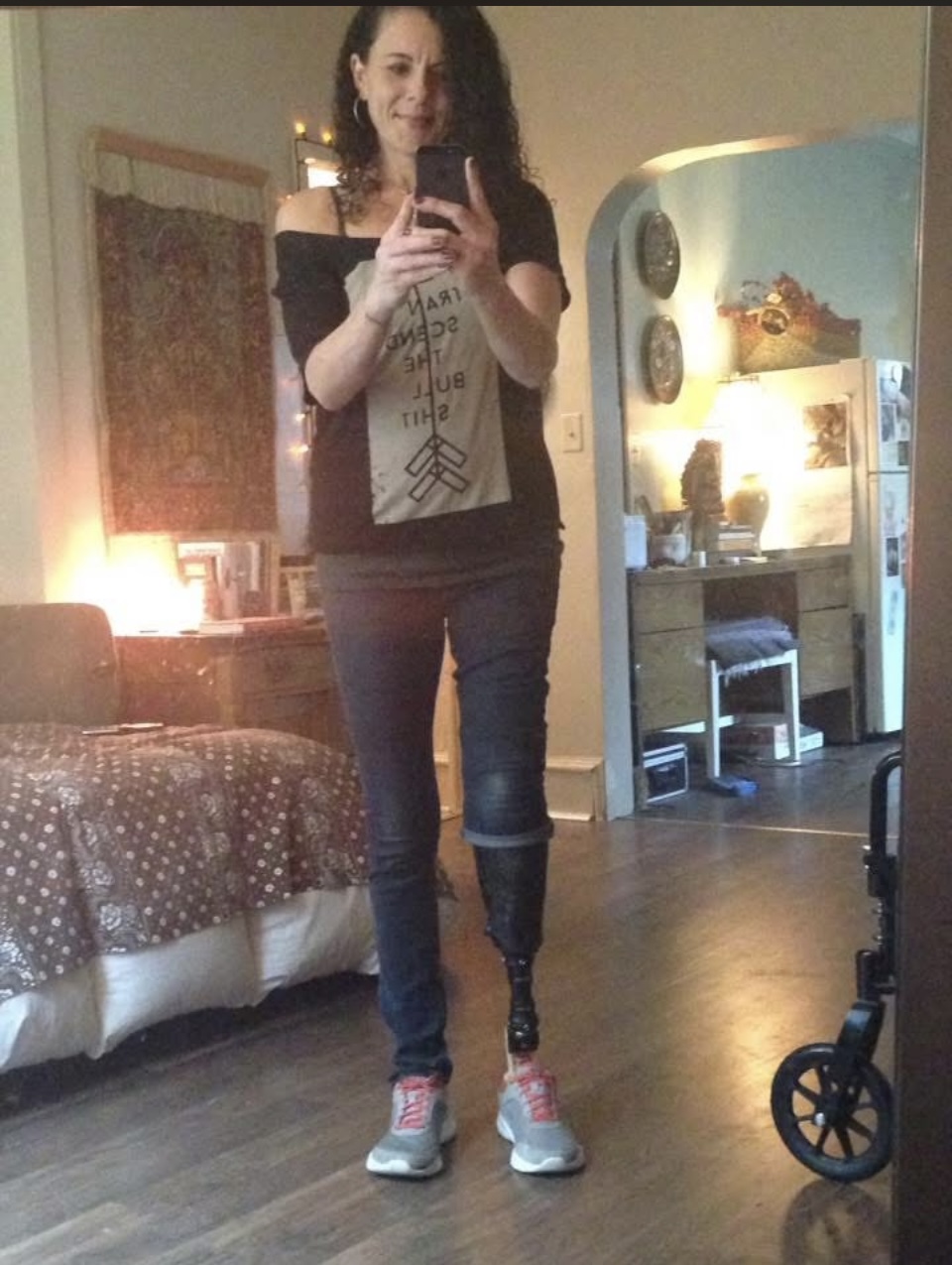
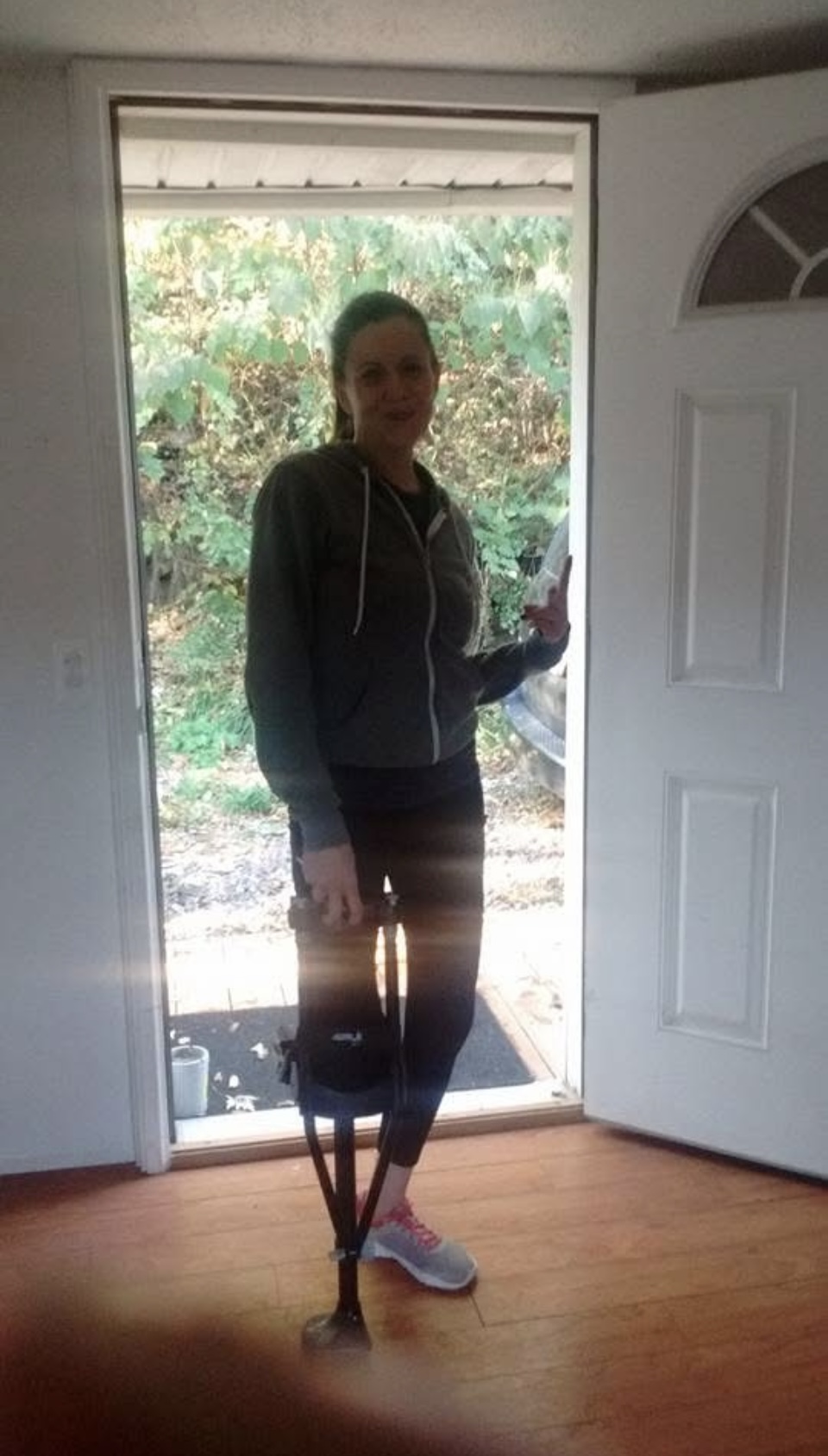
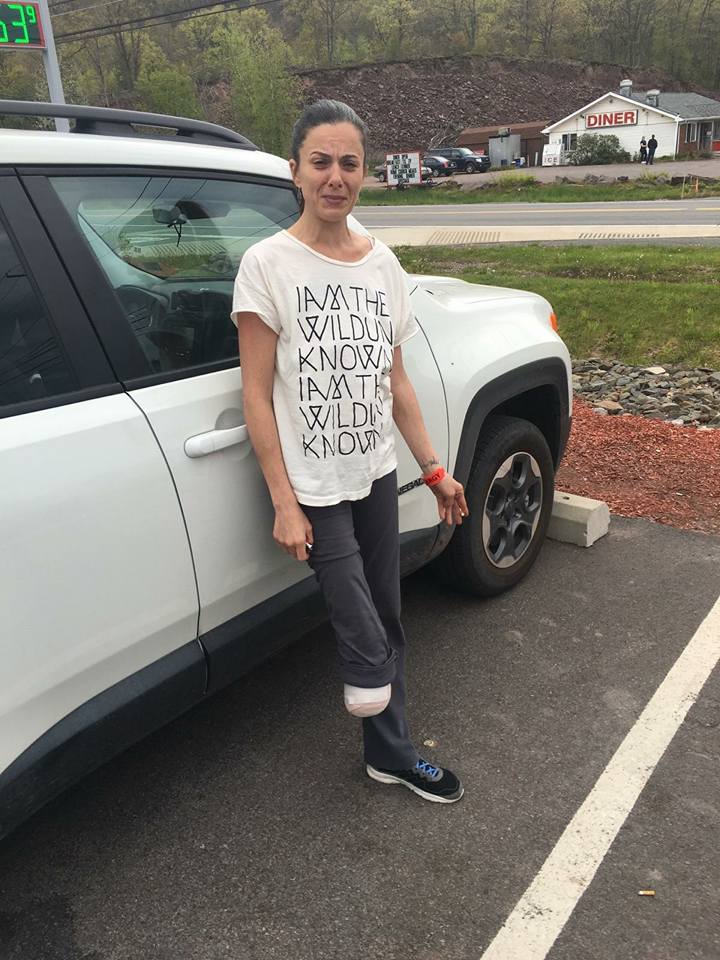
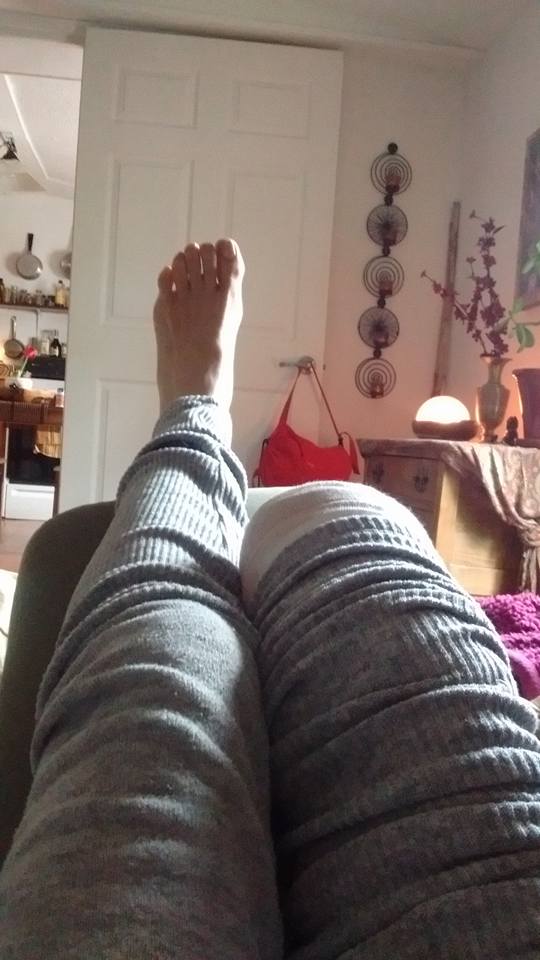
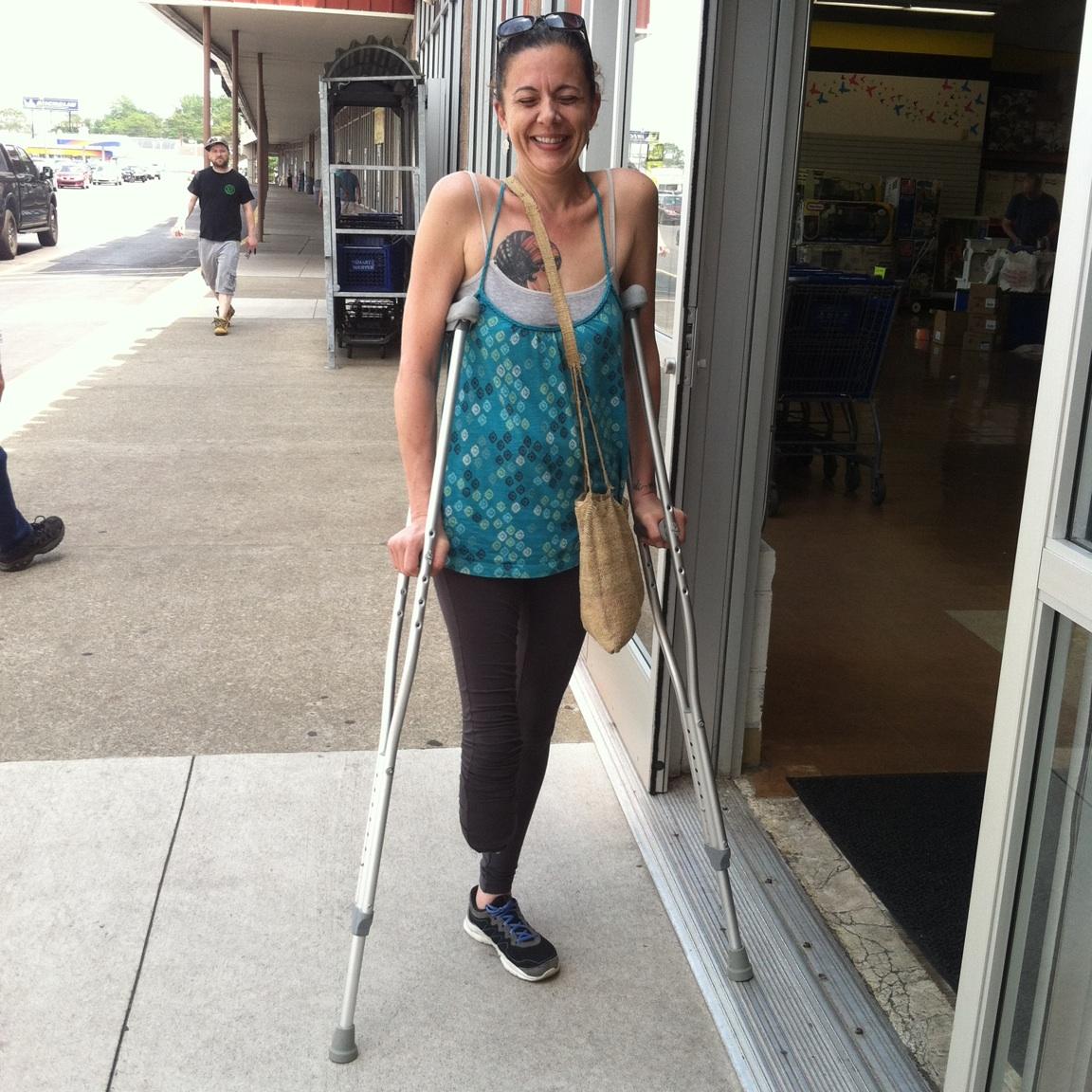
    I became a right below-knee amputee in May 2016. 

    First, what is a prosthetist?

    A prosthetist is a specialized healthcare clinician who designs, fabricates, fits, and maintains artificial limbs and orthotics. Certified Prosthetist and Orthotist (CPO).

    They work with people who have limb loss, injury, or congenital differences, helping to restore mobility and function.

    They typically complete a two-year master’s program, followed by a residency, to become certified. Prosthetists are not doctors; they are clinicians with “advanced”, specialized training.

    Prosthetists are paid well, considering they only need two years of formal education. As of 2026, the median salary ranges from about $78,000 to $88,000 per year, with high earners in large or national clinics earning $150,000 to $200,000 annually.

    It’s a lucrative business.

    I strongly believe every prosthetic clinic should employ people with lived limb-loss experience, both upper and lower limbs. Nothing replaces lived knowledge. You can study limbs, but living without one is different. It’s like going to a male OBGYN or a female urologist for prostate health.

    I have literally pointed to every intact leg in an exam room and said, “You don’t understand, you don’t understand,”  And while pointing at my intact leg, “I didn’t understand,” and pointing at my right residual limb, “now I understand”. 

    Prosthesis or prosthetic? 

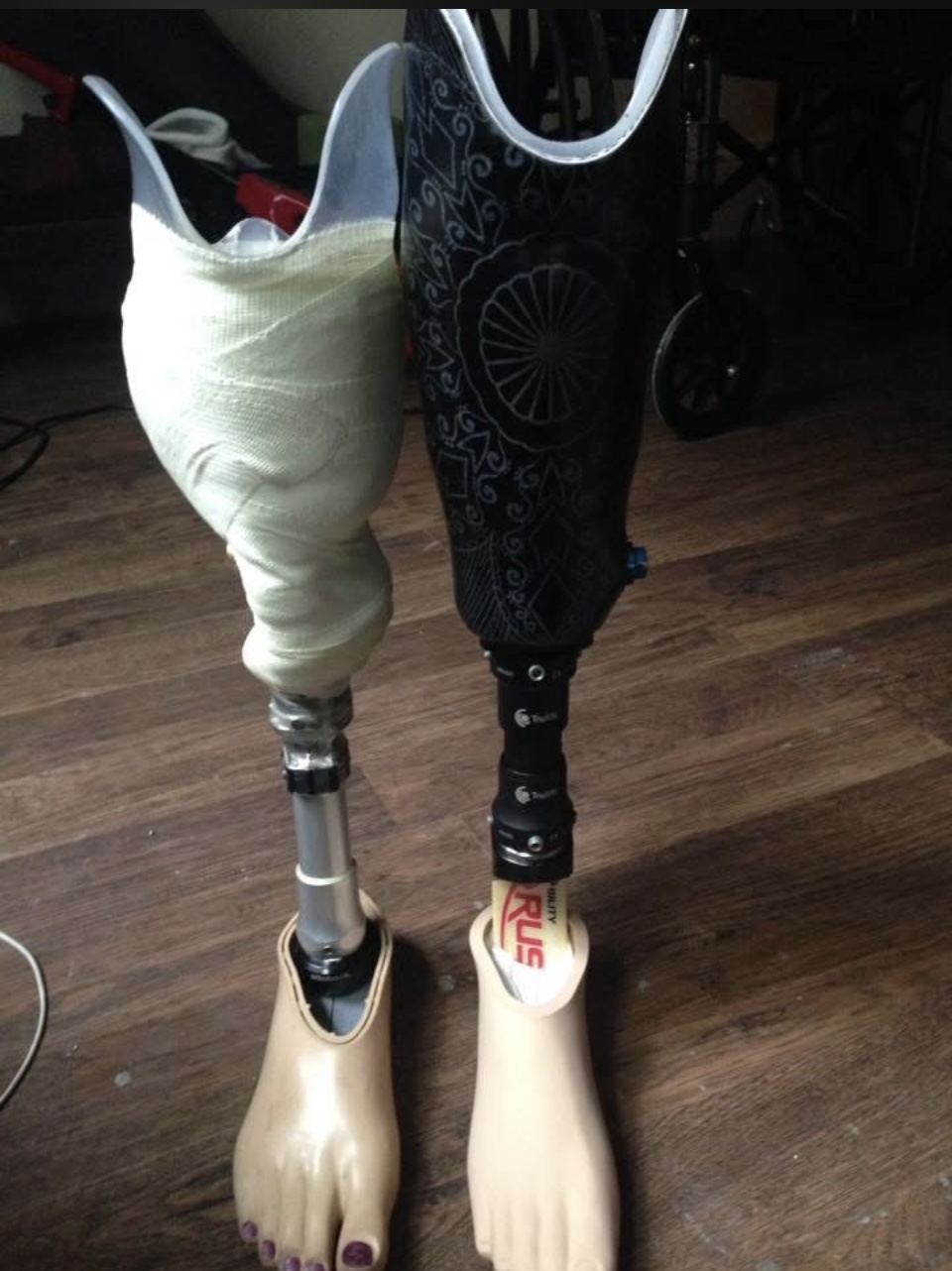
    I personally prefer the word prosthetic over prosthesis—the latter is a mouthful, and frankly, I’m not a fan of how it sounds. Technically, a prosthesis is a noun that refers to a physical artificial limb. Prosthetic is a descriptive adjective. I use the word prosthetic as a “shorthand” noun for the device itself. 

    My first experience with a prosthetist. June 2016. 

    His name was Tom, but I called him “Tommy Two Times” to my friends, like the character, Tony Two Times, in the movie Goodfellas.

    Tom always repeated himself because he clearly wasn’t confident the first time. He was literally learning as he went. 

    He was in his residency. While he technically had a supervising CPO, that supervisor wasn’t always present, if ever. I spent a lot of time sitting in exam rooms—without a leg—waiting while Tommy Two Times learned to be a Prosthetist.
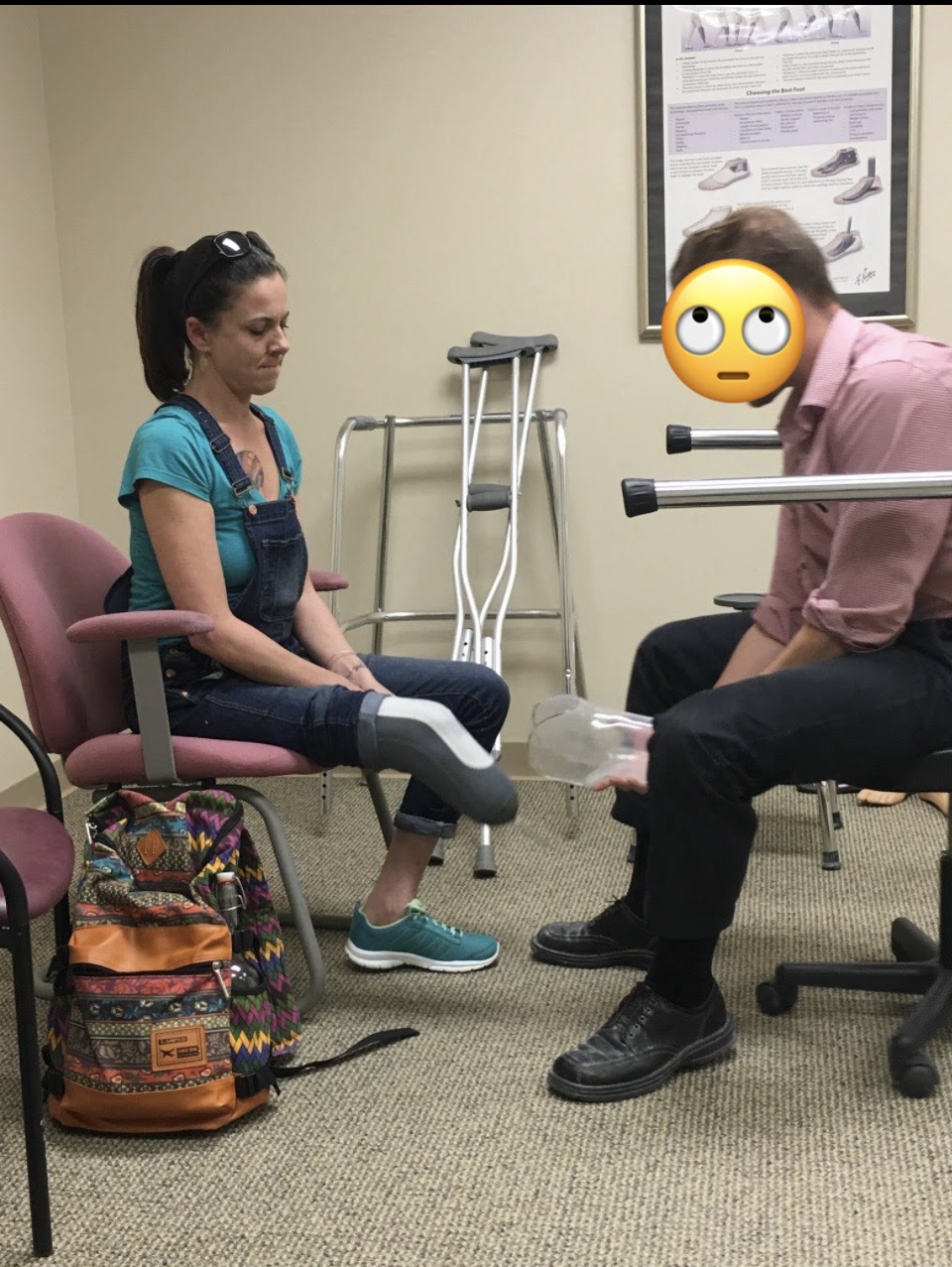
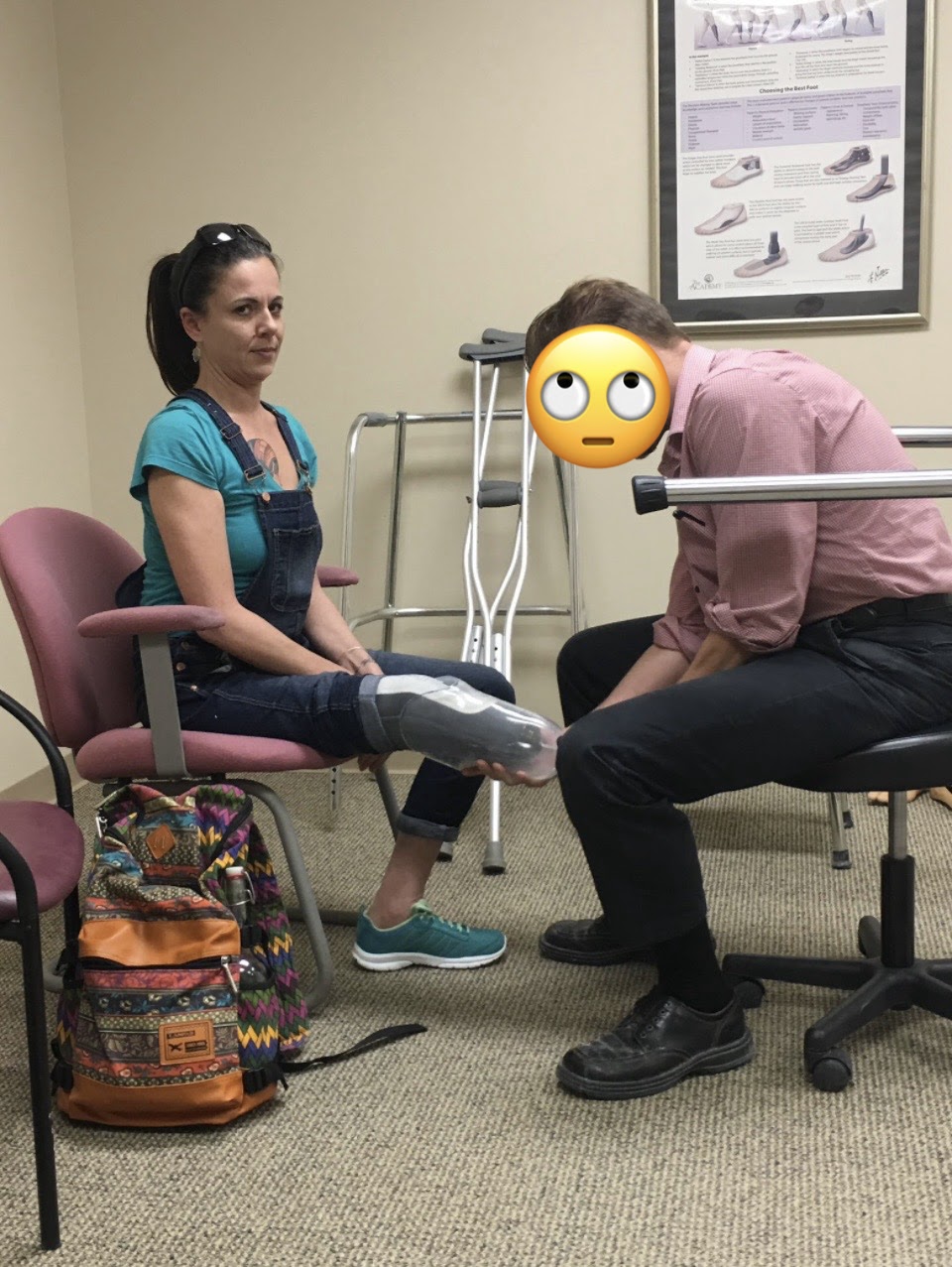
    Simply put: he didn’t know what he was doing.

    I understand learning curves. I understand being new. But no one should ever be an unwilling guinea pig. 

    Five weeks to the day after my amputation, something happened that changed everything at the time.

    A UPS delivery driver banged on my door like there was a fucking fire!  I had been asleep during the day because of horrific nighttime phantom pain that kept me awake all night. Startled awake, my 42-year-old brain forgot I only had one leg.

    I rushed up out of bed to run to the door. Frightened and not completely awake, I went straight down, directly onto my residual limb! 

    The pain was beyond anything I had experienced—including the amputation itself.

    I called my surgeon.

    I called my prosthetist.

    No one suggested an X-ray. There was no bruising. No major swelling. So no one suspected a fracture.

    For the next three weeks, I tried to walk with an early temporary/test prosthetic while unknowingly having a fracture at the tip of my tibia.

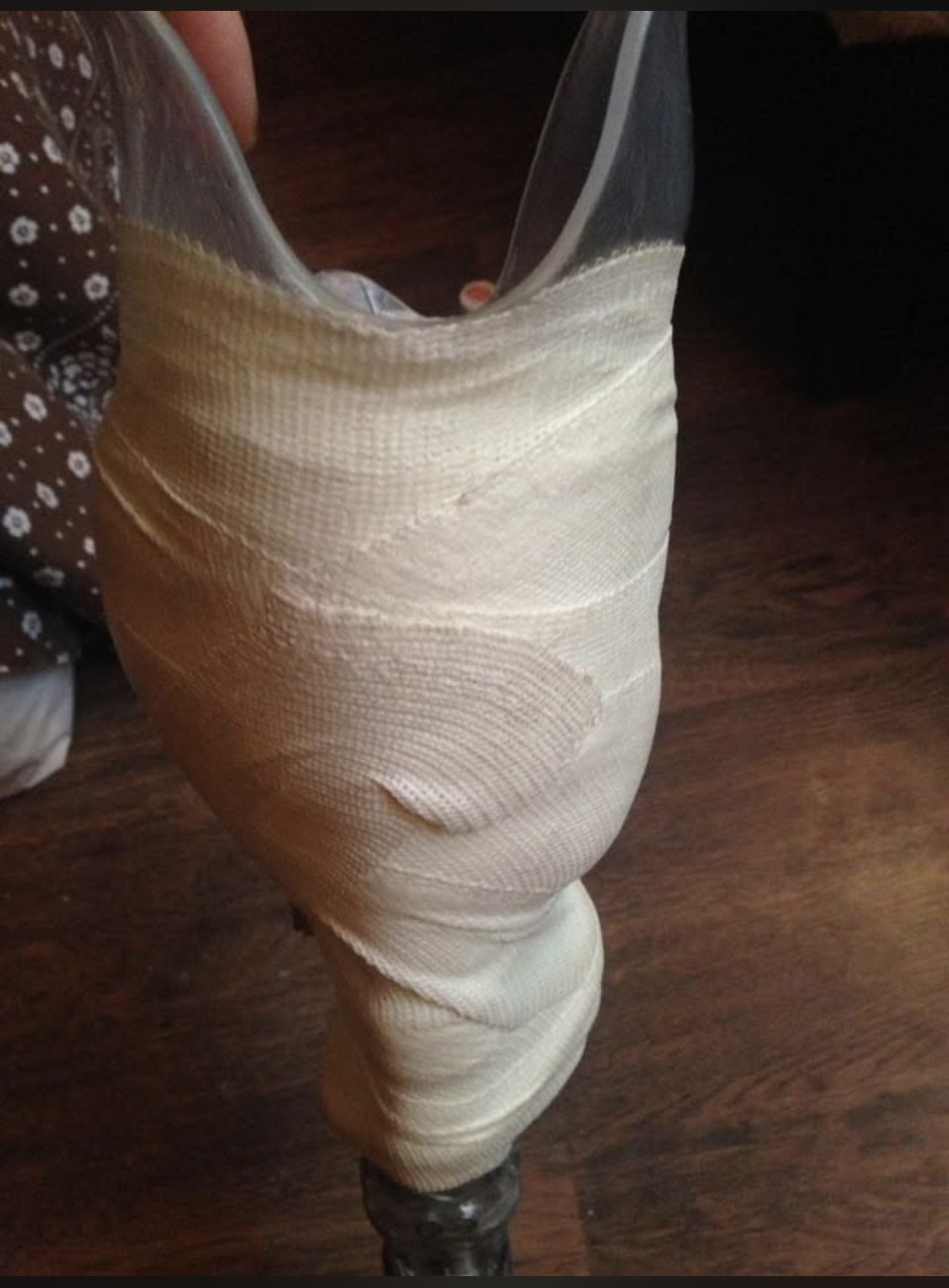
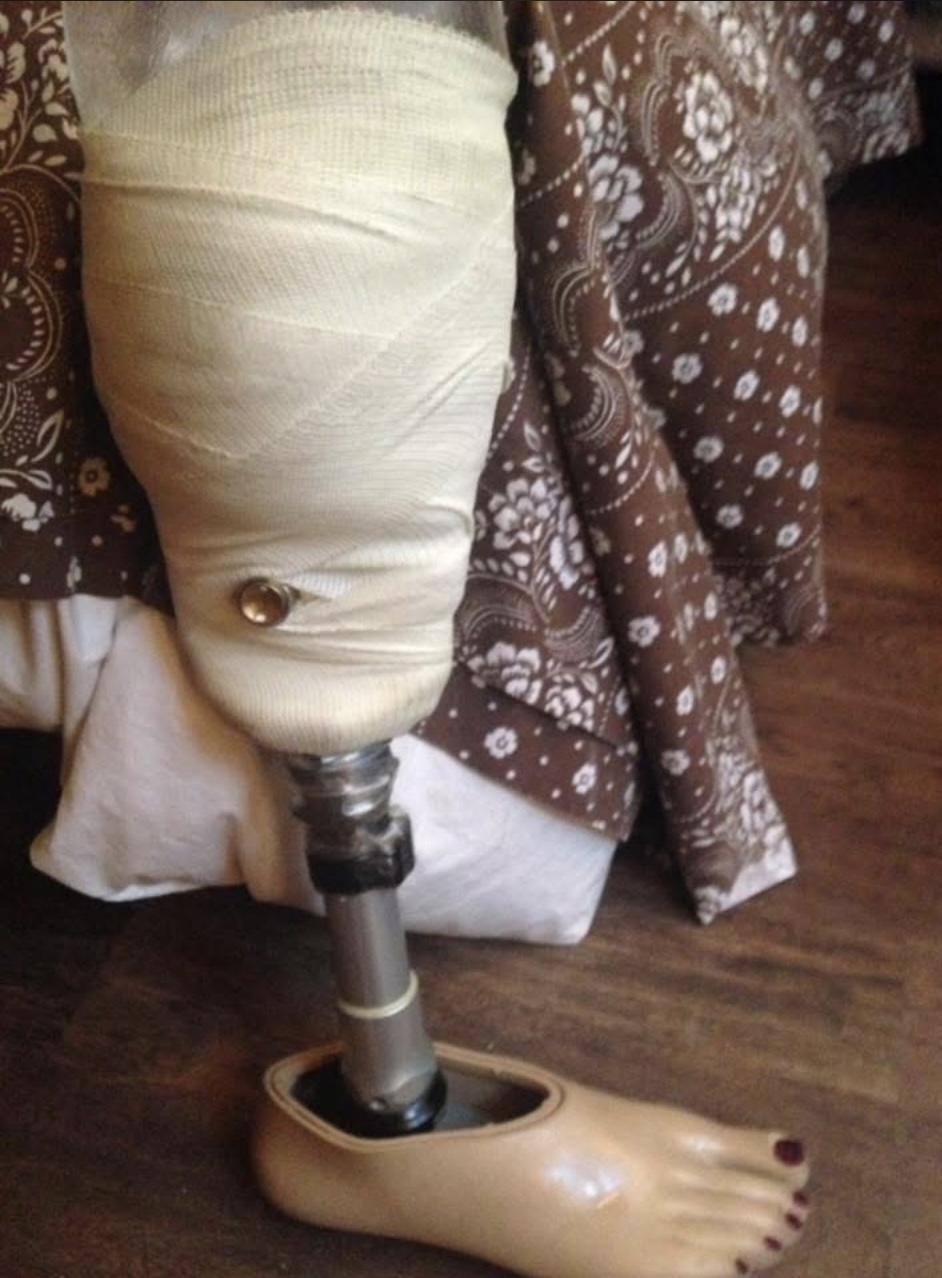
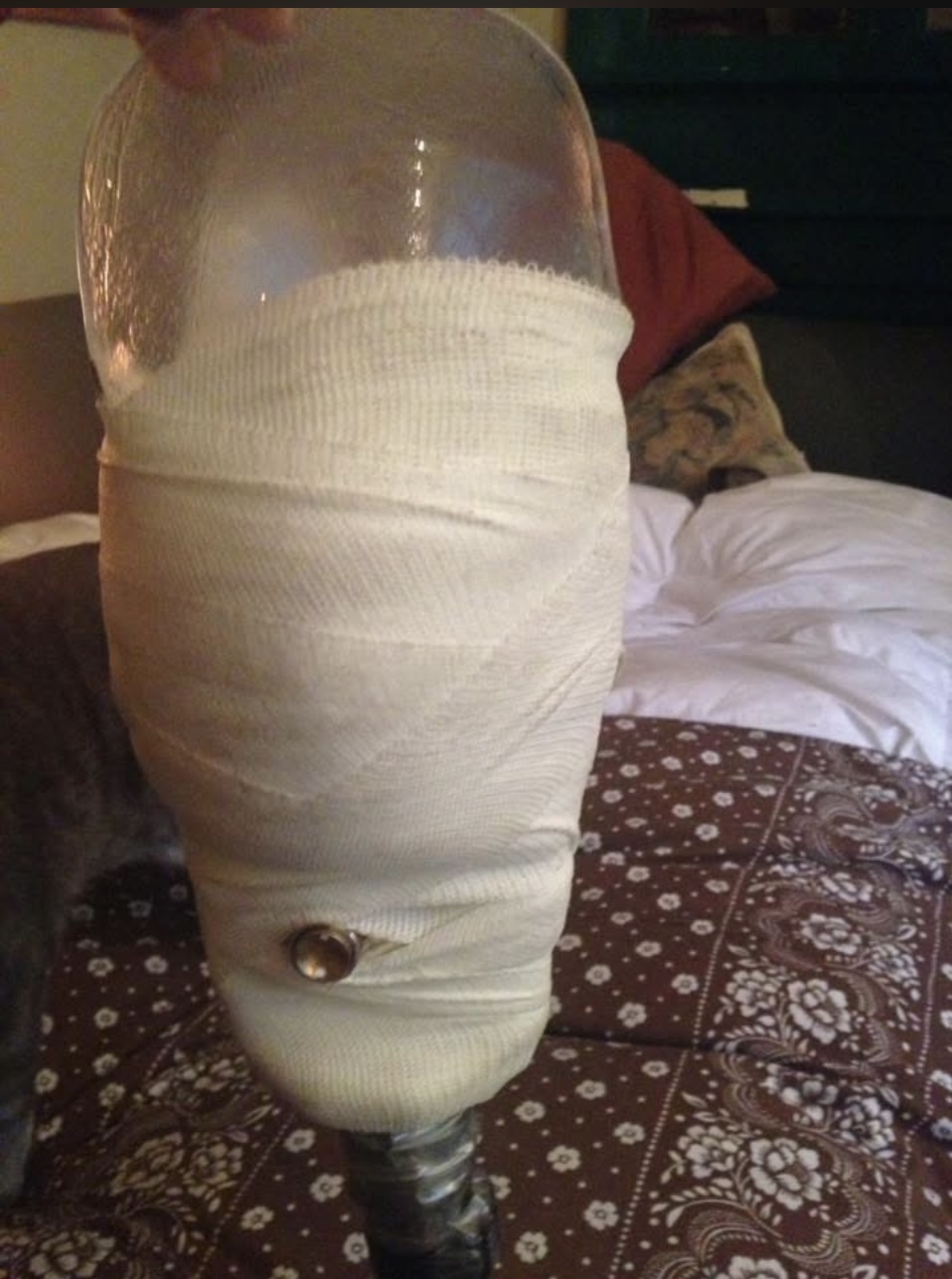
    The prosthetic itself looked horrifying—like a misshapen mummy cone, it didn’t even remotely resemble the shape of a residual limb.  
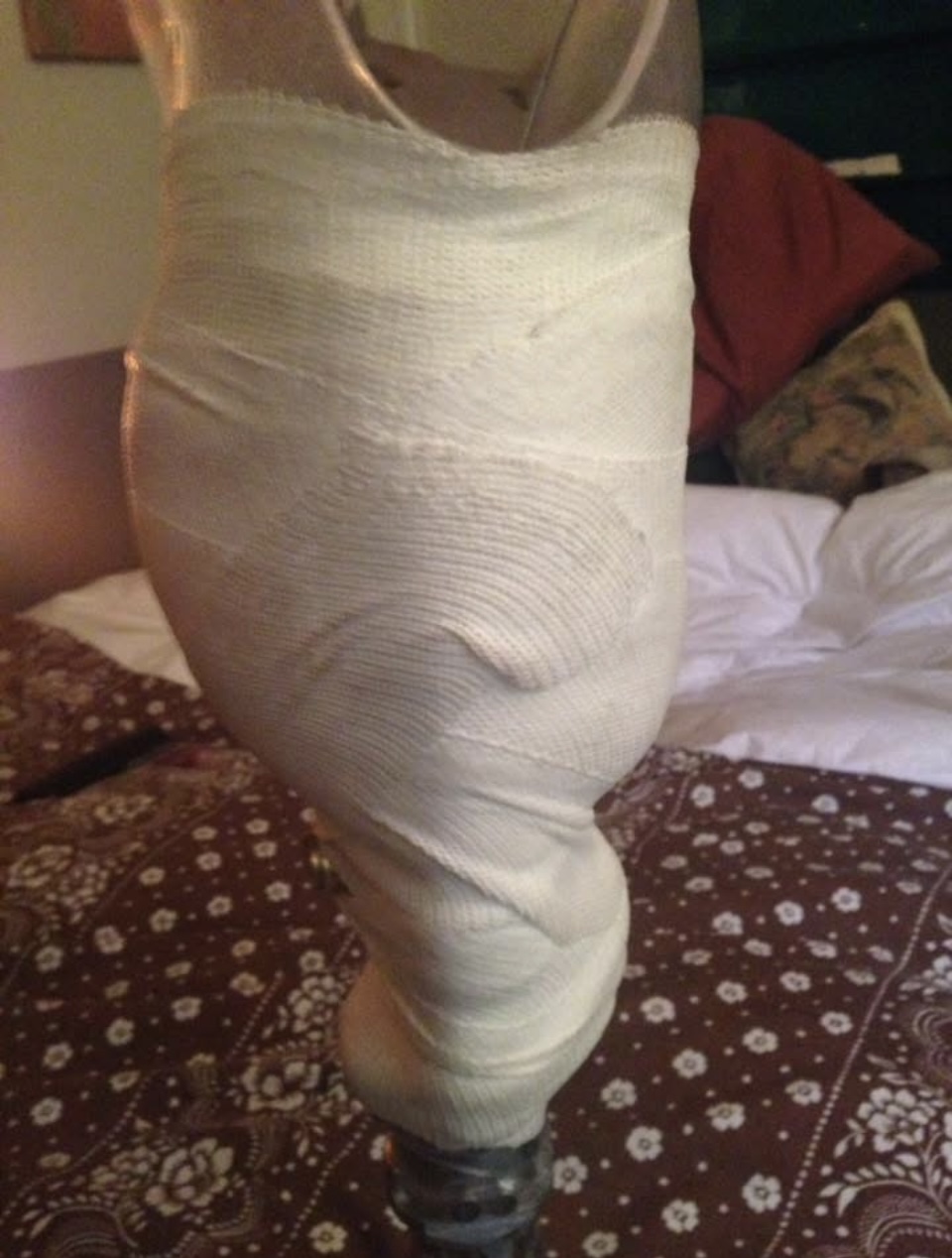
    I was told to walk, to bear weight. 

    I couldn’t. I was terrified and depressed, thinking I’d never walk in a prosthetic.

    Three weeks later, I finally got an X-ray—which was literally upstairs from the prosthetist’s office—that revealed a two-centimeter fibia fracture at the very end of my residual bone. 
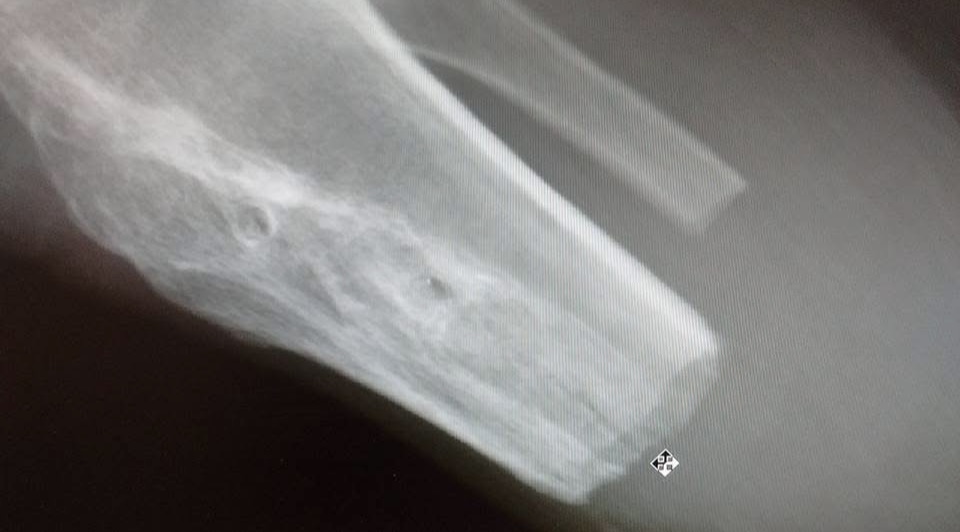
    I felt relief, knowing this was not permanent; it was something that would heal. At least there was a reason for the pain and inability to bear weight while wearing a prosthetic. 

    But that diagnosis delayed my walking with a prosthetic for another 12 weeks. By the time healing was complete, I was nearly six months post-amputation. 

    After healing (with the help of time and daily comfrey poultices), I fired Tommy Two Times.

    When I met my second prosthetist, they told me Tommy Two Times had put me in the wrong foot size—a size 9 prosthetic foot shell when I am a true size 8. I never understood why I couldn’t fit into any of my shoes.  I actually cut the heel opening of a few shoes so the foot would fit in the shoe. I assumed that was just “how prosthetics were.”

    That discovery alone still makes me angry.

    This new prosthetist was from a well-known national clinic. I worked with a father-daughter team. The difference between Tommy Two Times and this team was night and day.

    They gave me a prosthetic I could actually walk in.

    It was beautiful. It fit. It didn’t hurt.

    In April 2017—11 months after my amputation—I finally walked pain-free.

    It was literally life-changing. 
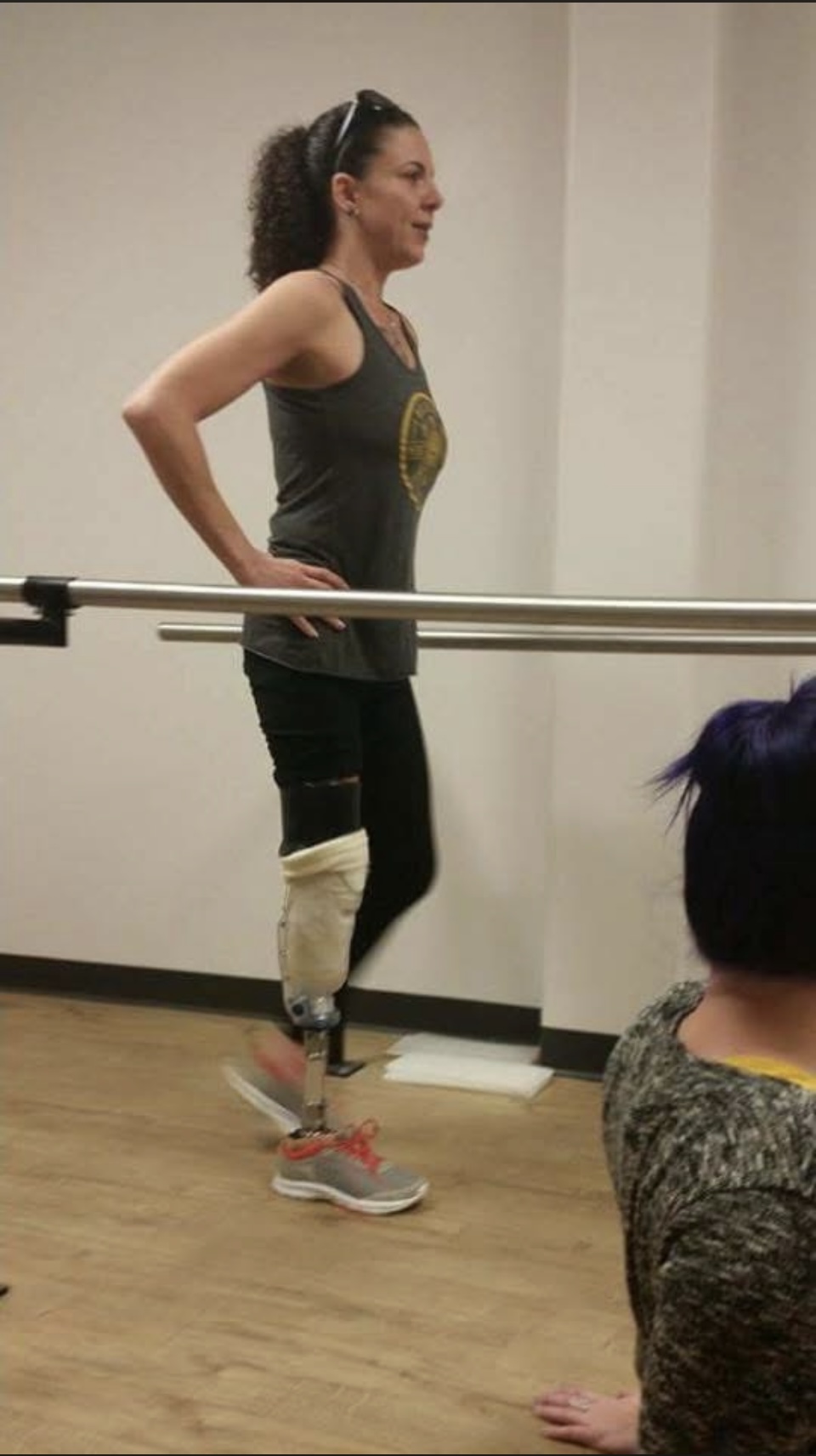
    When I received that first functioning prosthetic leg, I chose to honor that moment with a healing ceremony—a pure (tested) MDMA (methylenedioxymethamphetamine) assisted meditation.

    I took a therapeutic dose of MDMA (also known as ecstasy) and intentionally created a safe, calm, and nurturing space. I meditated with my new prosthetic leg on for hours, returning again and again to the same sacred intention: this was my new reality, and this is how I would walk through the rest of this lifetime.

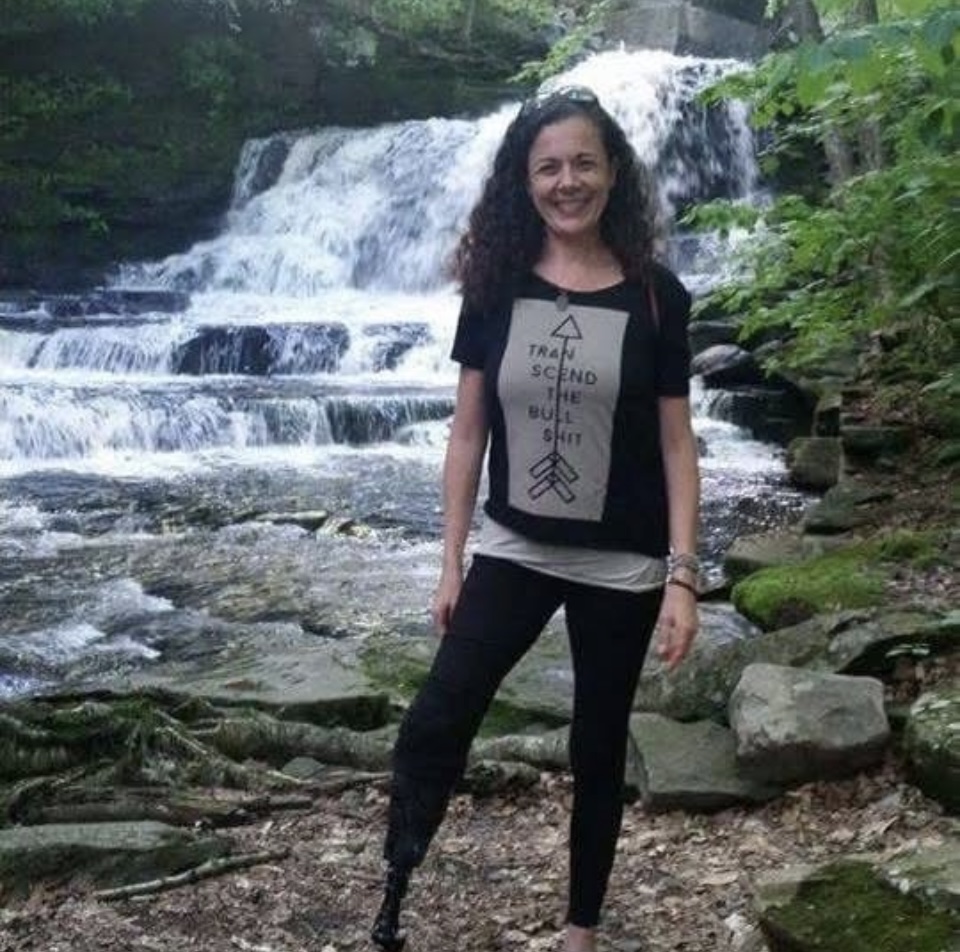
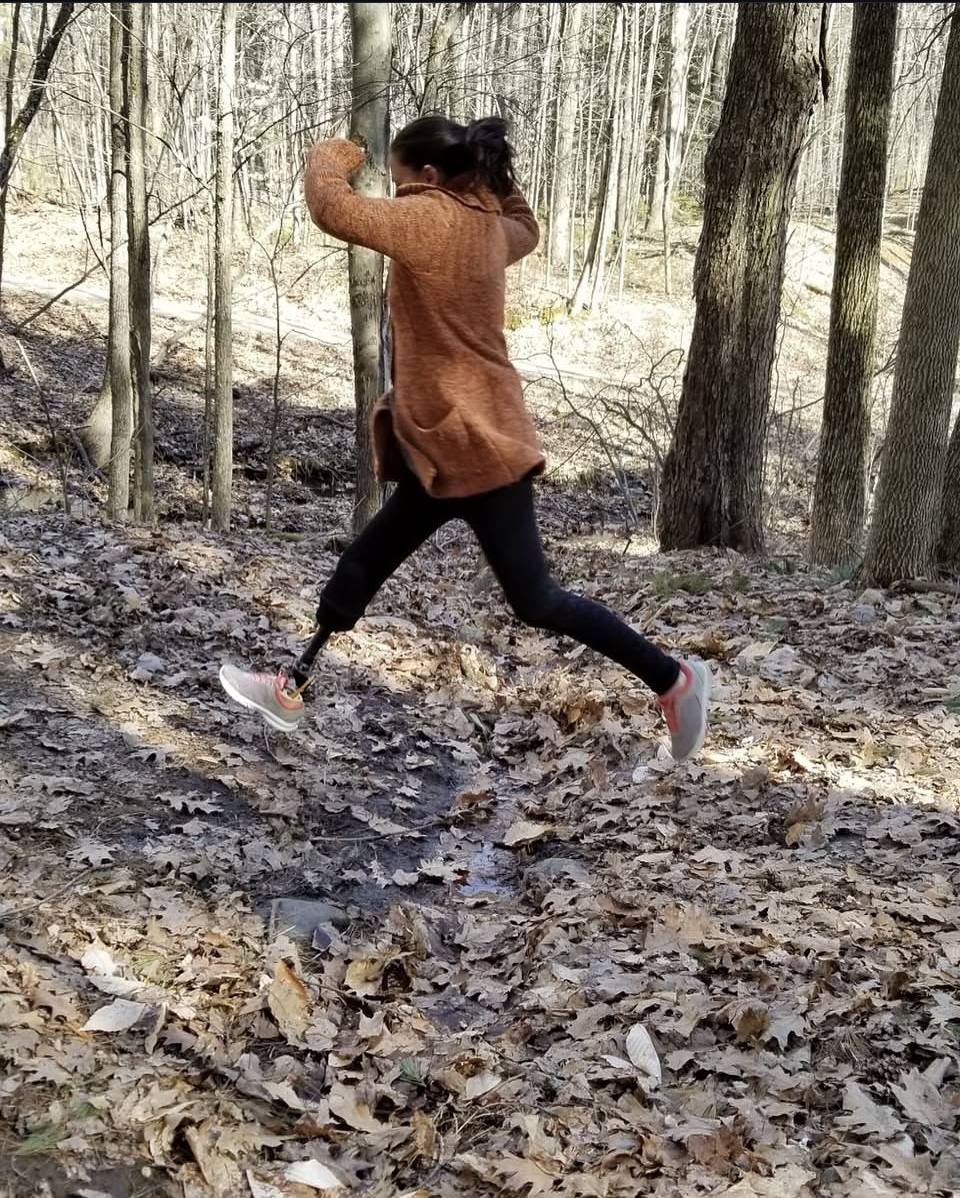
    The following day, I wore my prosthetic leg for 15 hours, and it felt nothing short of miraculous. From that point in April/May 2017 until September of 2018, I was able to bartend, lightly jog, hike, climb rocks, leap over small creeks, and reconnect with a sense of freedom in my body. I moved with confidence and trust—until my “compensator” knee eventually gave out.

    I truly believe that the MDMA-assisted meditation softened and opened my psyche, allowing me to fully accept life with a prosthetic limb—not as a loss, but as a continuation. It helped me surrender to the path I was on and embody the truth that this is how I would move through the world. In many ways, that moment set the tone for how I have walked—physically, emotionally, and spiritually—ever since.

    In June 2017, I moved to Maine. I stayed with the same national prosthetics and orthotics chain and transferred to a clinic in my area.

    Reminiscent of Tommy Two Times, I encountered another prosthetist with whom I didn’t connect; he felt more like a car salesman than a clinician. I didn’t feel heard, so I left him after almost two years.

    Through Instagram, I connected with a lower limb amputee who was a prosthetic fabricator at a small, local, family-owned clinic.

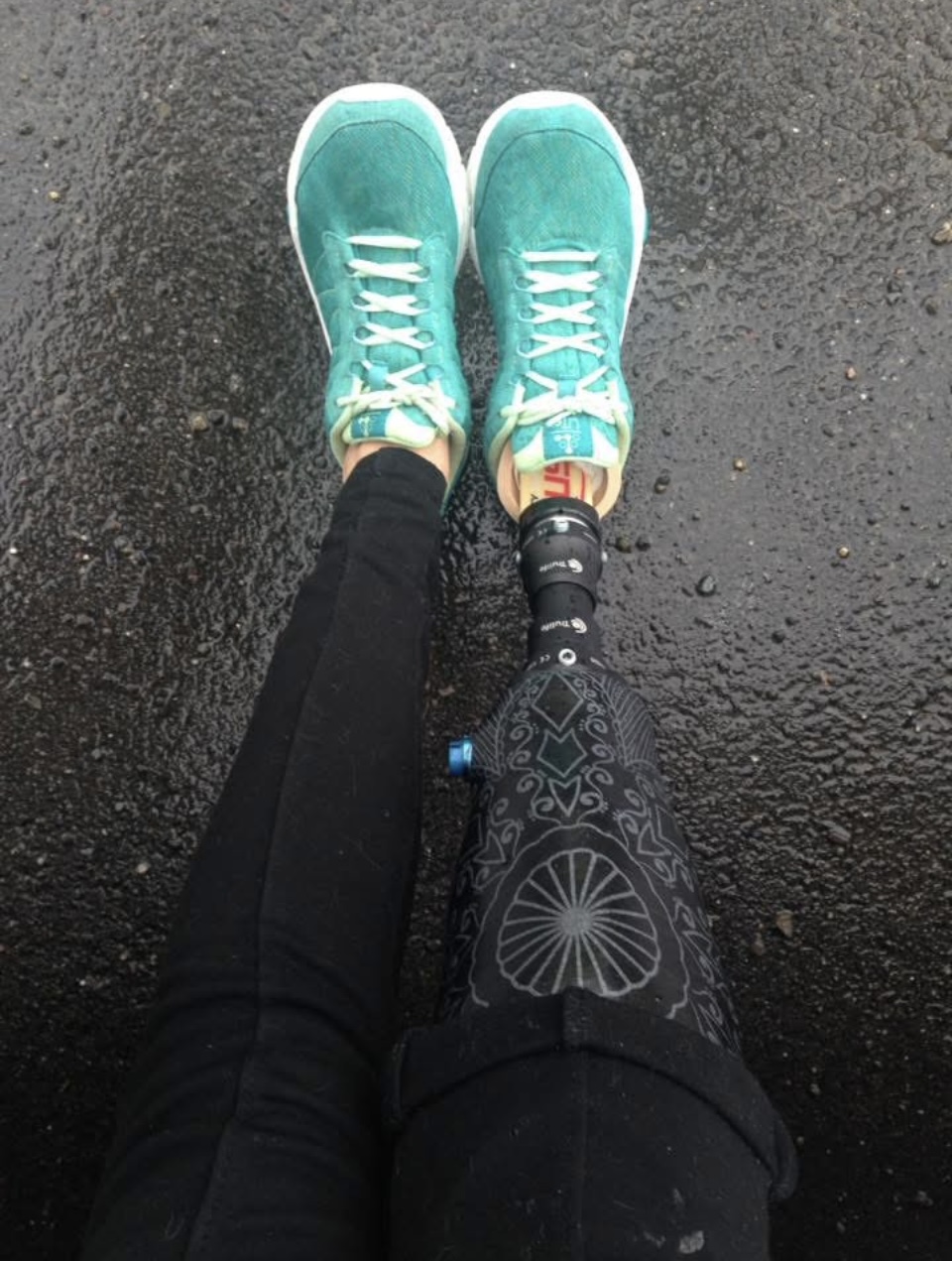
    In 2019, they built the socket I still wear today— having a lower-limb amputee involved in that process made all the difference.
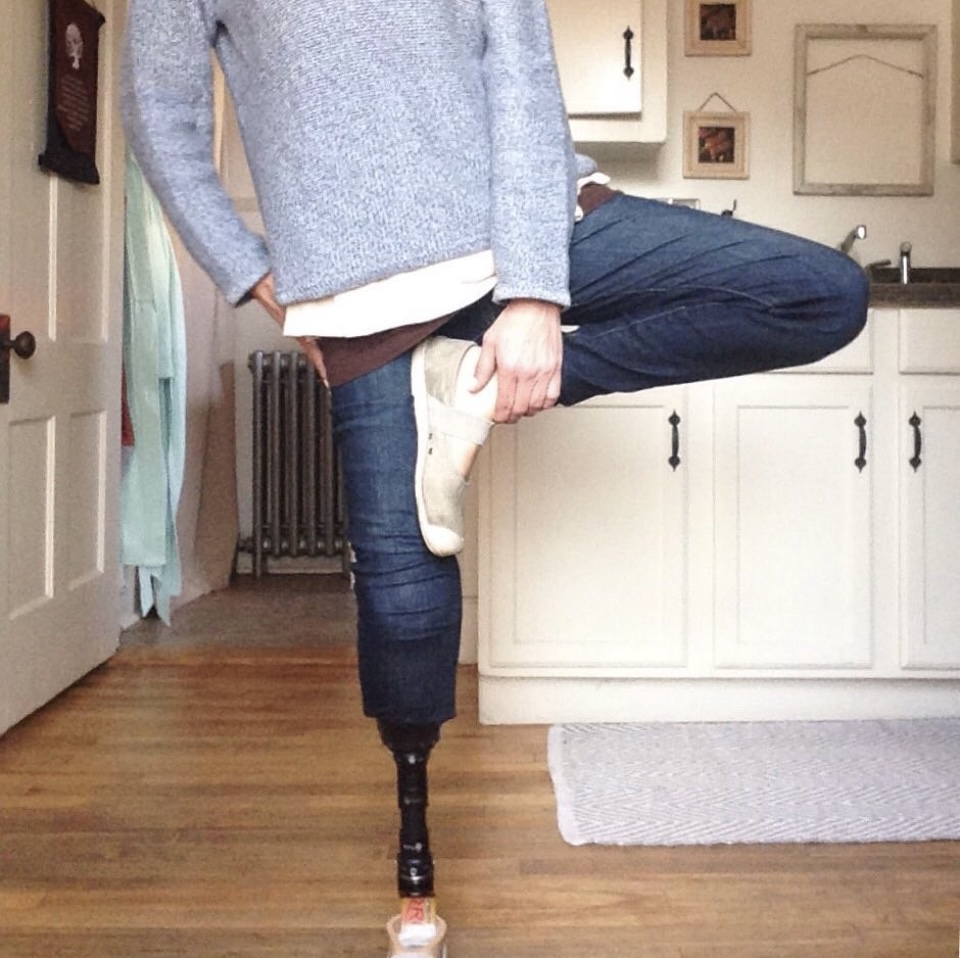
    Unfortunately, in 2022, that clinic stopped accepting insurance entirely. Self-pay prosthetics are simply not realistic for most people, certainly not me. 

    Without options, I returned—again—to the national clinic, this time a different location.

    Thankfully, I like my current prosthetist; he listens to me, respects my self-advocacy, and treats me like a human being who knows more about limb-loss than he does. 

    Unfortunately, the local clinic location closed in 2025, which was less than 5 miles from my home. They consolidated offices over 30 miles away, which is a challenge when you need quick adjustments or emergency help. But it’s the closest one in my area.

    I don’t love that one large chain essentially has a monopoly in Maine. Choice matters—especially in healthcare.

    But I’m fairly content with my current prosthetist. 
    And finally, let’s get into the fuckery that is health insurance and Medicare in the US. 

    Because I was still technically married at the time of my amputation in 2016, I was covered under his Department of Defense health insurance plan. That insurance paid for my amputation and most of my first three prosthetics.

    When I moved to Maine and received my second functional walking leg, I was told my copay/out-of-pocket deductible would be over $5,000. The clinic advised me to contact the Office of Vocational Rehabilitation, which helps people return to work and can cover costs not covered by insurance for mobility devices.

    Vocational Rehab agreed to cover the out-of-pocket cost, but only after I secured employment and worked for 90 days. I found a bartending job on my own—something I never thought I’d return to—and worked for five months and met that requirement.
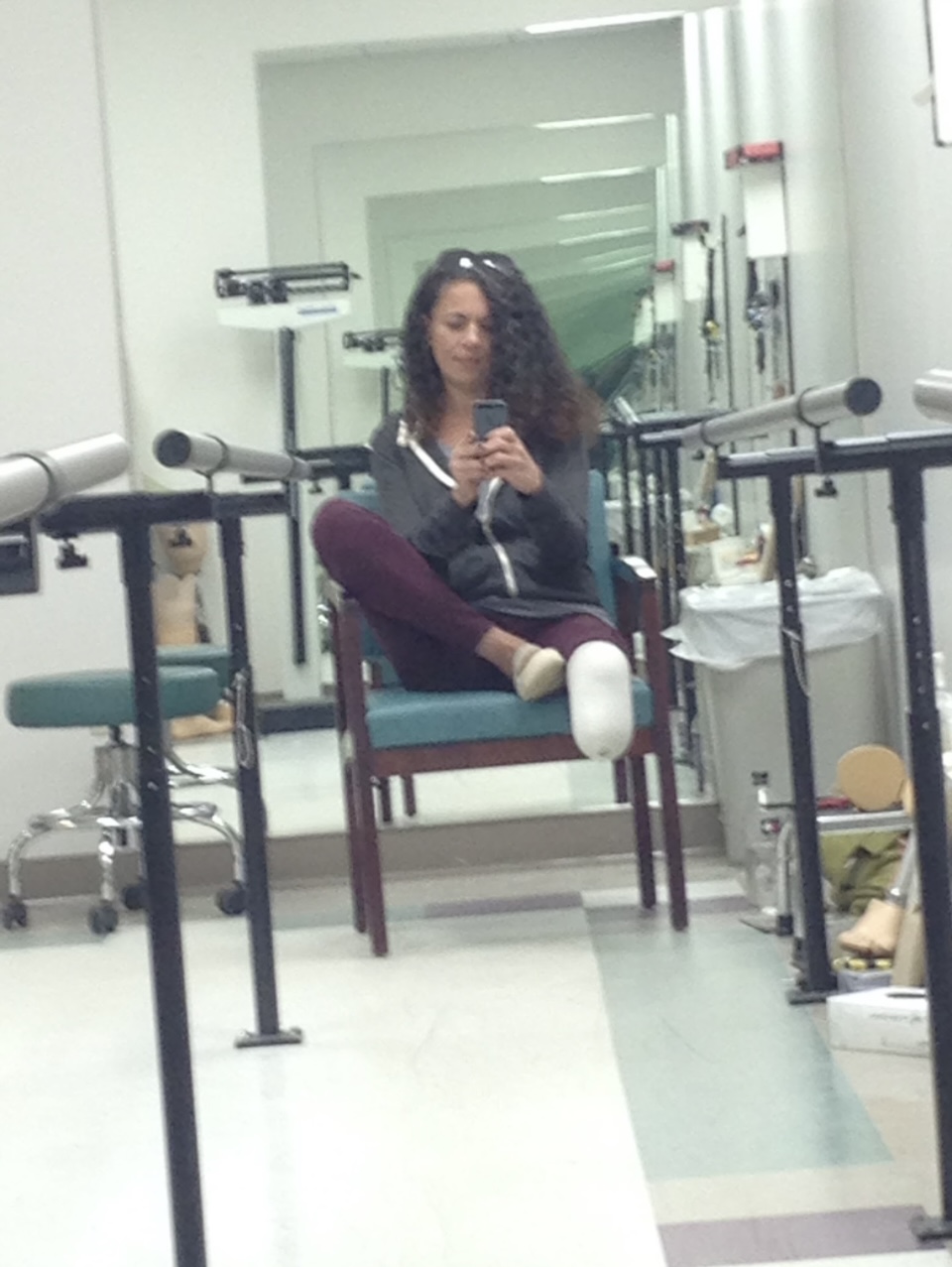
    Once I met that out-of-pocket deductible, I no longer had to jump through bureaucratic hoops to receive prosthetics in the future.

    The clinic also allowed me to receive the leg before the payment was completed, which made it possible for me to work those three months in the first place.

    In December 2020, my divorce was finalized, and I was no longer on his health insurance. I switched to Medicare, which has been great regarding zero copays and deductibles.

    Walking itself is often deemed “not medically necessary”, especially when it comes to “advanced” components—like ankles that move, knees that function properly, or technology that mimics a natural limb.

    Denials are very common. Preauthorizations are exhausting.

    Medicare imposes caps and restrictions.

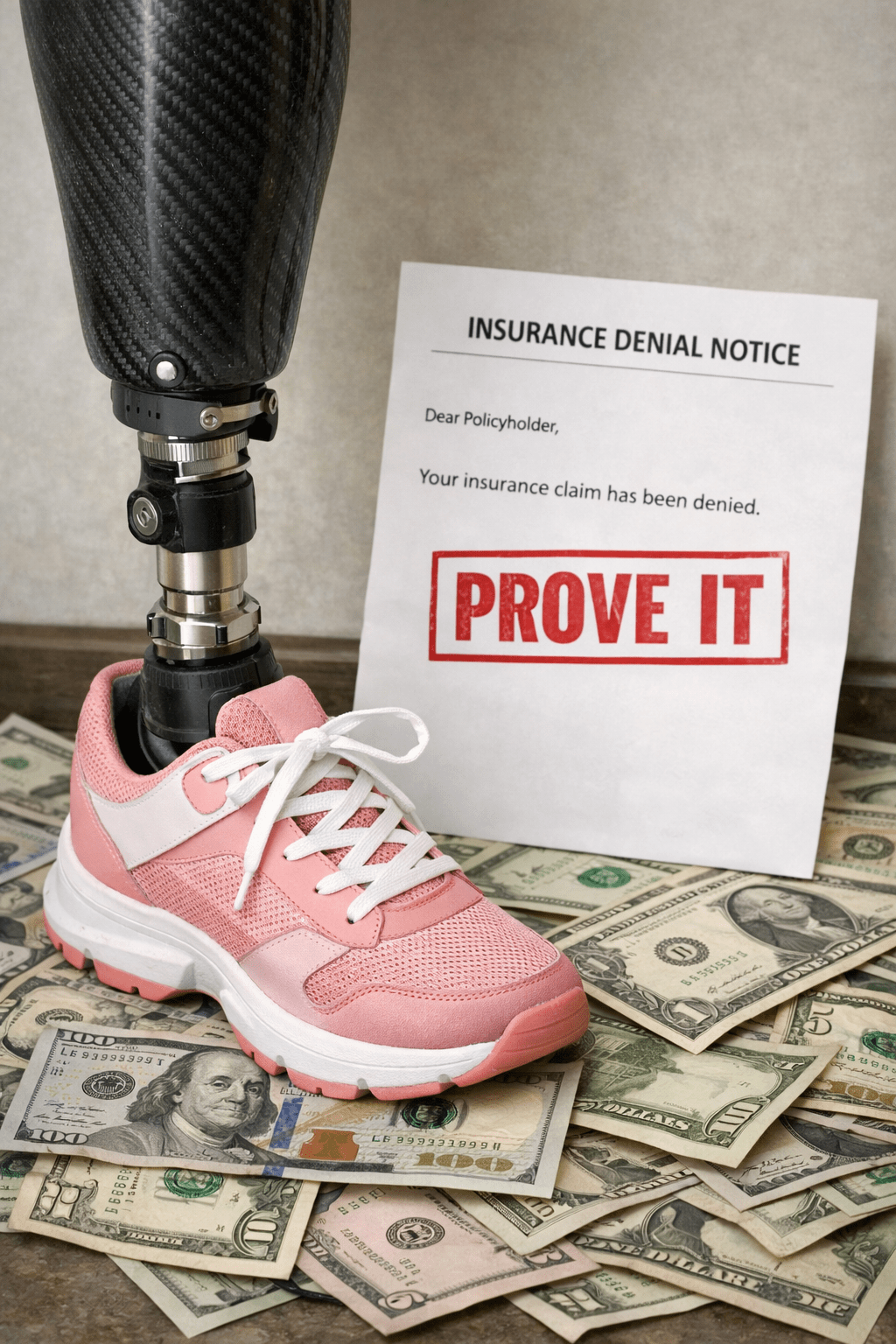
    You must prove, repeatedly, that a prosthetic leg helps you… walk.

    Let that sink in.

    PROVE A PROSTHETIC LEG HELPS YOU WALK! INCREDULOUS.

    Overall, I walk well in my prosthetic. I have a significant limp since 2018, and it’s not because of the prosthetic; it’s because my intact leg’s knee has severe osteoarthritis; the orthopedic surgeon called it “the knee of an 80-year-old retired marathon runner.” I have also pulled my ACL in that knee a couple of times since my amputation.
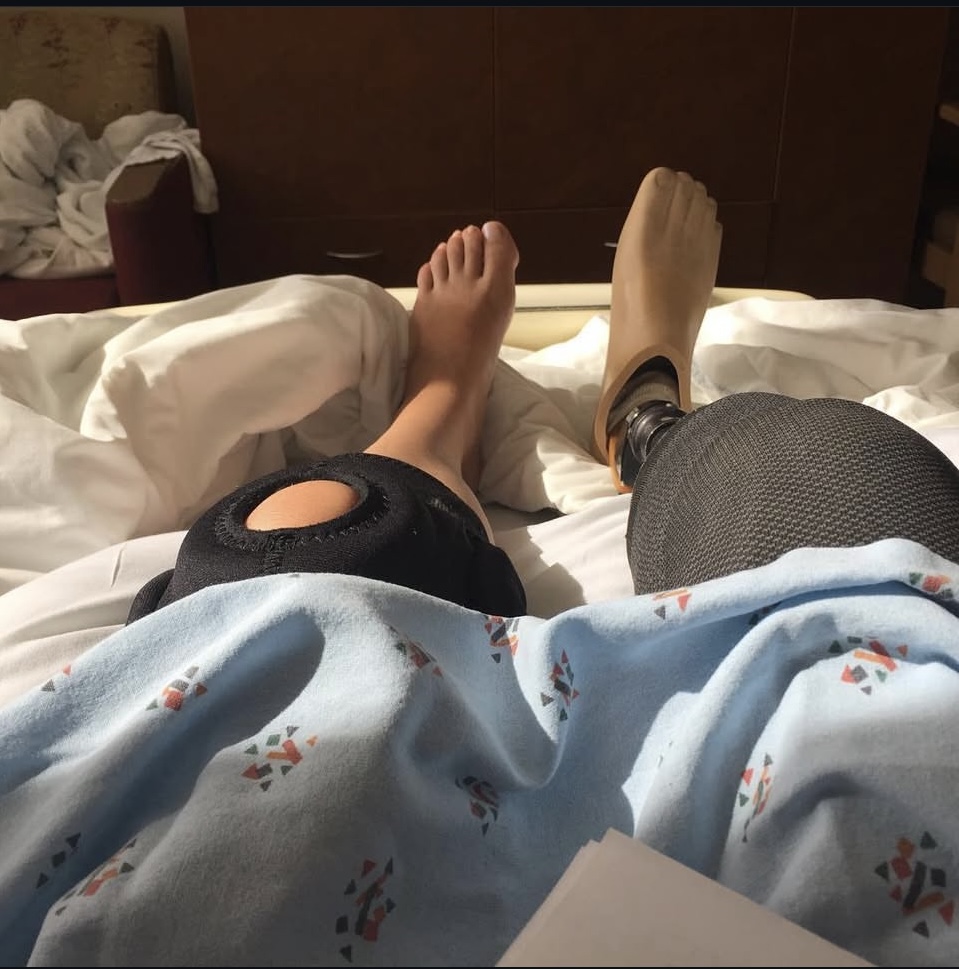
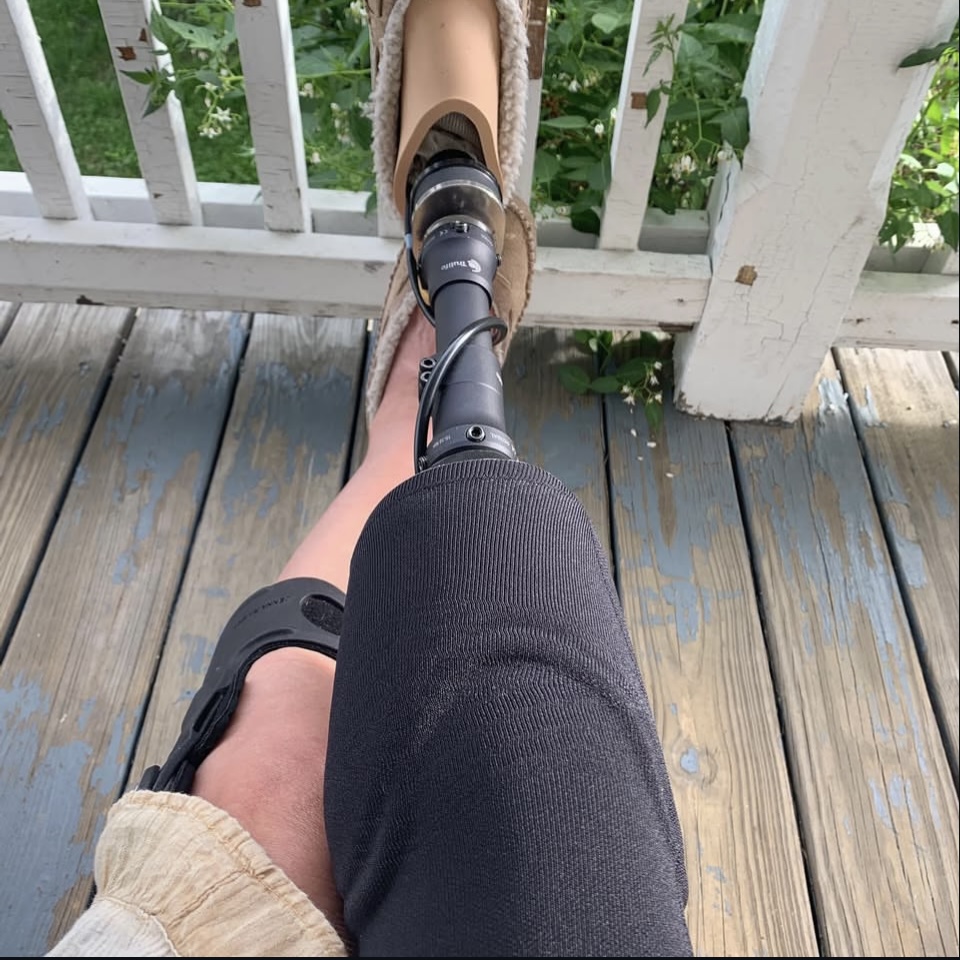
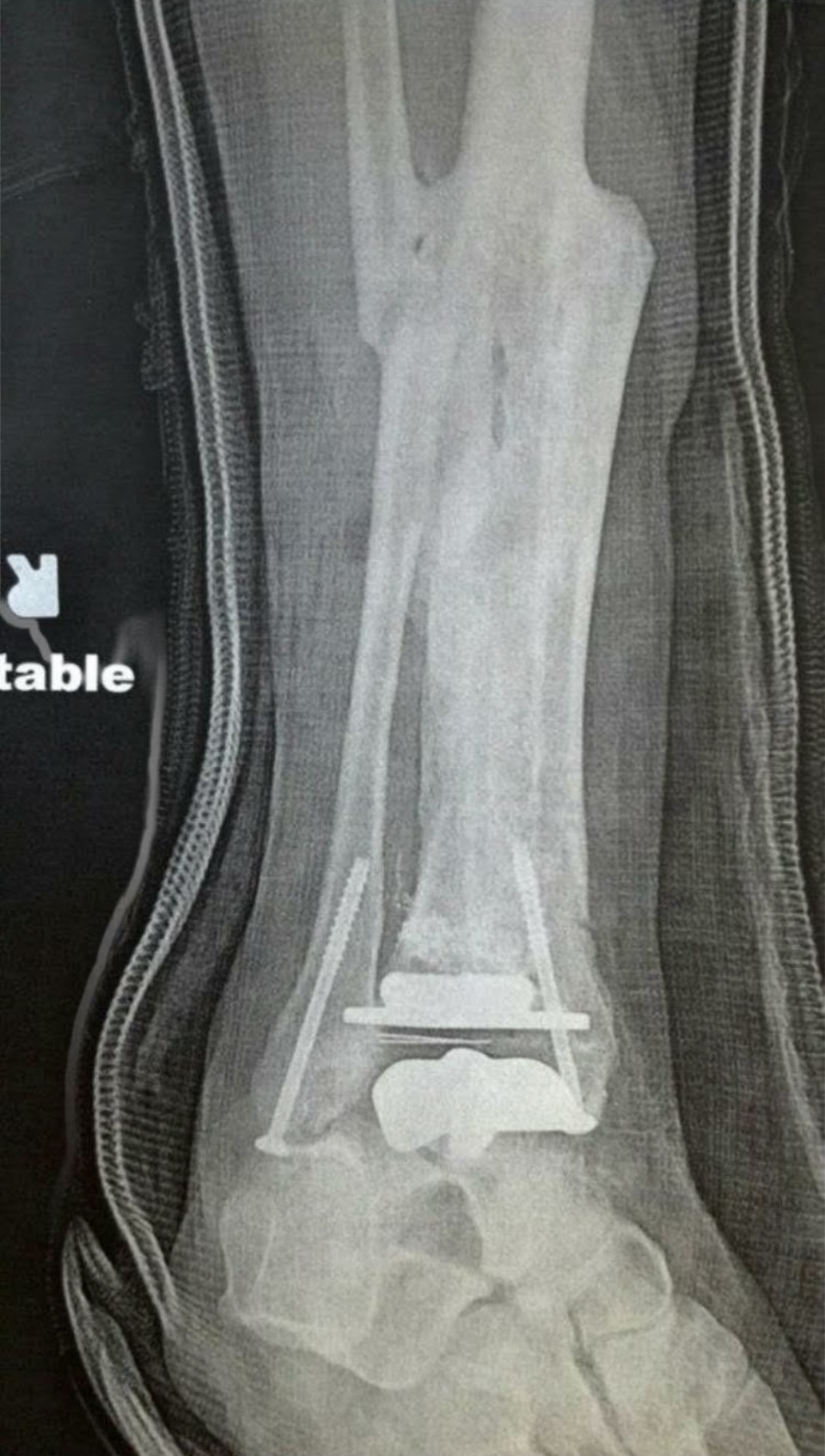
    But I refuse to have my knee replaced because joint replacement in my ankle caused osteomyelitis, which was the final complication that led to my below-knee amputation. I have no desire to replace my knee on my intact leg, risking infection and potential amputation, losing my knee on that leg.

    NO THANK YOU! I’ll continue to be gimpy.

    People always seem to comment on how well I walk in a prosthetic. My response is always,  “I’d walk better and possibly run if I hadn’t compensated for over 20 years on my left leg before amputation; my good leg is my prosthetic.” 

    I often think about waiting twenty years to amputate. What was I so afraid of when the potential for amputation was on the table, three official times in those twenty years?

    I did everything to avoid amputation, all the while unknowingly damaging my “compensator” knee.

    Hindsight.

    It’s been quite an amazing journey to get where I am today.

    I’ve had six different legs, six feet, and five prosthetists. I’ve been in the same socket (which holds your residual limb) for almost seven years.

    I’m considered “lucky” to not need new sockets all the time; most amputees experience fluctuations in residual limb size, which complicates wearing a socket. Thankfully, I haven’t experienced that since the first two years post-amputation, when the residual limb changes significantly in size as it heals.

    The only issue I really have with my prosthetic is sweat and blisters. In the blazing summer heat, it can get so sweaty in the silicone liner that my suspension system will lose suction; if I gently shake my leg or continue to walk with my prosthetic, the leg will fall completely off. Incredibly dangerous.

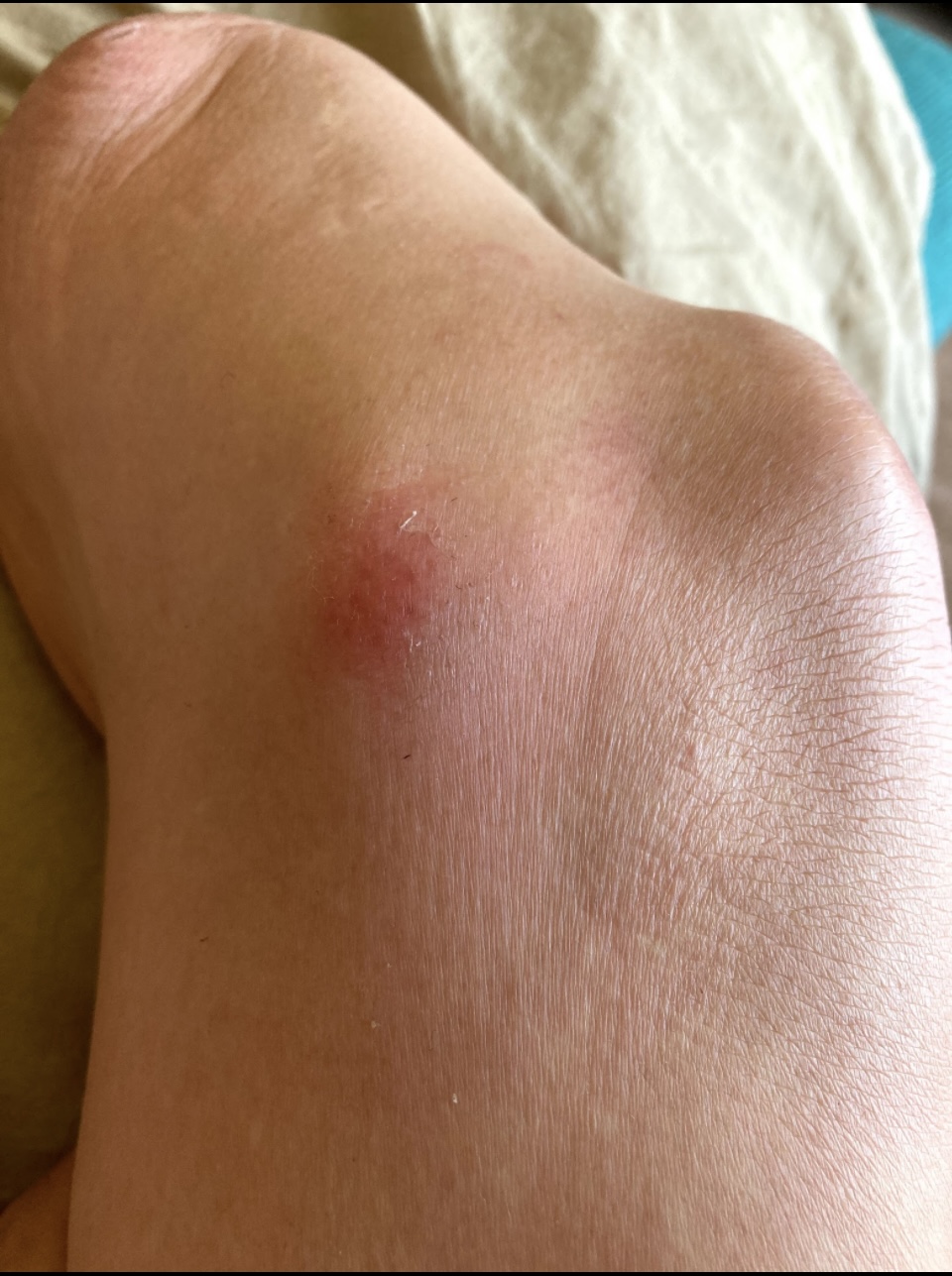
    Just a little sweat causes friction, and the friction, combined with skin and silicone, creates blisters. They are very painful while wearing a prosthetic.

    There isn’t much I can do once I have a blister, except keep my residual limb dry and let the skin heal. Which means, leg off. That’s a significant challenge: living alone with zero assistance and a dog that needs to be walked every day. I do not use a walker, crutches, or a wheelchair anymore. So, all day, it’s leg on, leg off.
    Despite the challenges, I express my gratitude daily for being able to live independently and walk my dog. It really is that simple.

    Thank you for taking the time to read.

    If you feel inclined, please like, share, comment, and subscribe. 
  • The Wanderer

    The Wanderer

    Eleven Moves After Amputation: Finding Home at Last

    Today I’m writing about moving—specifically, moving eleven times in the first six years after my below-knee amputation.

    I am a wanderer by nature. I always have been. Home, for me, has never been a place so much as a state of mind. And my state of mind was homeless and unsettled for a long time. I am quite “domesticated.” I can make a cardboard box feel like home if I need to. That instinct didn’t come from nowhere—I moved constantly as a child.

    I attended six elementary schools, one middle school, and two high schools before dropping out after ninth grade. My single mother and I moved back and forth to my grandmother’s house —my Grammy’s—my entire childhood. If we weren’t actually living under her roof, I spent entire summers and school breaks there. Stability has always been temporary for me, if I ever really felt it.

    Sometimes we moved in the middle of the night. Almost exclusively without warning. No goodbyes. No closure. This was the late 70’s and the entire 80’s. There was no internet, no social media, no easy way to stay in touch. One day I’d be a student in a classroom, and by the next, I’d be gone—dropped into a new school, a new town, a new identity as the new girl. I was always the new girl.

    After my Grammy died when I was fourteen, my feeling of impermanence deepened. I couldn’t even count how many places I’ve lived—definitely hundreds. I’ve lived in fifteen states: Maryland, Virginia, Pennsylvania, Ohio, New York, Michigan, California, Utah, Arizona, Florida, North Carolina, Texas, Indiana, Maine, plus Washington, D.C., and Puerto Rico. Those are just where I officially moved and forwarded my USPS mail. It has been a journey of constant change, leaving me unsettled for over four decades.

    That theme continued after my amputation in 2016.

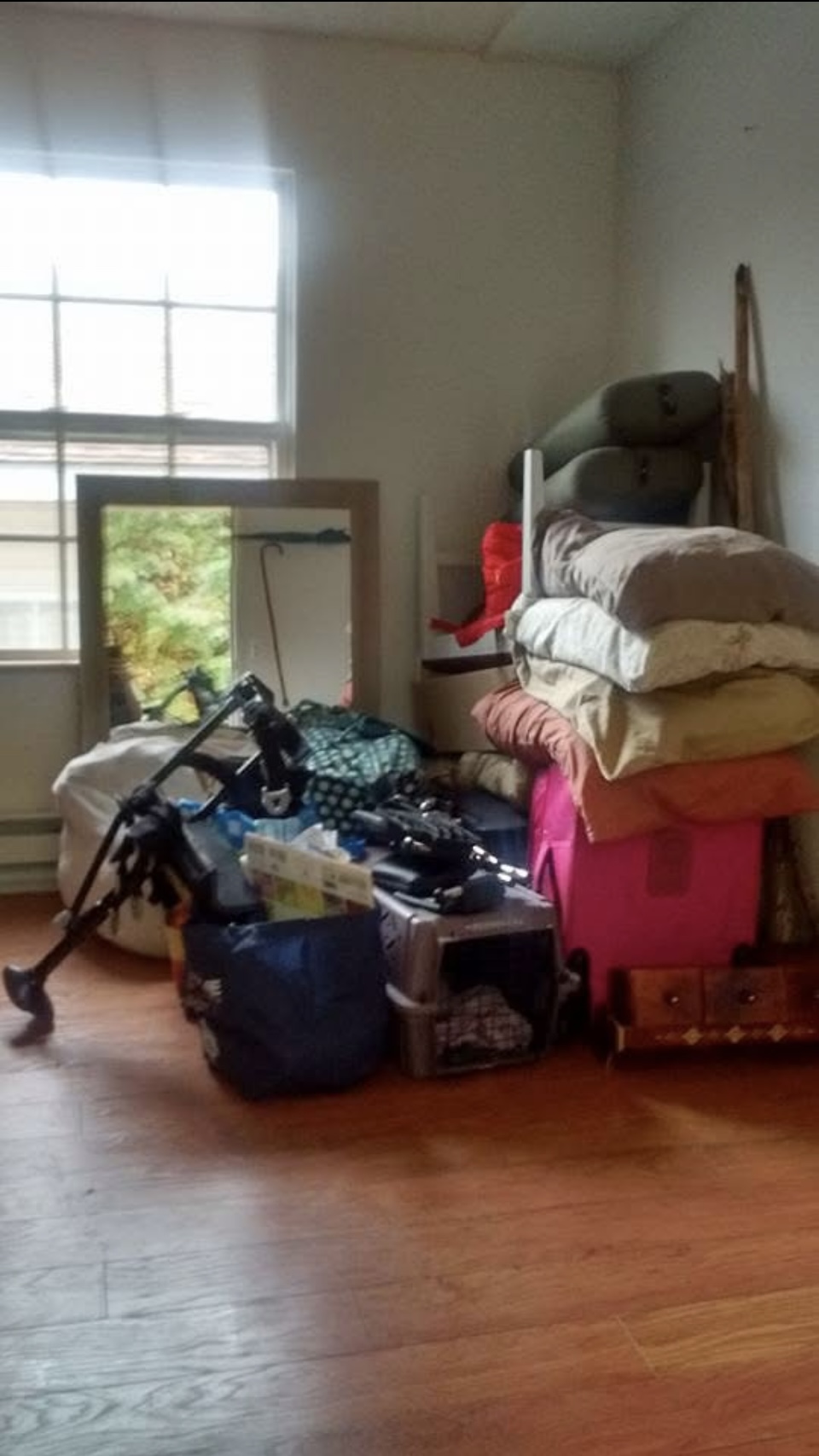
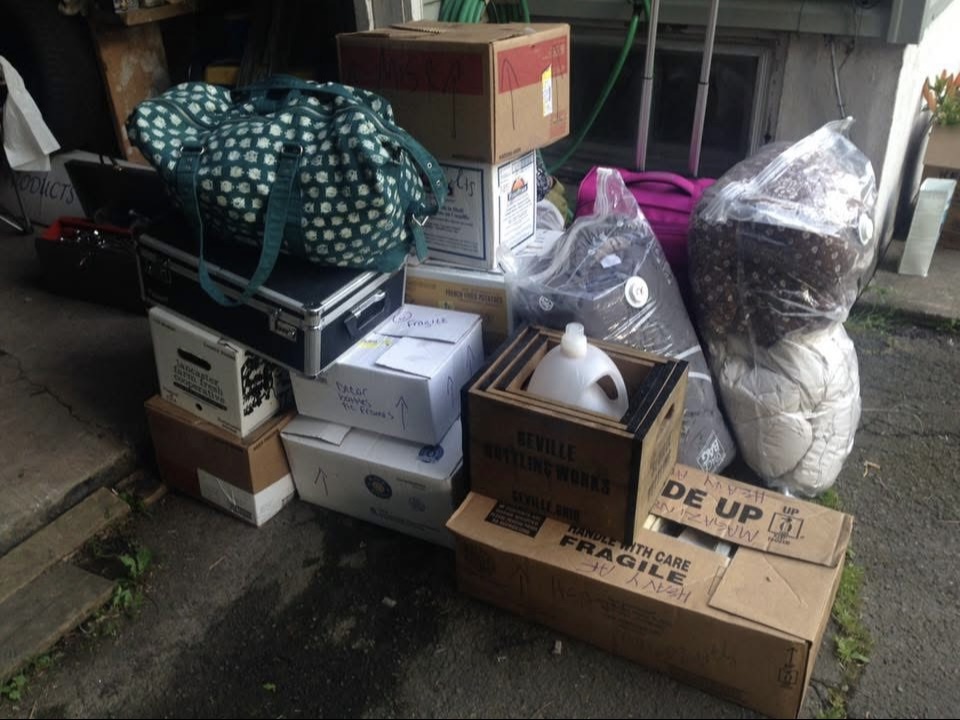
    At the time of my amputation, I was living in an apartment in Larksville, Pennsylvania. About five months later, still without a prosthetic leg, I moved. Friends helped with the physical move, but I handled the packing and unpacking myself.

    I moved to Uniondale, Pennsylvania, renting a room from someone who was supposed to offer a little support. Instead, it became a nightmare. After about a month, I packed up—again alone—and moved to Honesdale, Pennsylvania. I still didn’t have a prosthetic I could walk in. I had help with the physical move. I stayed there for a few months before deciding to move to Maine.

    Once again, I packed and unpacked alone. I had help with the long-distance move. I was free of any furniture, so it was not a substantial long-distance move.

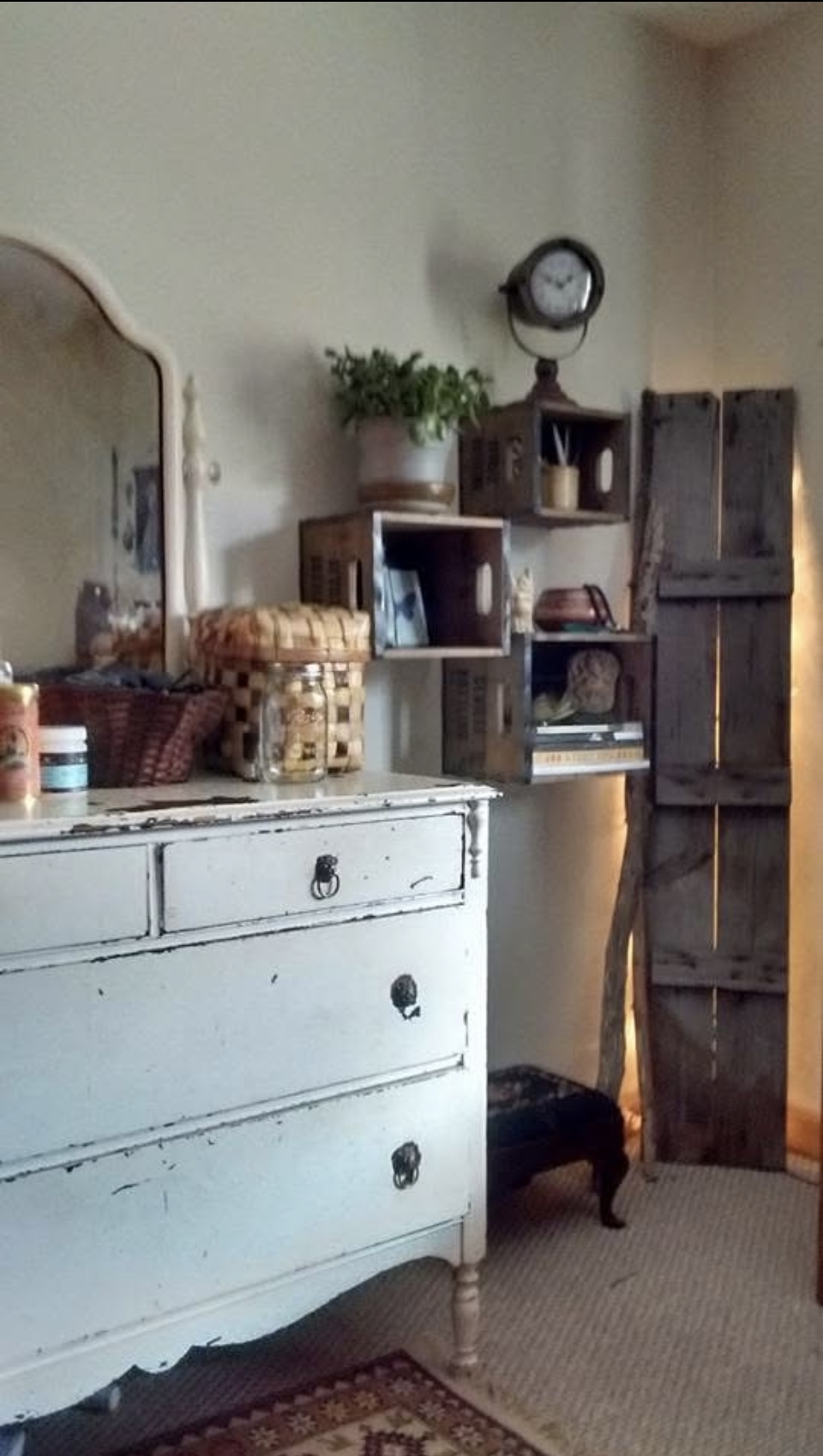
    Once in Maine, I stayed briefly with friends, then moved into a rooming house in the same town. A few months later, I moved again—this time into a small studio apartment, where I paid market rent, more than 60% of my disability income. I slowly reacquired furnishings, trying to create some sense of home. I stayed in that studio for 2 years. Then I made another leap: moving in with a new elderly friend who had land and plans to build a yurt or cabin for me to live in, so we could rescue and foster dogs together. A true DREAM!

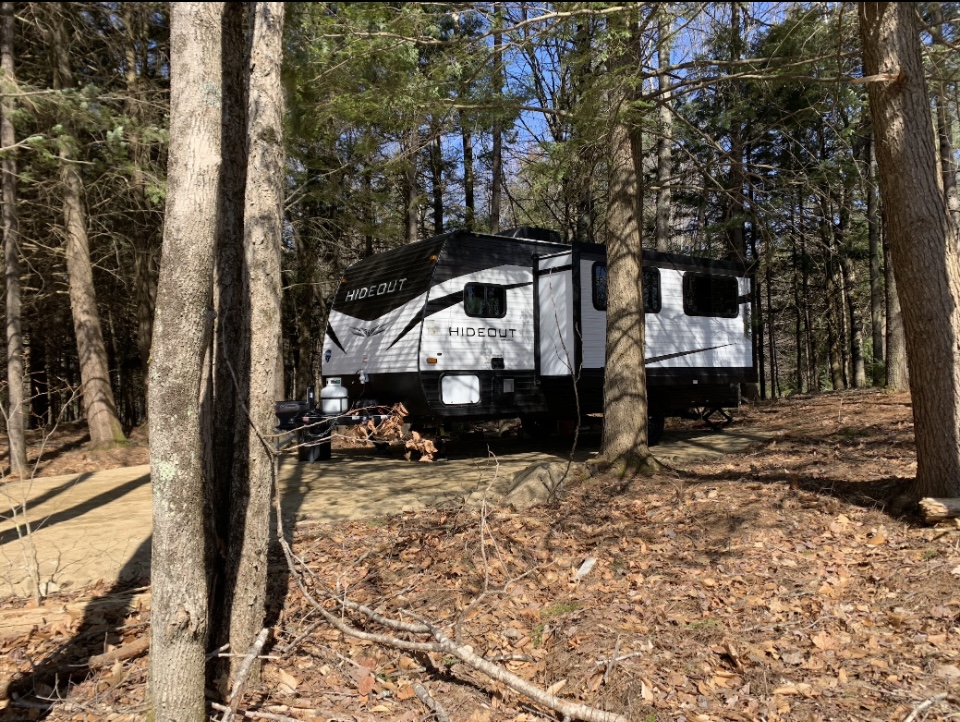
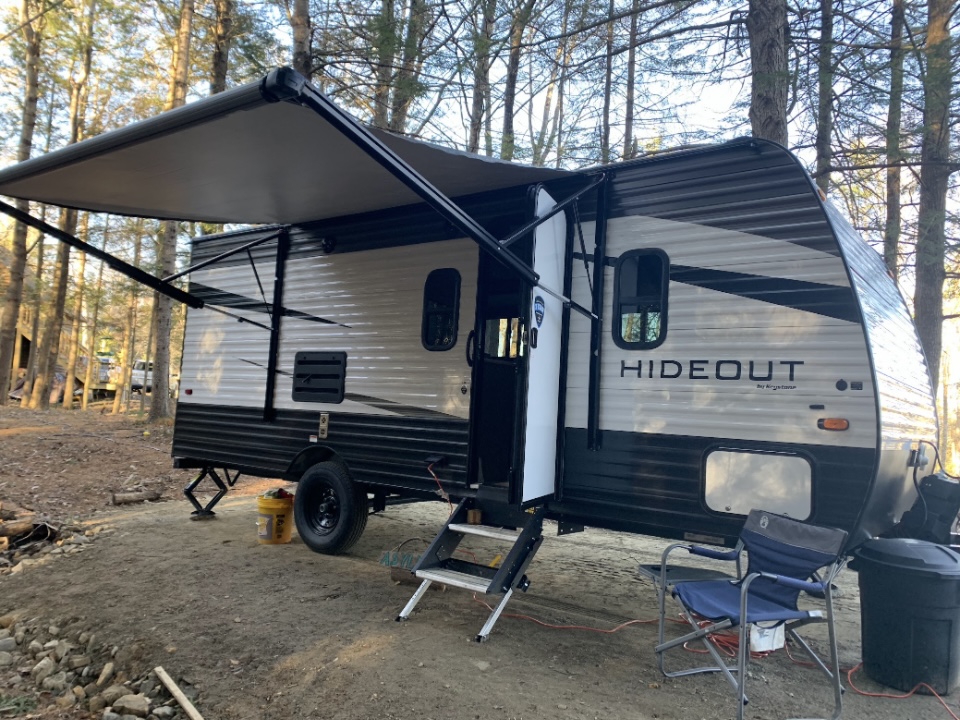
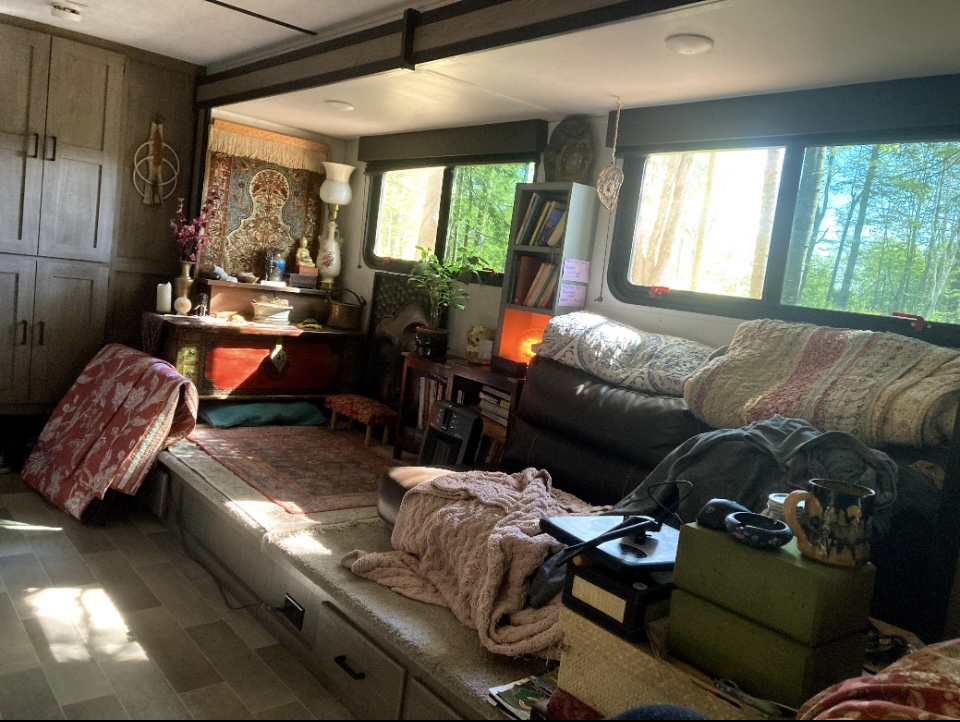
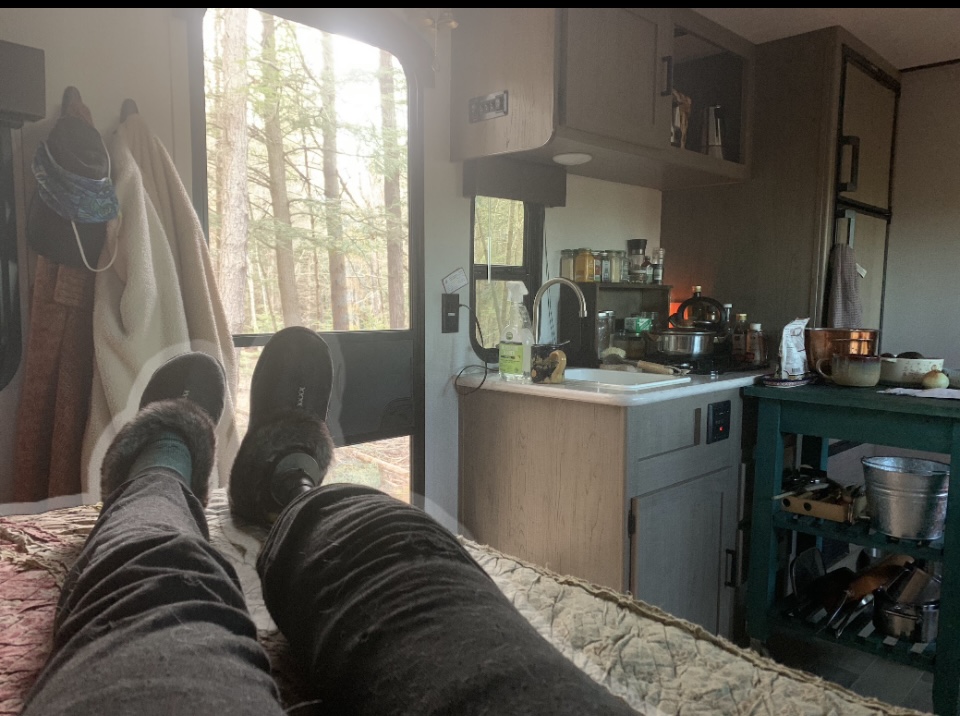
    I lived in her basement from the end of 2019 and into early 2020—and ended up with mold toxicity in my lungs just as COVID arrived. The plans for a yurt or cabin build on her property disintegrated because of her relationship with her boyfriend (who was going to actually build it) and the pandemic stress. So, in February 2020, I ordered a 22-foot 2020 Keystone Hideout camper, with plans to travel cross-country, visit friends, and work as a campground host starting in the spring. The camper arrived in early April—right as the world shut down.

    So I moved into the camper.

    I lived there for nine months during lockdown, only to realize there were no campsites or host positions open and no affordable, rust-free trucks in Maine that could tow a 22-foot camper. And winter was coming, and the camper wasn’t the place to be in Maine. The nomadic dream collapsed quickly.

    Next, I quickly moved to Portland and lived rent-free as a “live-in aide,” which really meant just being present in their apartment to feel safe. This person had extreme mental health issues that were not disclosed to me by their caretakers before moving in. After a few scary months, I frantically packed my things—by myself—into storage and left. I was technically homeless with my dog, Honey Bea.

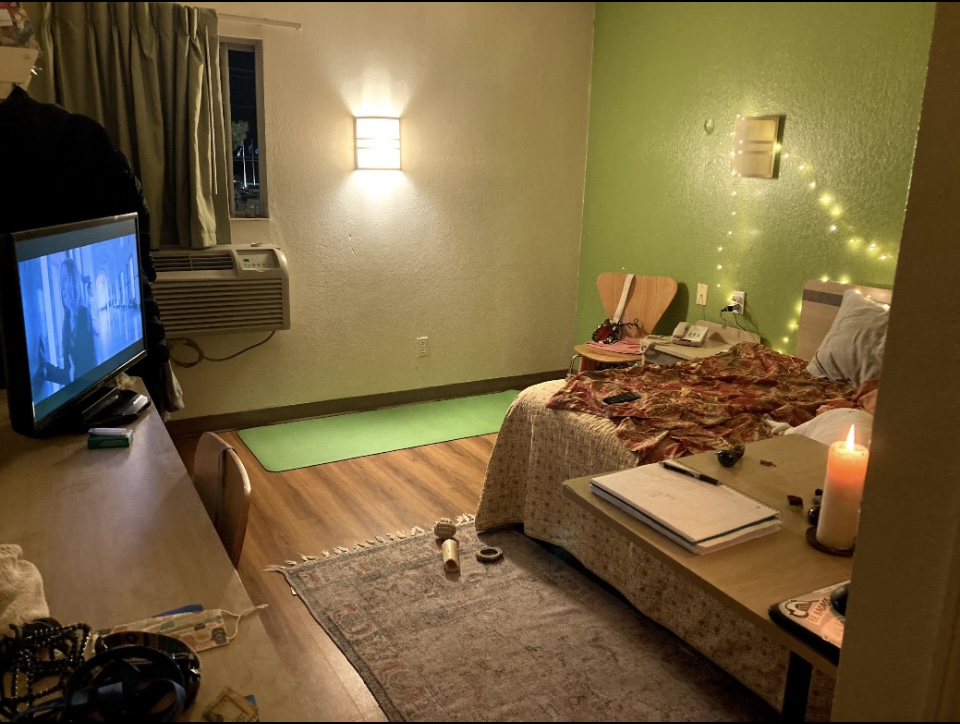
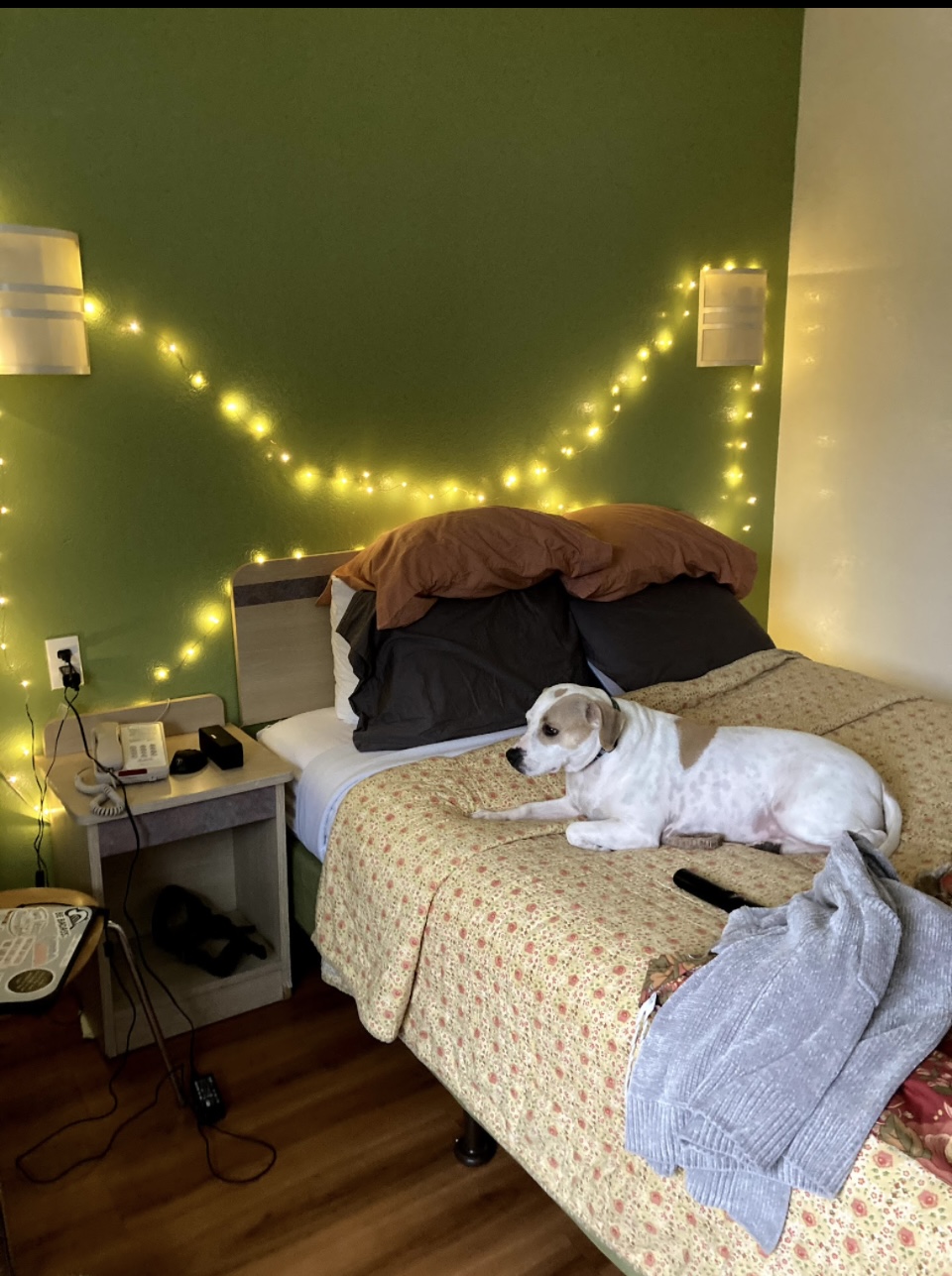
    Because it was COVID, thankfully, the homeless shelter was actually a motel room at the Motel 6. I could have my dog. Honey Bea and I stayed there for only eleven days. Being both disabled and homeless moved me up the waiting list for disability housing.

    I was offered a subsidized apartment about an hour and a half northwest of Portland—a town I had never even visited—in an apartment building with 24 other residents who were all elderly and/or disabled.

    Once again, I packed alone. One friend helped me move. And I moved into that apartment sight unseen.

    I lived there for fifteen months. I was grateful—it was a nice apartment, affordable, and safe—but the building and its occupants were extremely chaotic. Parking was a constant issue, and the environment and geographical location didn’t support the life I wanted to live.

    So I moved again.

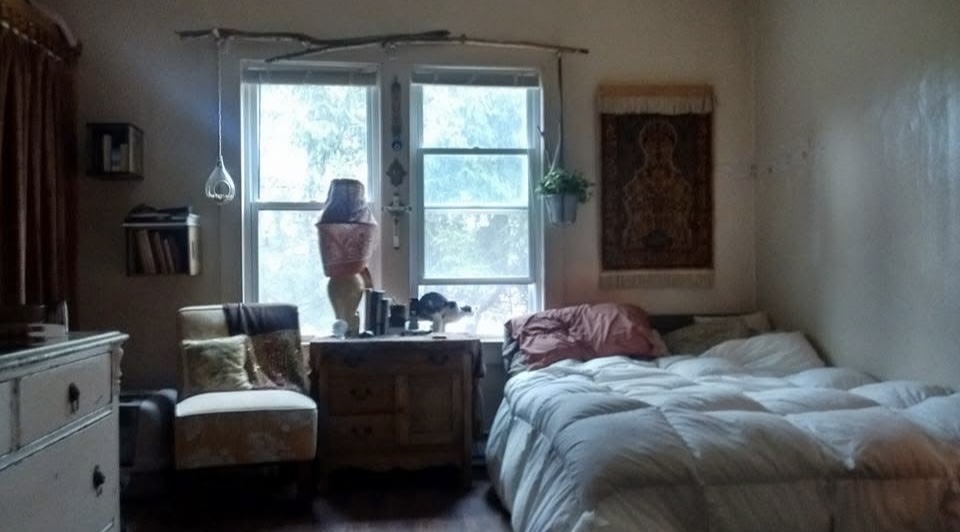
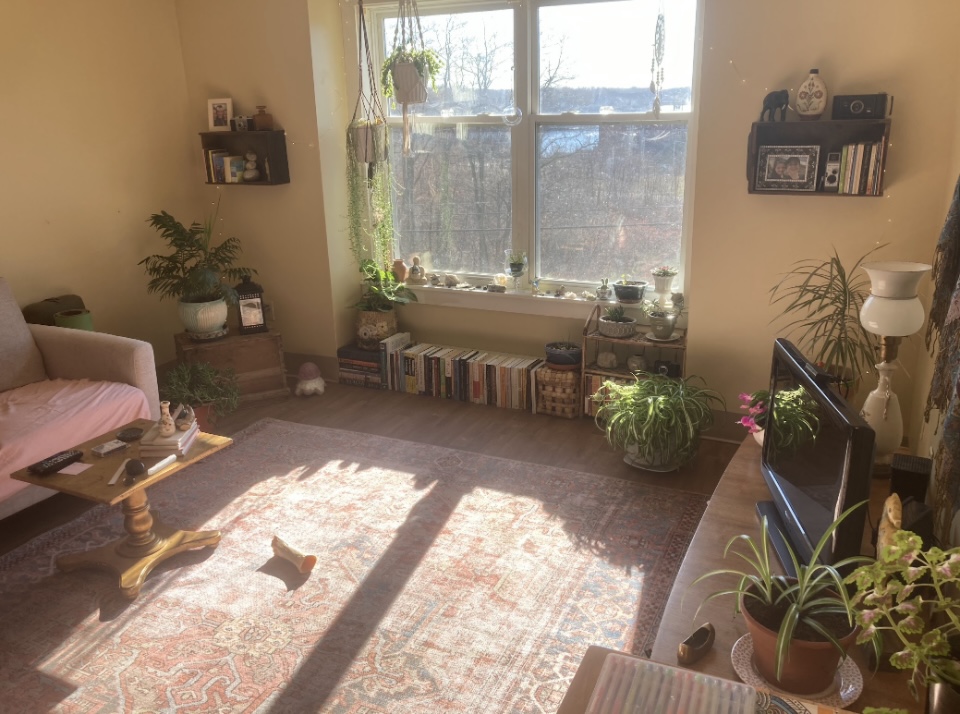
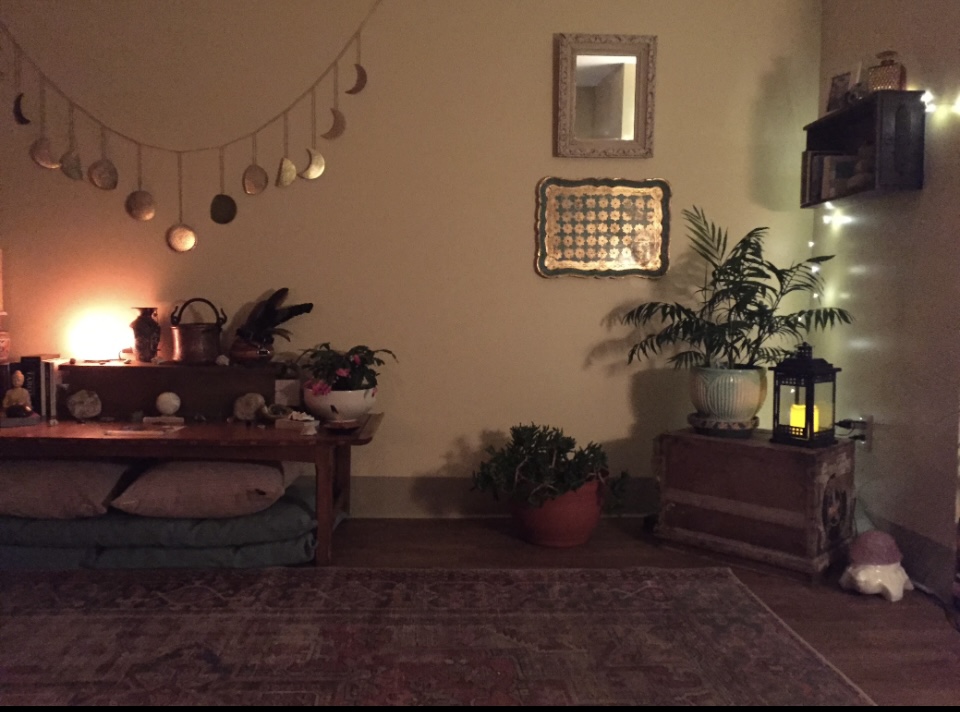
    In 2022, I moved into the apartment I still live in today. I didn’t have help with packing or unpacking, but I did have significant help with the move itself. This May, it will be four years.

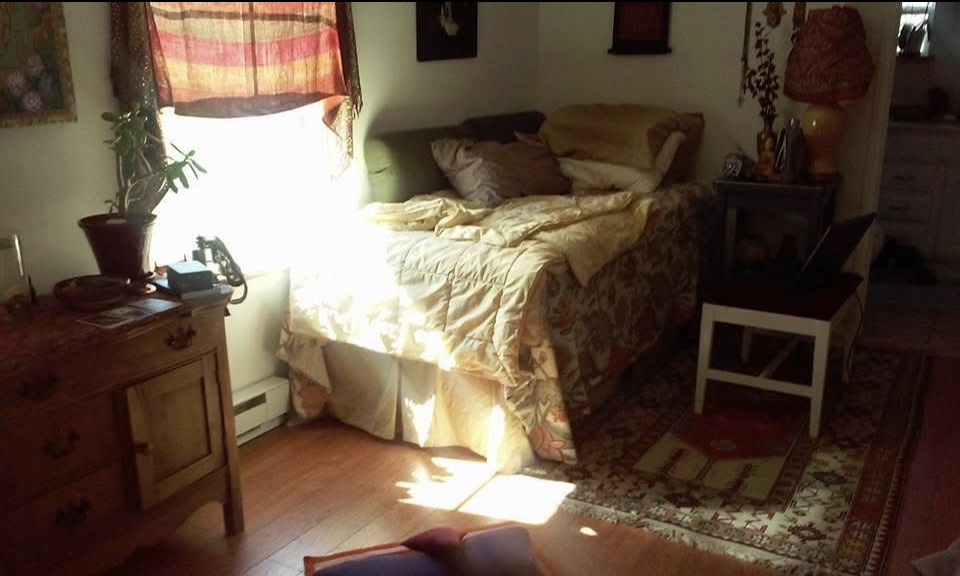
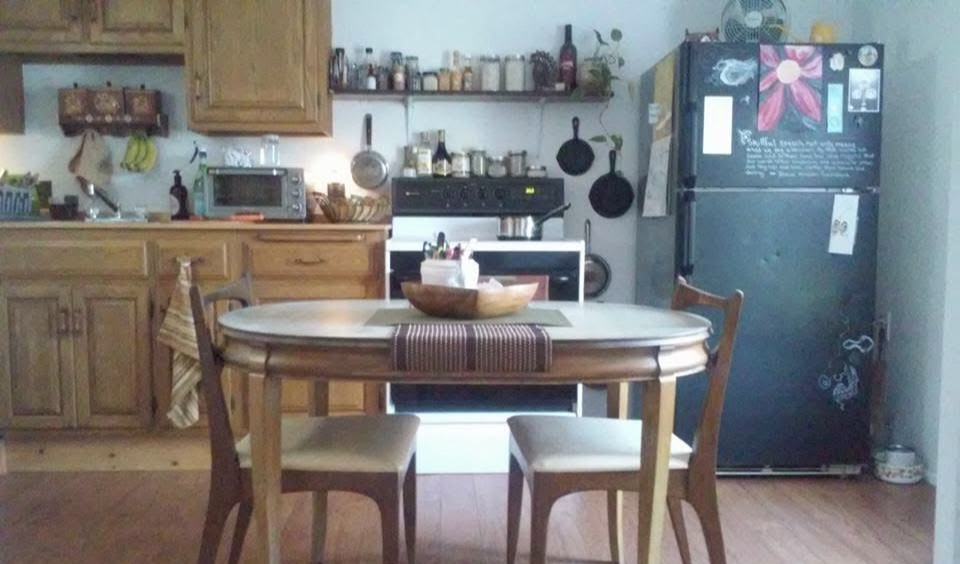
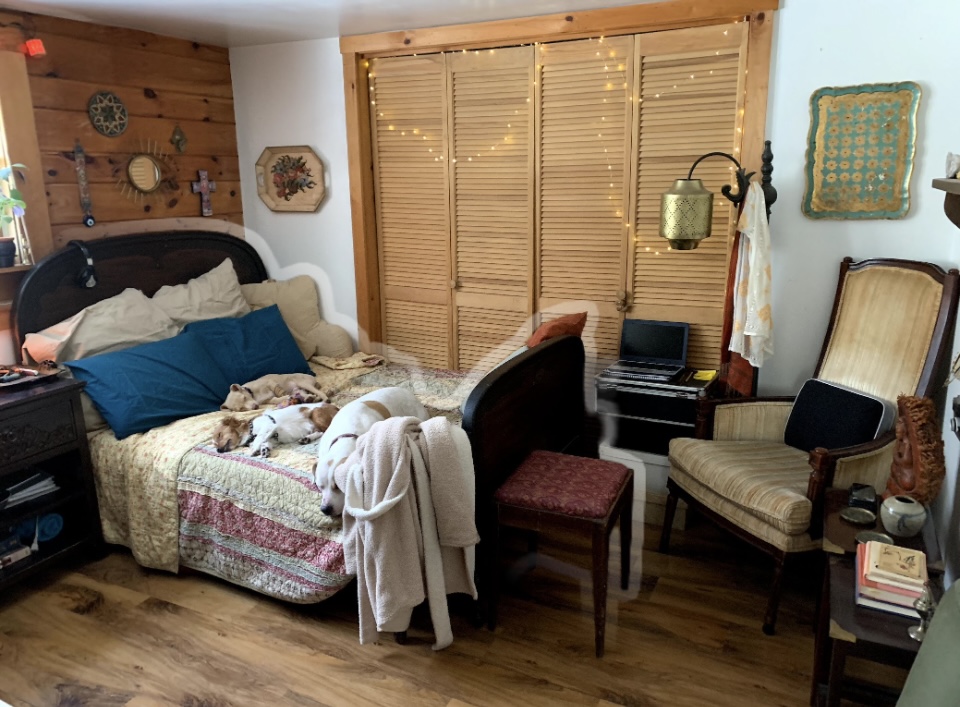
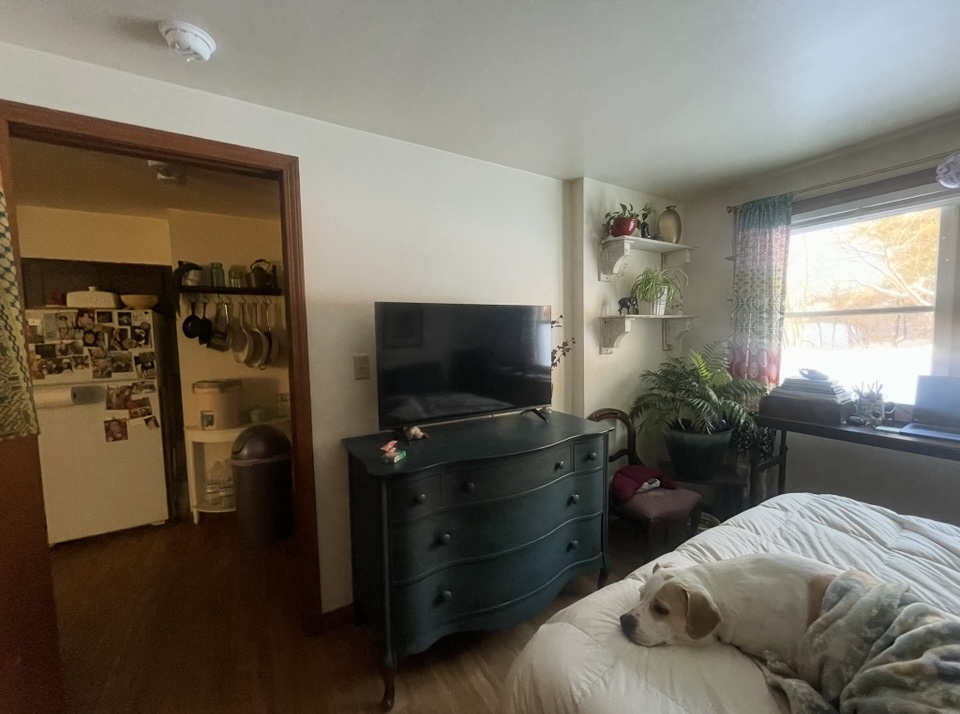
    I love my town. I love the area. I love that it’s a single-structure building, with only one shared wall. No one above or below me. Only one apartment is connected to mine. I love the parking and proximity to my front door. I love the view from my bedroom window. And I’m not technically alone, I do have my true love, Honey Bea.

    At 52, this is the most stable I have ever been on my own since I was 14—perhaps in my entire life.

    The only other period of relative stability was during my second marriage, when I raised my husband’s children as my own. I was technically married, in total, from age 21 to 47—to two different men, many years unhealed, still deeply shaped by unhealed trauma.

    Looking back, I sometimes wonder why I spent those decades trying to be in relationships instead of learning how to be myself, how to love myself. Why didn’t I focus on healing sooner? On building a life rooted in safety and self-reliance?

    Life unfolds as it should, and we learn lessons when we’re ready. Ironically, now that I know myself, I know I’m happiest being alone.

    As I get older, I do think it might be nice to have someone. But I don’t ever want to live with someone full-time again. I want my own sanctuary. My own retreat. And I want them to have theirs.

    Eleven moves in the first six years after amputation is extreme. But it brought me here—to routine, to structure, to stability. It gave me this beautiful space to write my memoir, to create this blog, and to become someone I genuinely love.

    The only way I’ll move is if I have a small cabin or yurt on my own land. Otherwise, I’ll stay where I am!

    I’m still learning who I am. I really like her and am deeply grateful for her and the hard lessons she had to endure.

    Thank you for being here.

    Please like, comment, share, and subscribe.
  • Heartwell

    Heartwell

    Therapy, Trauma, and Finally Being Seen

    Today I am writing about therapy—specifically Cognitive Processing Therapy (CPT), Cognitive Behavioral Therapy (CBT), and traditional talk therapy—as treatment for complex PTSD (C-PTSD), and borderline personality disorder (BPD).

    I have been in and out of therapy and psychiatric hospitalizations since I was 15 years old. My last psychiatric hospitalization was in 2014. Over the course of my life, I received many diagnoses, and misdiagnoses, including manic depression, anxiety, clinical depression, bipolar disorder, and PTSD. My current therapist diagnosed me with complex PTSD (C-PTSD), along with a comorbid diagnosis of borderline personality disorder (BPD), which developed secondary to the trauma. I absolutely agree with my current mental health diagnosis.

    In my case, these conditions had the most impact on my relationships, trust, and sense of security. When I was younger, I really struggled with emotional dysregulation, relationship instability, negative self-image, dissociation, identity instability, fear of abandonment, self-harm, aggression, and relational trauma. I also have an extensive history of suicidal ideation and multiple significant suicide attempts.

    I was in consistent therapy for nearly nine years during my second marriage, all with the same male CBT therapist in Manassas, Virginia. For the first few years, it worked; it felt safe. But when my husband became involved—first in couples therapy, then individually with the same therapist—everything changed.

    That therapist was suddenly treating me, my husband, and us as a couple. It crossed an ethical gray line, leaving me feeling exposed and unsafe. I began to feel ganged up on by my therapist and husband. I felt like the one therapeutic relationship I ever trusted was no longer safe.

    Everything in my life deteriorated further after my husband returned from Afghanistan with severe combat fatigue and traumatic brain injuries from two significant blasts. By 2012, my therapeutic relationship had completely broken down, and I left therapy altogether. My marriage also deteriorated and ended in 2013.

    I didn’t return to therapy for about eight years.


    By June 2020, I was living in a 22-foot Keystone Hideout camper on a friend’s eight acres of land in Maine. I had ordered it before the COVID pandemic, hoping to travel the country, but instead, it became my home during the lockdown. My relationship with the landowner, an older woman with whom I rescued and fostered dogs, had become deeply strained, and I was under enormous emotional stress. I knew I needed support.

    At that point, I was four years post-amputation and eight years without a therapist. I had also never worked with a female therapist before—only one psychiatrist, whose role was medication, not emotional processing.

    I went to Psychology Today’s therapist directory and filtered for trauma-informed care, CBT, CPT, and highly sensitive persons (HSPs). One therapist stood out immediately. Her photo felt warm and welcoming. Her last name was Heartwell.

    To me, that name meant something profound: heart and well—the center of being, compassion, emotional truth, and wellness. It felt like a sign.

    I sent her a message and also called, expecting a voicemail. Instead, she answered. It was early June 2020. She told me she rarely responded to numbers she did not know, but something made her pick up. I explained what I was going through, and she said, “Let’s get you in.” I had my first session that same week.

    Before that session, she had read a short, personal story I had written about my life and amputation. She came in knowing a bit about my life. 

    She has been my therapist ever since.

    For the first three years, I saw her every single week—sometimes more. There have been, and I’m sure will continue to be, emergency phone calls and extra sessions when things are overwhelming. For the last two and a half years, we’ve met every other week.

    This is the therapist who helped me become the version of myself I live as today. I only refer to her as “Heartwell” to my people. I don’t think I’ve ever used her first name.

    She sees me clearly. In my clinical assessment, she describes me as intelligent, resilient, resourceful, empathetic, funny, creative, perceptive, and willing to try new things. Hearing those words from someone trained to analyze the human mind—my mind—has been profoundly healing.

    We also connected immediately because she, like me, is a highly sensitive person (HSP), a trait defined by psychologist Dr. Elaine Aron. That shared understanding matters. It means I don’t have to justify why I feel deeply, notice everything, or get overwhelmed by stimuli. I am not “too much.” I am wired this way.


    One unexpected gift of COVID was the normalization of Zoom therapy. For someone like me, it’s life-changing.

    Going to an office often means navigating traffic, horribly lit waiting rooms, unfamiliar spaces, small talk, and sensory overload—by the time I sit down, my nervous system is already fried. I spend most of the session just trying to settle enough to speak. Let alone discuss my deepest, most vulnerable self.

    At home, I can actually do the work.

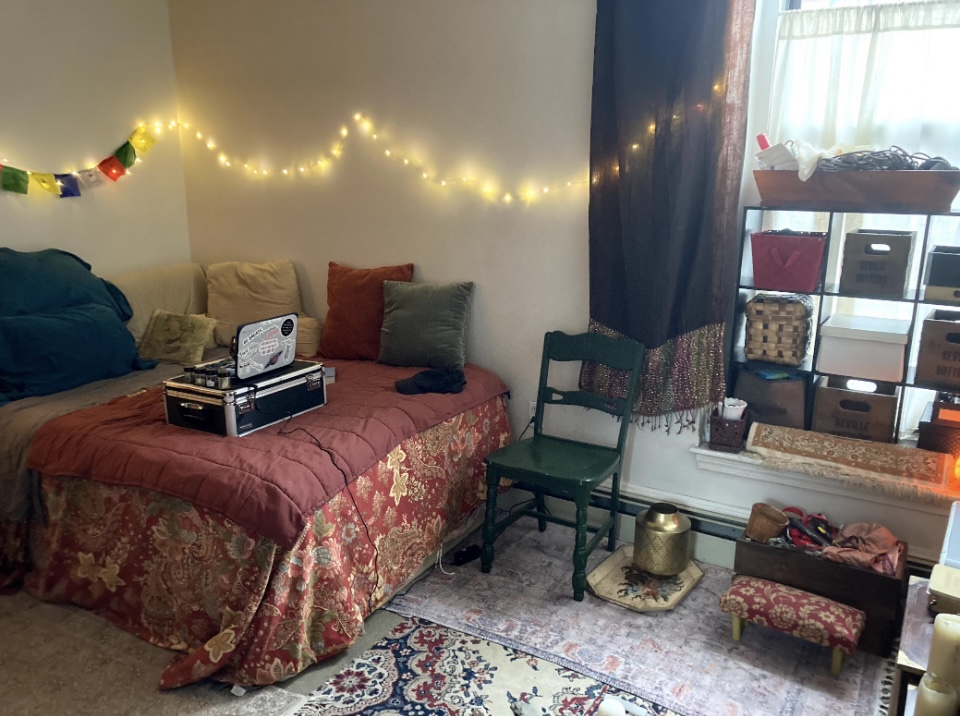
    Before each session, I prepare: my breath pillow, crystals, essential oils, water, tea, tissues, and everything I need to regulate my body. I stretch, breathe, and focus on what I want and need to share. I can take my prosthetic leg off. I can sit how I need to sit. (I don’t have to wear pants – BONUS!). My nervous system is already grounded when the session begins, so we can go deep instead of spending 45 minutes just getting me decompressed. It helps that I can talk fast and get a lot out in a quick amount of time. If you can’t tell, I have lots to say. 

    For trauma survivors with an overactive nervous system, that difference is everything.


    I don’t know if I’ll ever reach a point where I no longer need therapy—and honestly, I’m not sure I want to. I value this relationship. I value being seen. I value having someone who reflects my truth back to me with clarity, compassion, and honesty. I’m filled with love, joy, and gratitude even when I’m struggling.

    Ms. Heartwell didn’t invent who I am. But she gave me a safe space to be witnessed. Everyone needs validation. Heartwell has given me that.

    And for that, I will always be grateful.

    Thank you for being here.

    Please like, comment, share, and subscribe.
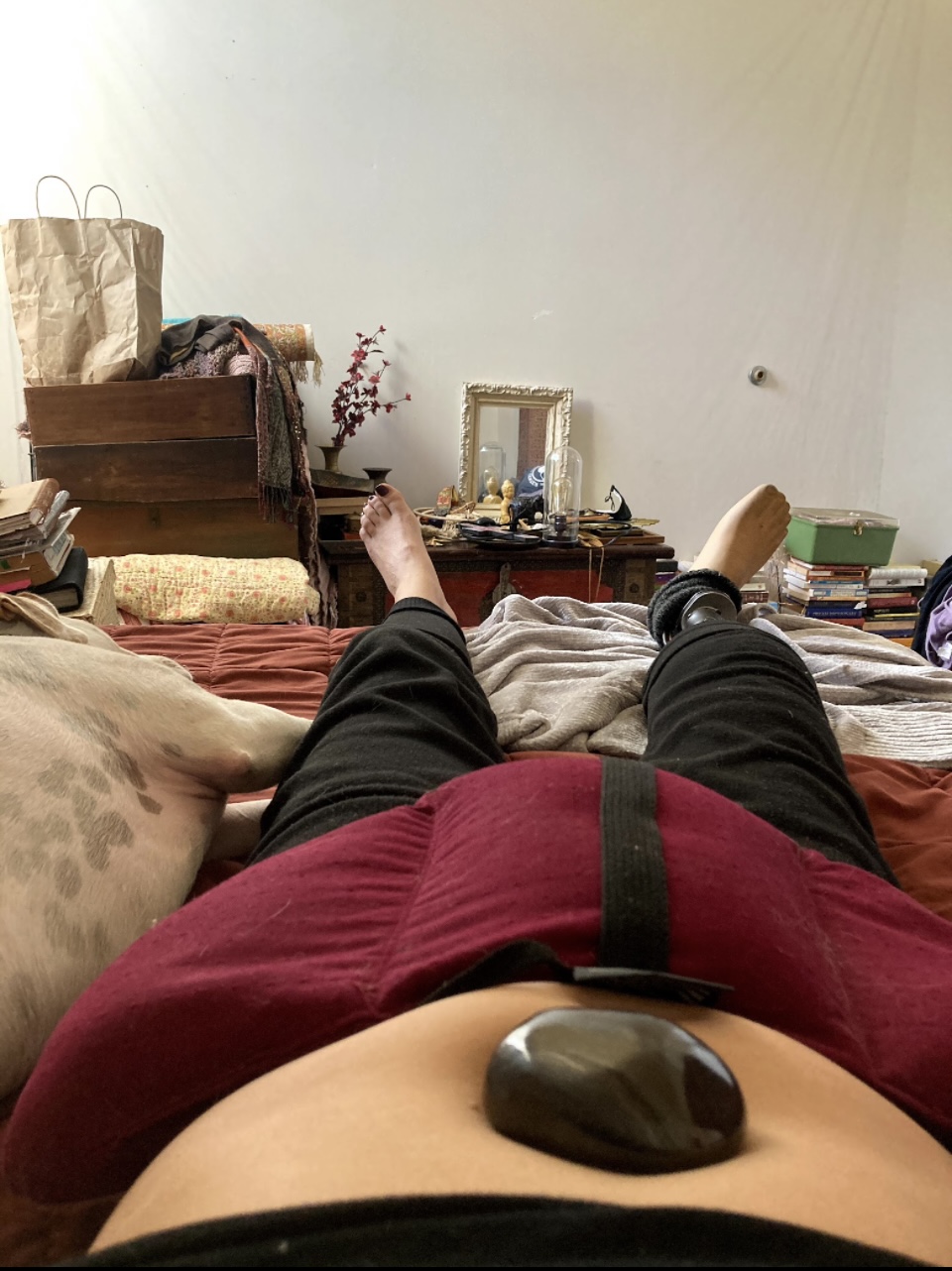
  • Body Image, Intimacy, and Amputation.

    Body Image, Intimacy, and Amputation.

    Today, I am writing about body image, intimacy, and amputation.

    As a child, I was bullied relentlessly for my “chicken legs.” One boy used to chant, “Breaker, breaker, jump on her, you’ll break her,” which—looking back—was pretty clever for a third grader, but cruel all the same. Kids clucked like chickens when I walked down the hall. They called me Olive Oyl, Popeye’s homely girlfriend. Those moments stick with you. They shape how you see yourself long before you have the language to understand what’s happening.

    Home wasn’t much safer when it came to my body image. My mother and Grammy joked that I had “no ass at all disease,” that my butt was as flat as a cracker. When my mother spanked me, she’d say, “This bony ass hurts my hand.” Those comments landed—and they stayed.

    I grew up internalizing the belief that my body was wrong and ugly. When people told me I was beautiful, I assumed they meant only my face or my hair—my naturally curly hair—not my body; they couldn’t mean my body. I was long and lanky, awkward and uncoordinated, like my body didn’t quite belong to me. By my late teens, I was nearly 5’8” and rarely weighed more than 105 pounds, which continued well into my twenties.

    I hated my legs—how skinny, long, and stick-straight they were. I did everything I could to hide them. I rarely wore shorts; if I did, it wasn’t out in public, maybe on a hot day in the woods, but not to the store. I lived in long skirts or pants. In the late ’80s and early ’90s, I wore sweatpants under baggy jeans just to make my lower body look less stick-like. When I worked in the car business for 10 years, one of my nicknames was “Stick Chick.” I was constantly accused of having an eating disorder, which hurt deeply because it wasn’t true. The truth was, I could eat whatever I wanted and not gain a pound. I also knew what an eating disorder looked like; my mother was bulimic for my entire childhood, and that was not me.

    So yes—body dysmorphia accurately describes my younger years. Body dysmorphic disorder involves obsessing over perceived physical flaws, and I absolutely lived with that as a child and young adult. While I still struggle with body image, I no longer meet that definition today.

    In 1996, at 22, everything changed. I jumped out of a car traveling 60 miles per hour. The trauma left my right leg permanently disfigured—a compound tib-fib fracture with a visible bone protrusion. For the next 20 years, I hated my legs even more. Not only were they thin, but now one was visibly damaged.

    The irony isn’t lost on me that I spent so many years hating my legs—and then eventually lost one.

    In my thirties, I drank heavily and was on several prescription medications, most notably Lyrica, all of which caused significant weight gain. For the first time in my life, I was “thick,” and I liked it. At my heaviest, I weighed around 170 pounds. Most of the weight went to my face, belly, and boobs, not much, if any, went to my hips and butt, and nothing to my legs. Around that time, I ran into a “friend” who had always mocked my body. After nearly a decade of not seeing me, she said, “Oh my God, you look like a strawberry with toothpicks for arms and legs.” Even in my thirties, the shaming didn’t stop.

    At forty, my life collapsed all at once. I left my second husband and the children I had raised and loved as my own. I went into full menopause. I became ill and lost a significant amount of weight. Just before my amputation, I weighed about 108 pounds and hated how thin I was. I was trying desperately to gain weight, not knowing I had osteomyelitis and that my body simply couldn’t absorb what it needed.

    The last time I can remember (I’m sure there have been occasions since, but I remember this one) being mocked for my body was in 2016, just before my amputation. Someone invited me to sit and eat at their crowded table and said, “You can sit in the child booster seat—you’re thin enough.” Thin shaming is just as hurtful as fat shaming and completely unnecessary. No one needs to comment—unsolicited—on someone else’s body. Ever.

    At 42, I lost my right leg. I am now deeply grateful for the one intact leg I still have, even though the knee has severe osteoarthritis from 30 years of compensating. I’m very grateful I can walk with a prosthetic. So many amputees cannot. But prosthetics are cold, stiff metal, the opposite of my personal idea of femininity. Add that to the negative body image list.

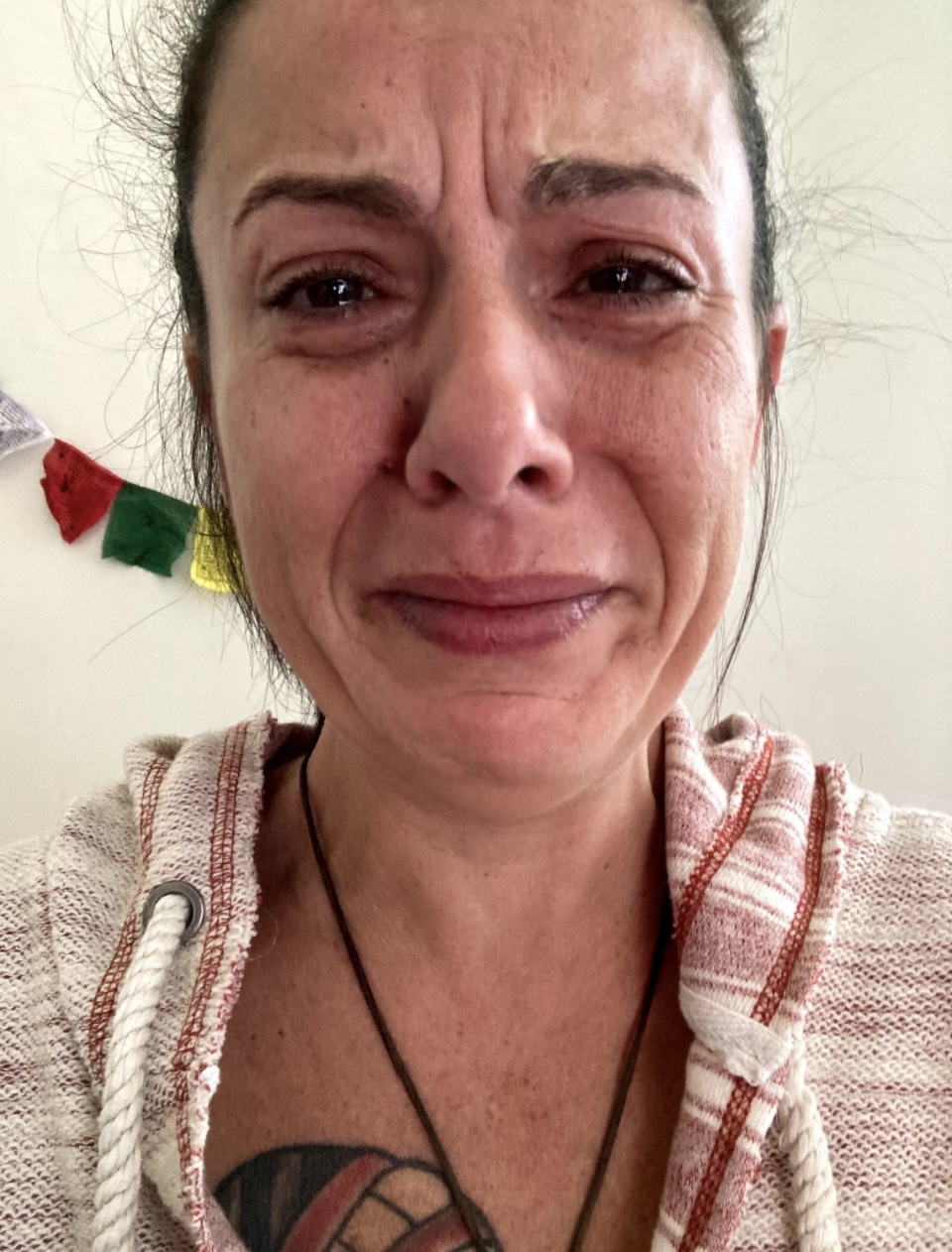
    I’ve always felt pretty in my face and hair. I had great hair when I was young; I still do, though I’ve put it through decades of heat damage straightening it. I’m now eight years post-menopausal, which has honestly been amazing—but it also comes with thinning skin and osteoporosis. The “pretty face” I once relied on now has deep, well-earned lines. Maybe too many for my 52 years. I’ve always worn my emotions on my face. I’m animated. If my mouth doesn’t say it, my face will. That expressiveness—through physical and emotional pain post-amputation—is permanently etched there. I try to frame them as wisdom lines, but it’s getting harder to look in the mirror. I just don’t recognize myself. Selfies are nearly nonexistent these days.

    Sexuality has also shifted. As a teenager and well into adulthood, I was very sexual. I enjoyed sex. I loved sex. One might even say I was promiscuous at times. But a couple of years before my amputation—and for a couple of years after—I was celibate. Since 2019, I’ve remained celibate.

    About two and a half years after my amputation, I jokingly referred to myself as a “born-again virgin.” I had never been intimate as a one-legged woman. Being without your leg—beneath or beside an able-bodied partner—is incredibly vulnerable. I was terrified. I wanted to do it. I felt I needed to do it. Lose that “born-again virginity” as an amputee.

    Thankfully, the person I chose was gentle and kind. I cried quietly because everything was different. He also cried. Positions I once enjoyed were painful or impossible. My body felt completely unfamiliar. The connection with him was brief, but necessary, and I’m grateful for it.

    The second—and last—person I was intimate with after my amputation was in 2019. That experience was somewhat traumatic. I was effectively trapped at his home, three and a half hours from mine, without a car. I didn’t learn he was schizophrenic until about two weeks in. I considered spending my last $300 on an Uber just to get home. I eventually managed to get home, but the experience shattered my trust in men.

    Since then, I haven’t dated. I don’t trust men—for many reasons. Sex feels complicated. Devotees exist. Disability fetishization is real. My libido is low, likely due to post menopause. My body image struggles remain, primarily because of amputation. If I had the right partner, I might enjoy intimacy again—but I don’t feel driven toward it.

    What I miss most is touch. Connection. Not sex itself.

    Ironically, my body image has improved since my amputation. It’s not healed, but it’s better. I currently weigh about 130 pounds without my prosthetic, which feels healthy for me. I’d still love another five or ten pounds—preferably in my hips, butt, and legs. In my dream body, I have a thick, curvy lower half. Instead, I inherited my father’s part-German build from the hips down.

    And finally, the truth I really haven’t confronted. I no longer believe that finding love is worth the pain. I’ve loved. I’ve been loved. I’ve lost love. Those experiences mattered, and I’m grateful for them. But I don’t believe love is worth the cost anymore. This, coupled with my less-than-desirable body image and distrust of potential intimate partners, keeps me single. 

    Then again… who knows? When you least expect it, right? Maybe I’ll be a fool and love again.

    Thank you for being here.

    Please like, comment, share, and subscribe.
  • The Lonely Death – The Kodokushi Phenomenon.

    The Lonely Death – The Kodokushi Phenomenon.

    Today I’m writing about kodokushi—a Japanese term that translates to “the lonely death.” It refers to a phenomenon in Japan in which someone dies alone in their home and isn’t discovered for days, weeks, or even months. These deaths are most often linked to social isolation, and Japan experiences an estimated 10,000 of them each year.

    I had never heard the word kodokushi until after my amputation, when—late one night—I Googled “dying alone.”

    Before proceeding, I want to clarify something important, as the words’ alone,’ ‘lonely,’ and ‘isolated’ are often used interchangeably. They are not the same.
    Isolation is objective. It’s a measurable social condition defined by a lack of contact, relationships, or support. It can be caused by physical barriers, health issues (mine), geography (also mine), or circumstance (again—mine). It can be chosen, imposed, or—like in my case—a little of both.
    Loneliness is subjective. It’s an emotional state: a feeling of emptiness or disconnection. You can feel lonely in a crowded room. This is not something I struggle with. I genuinely enjoy spending time alone.

    Being alone is simply a physical state—being by yourself. For many people, including me, it’s often a choice. Solitude can be restorative, reflective, even joyful.

    But here’s the complicated truth: being alone is a choice for me—and it also isn’t.

    What I miss is belonging. Not abstract belonging, but the everyday kind—the quiet knowing that you’re connected to someone in the rhythm of daily life.

    I have people I love deeply. My favorite person lives 1,300 miles away. Others live even farther. They care about me, check on me, and visit when they can. And yes, I live in “vacation land,” which helps. I belong to them. But in my day-to-day life, that sense of belonging is absent.

    When I look back over my 52 years, I realize I’ve only experienced that kind of belonging during a few limited chapters. I had it with my Grammy— and her house—for the first 14 years of my life; she was always a soft place to land. Later, I had it with my second husband, his family, and the children I raised and loved as my own. Altogether, those years add up to less than half of my life.

    Now I’m an amputee living in Maine—a state that lacks the diversity I grew up with in Washington, D.C.—and that disconnect feels sharper. My interests and beliefs don’t appear to align easily with the surrounding culture. I haven’t found the social connections I’m looking for. I rarely leave the house. I don’t socialize. I don’t go to bars. I don’t drink the way I once did.

    I drank just about daily from age 14 until about 41. That stopped when I lived at a yoga retreat center—and it stopped pretty much altogether after my amputation. I rarely drink anymore, and I certainly don’t get blacked out drunk anymore. Being drunk on a prosthetic leg is, frankly, just stupid. Period. That’s a blog post in and of itself. 

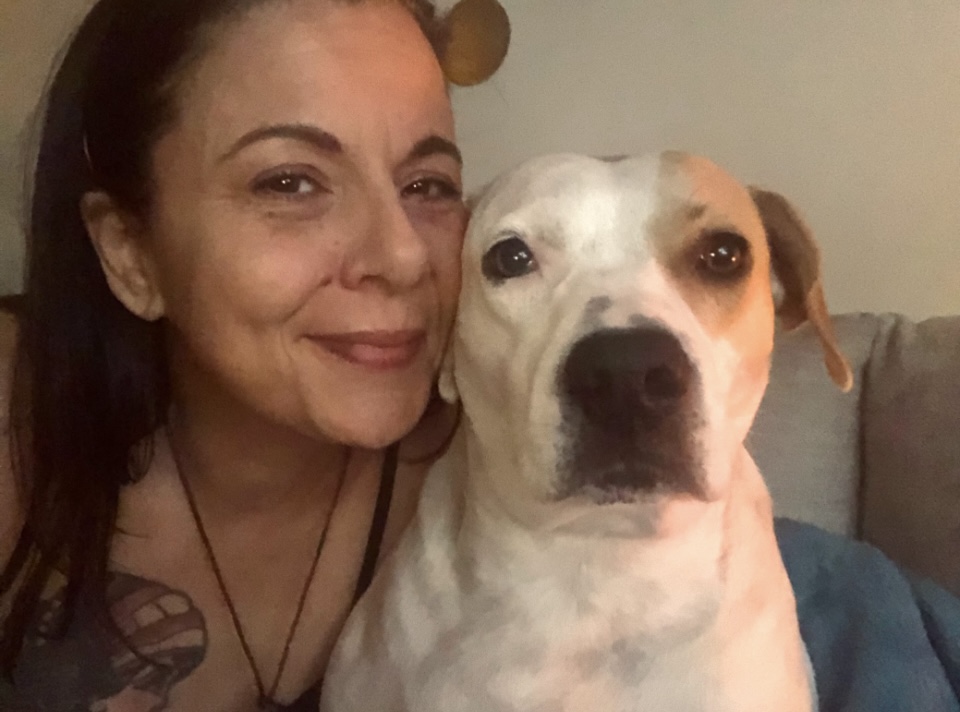
    These days, I mostly leave the house to be in nature with my dog, Honey Bea, or to do necessary shopping, which feels more like a chore than an outing.

    I also don’t trust many men, primarily because of amputee devotees. For the first seven years after my amputation, my prosthetic was always visible. I had to cut my pants to accommodate it, which meant anyone who flirted with me felt suspect as hell. Is he interested in me, or does he have a fetish?

    That distrust kept me from dating.

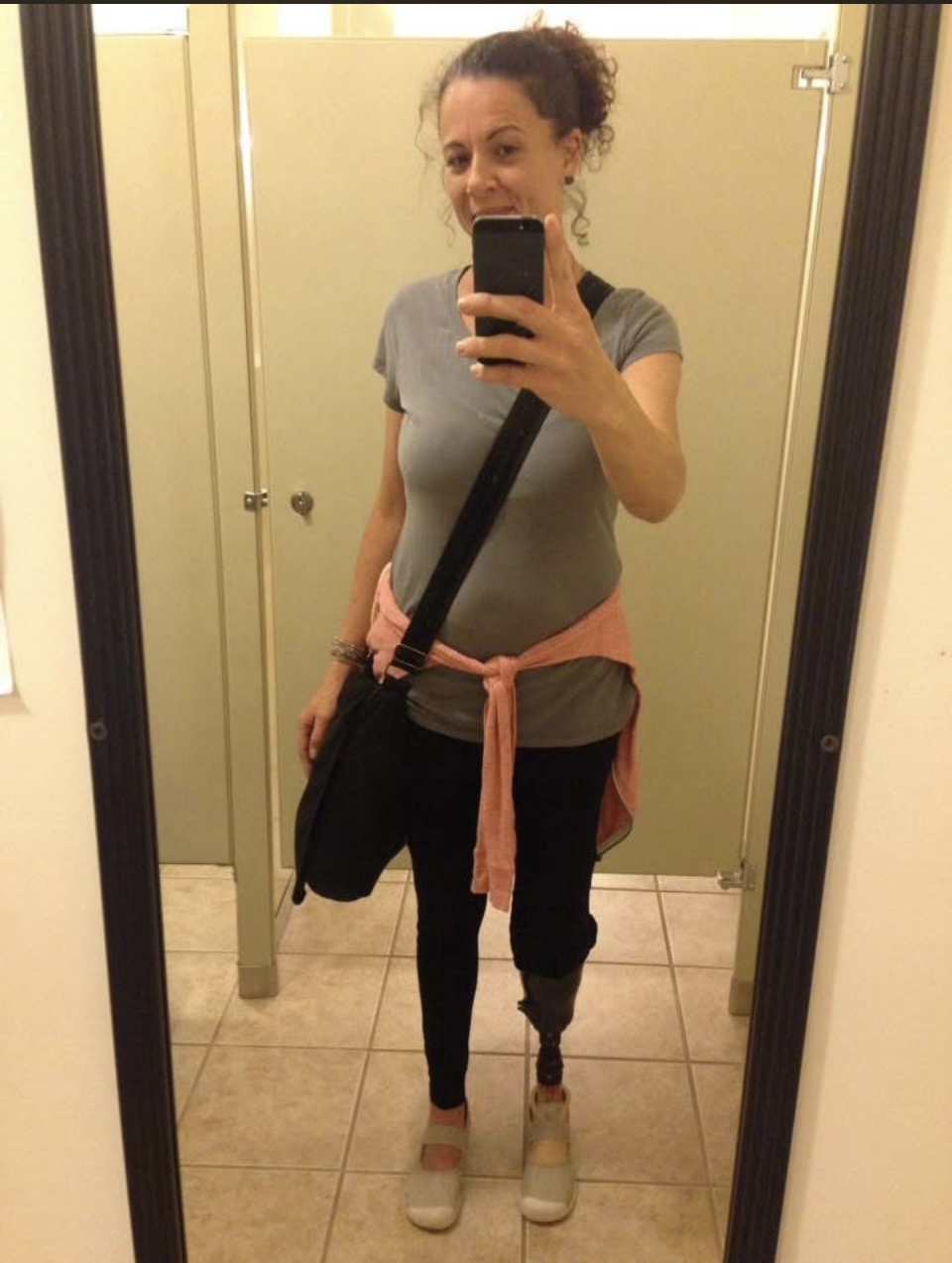
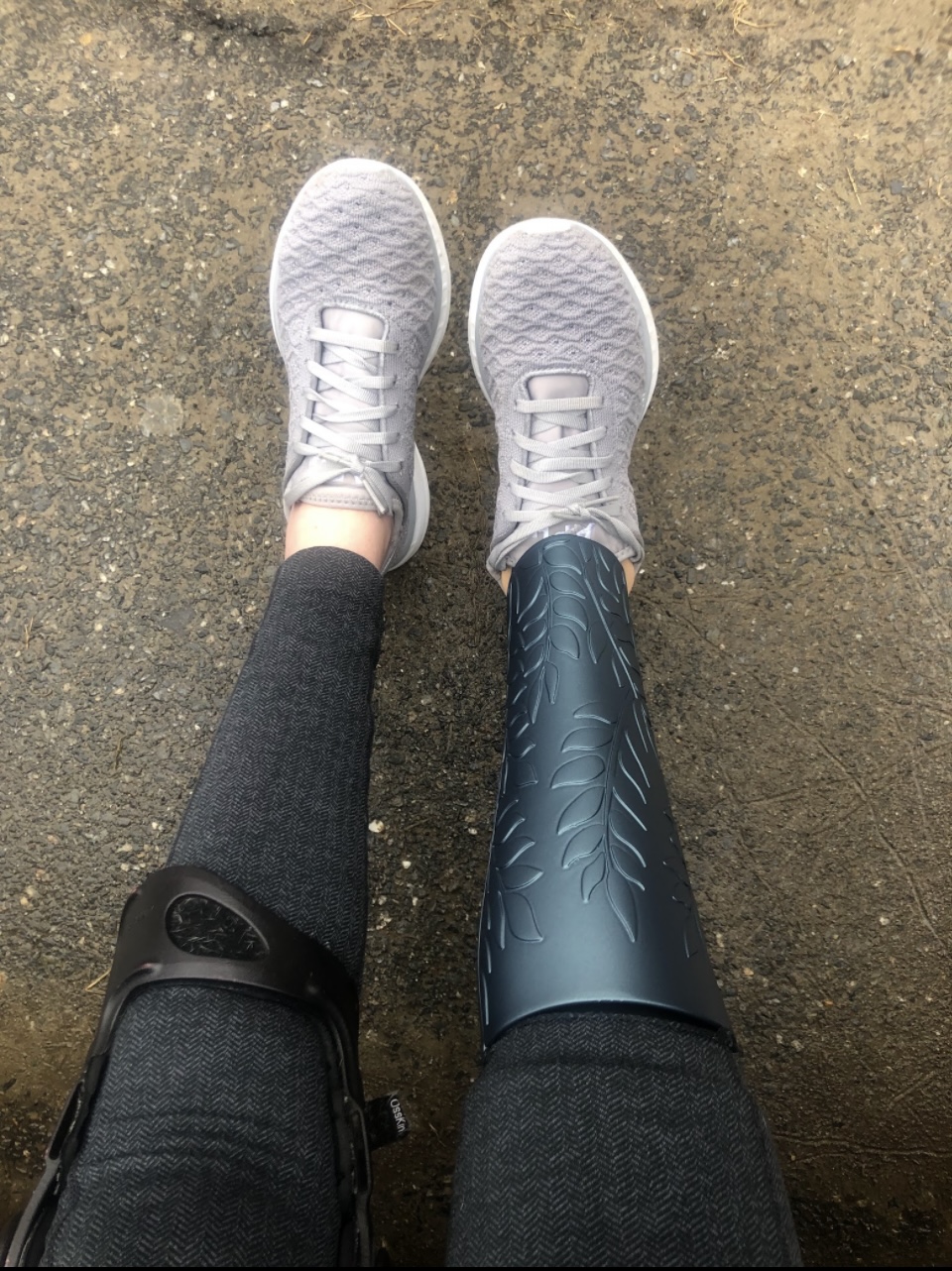
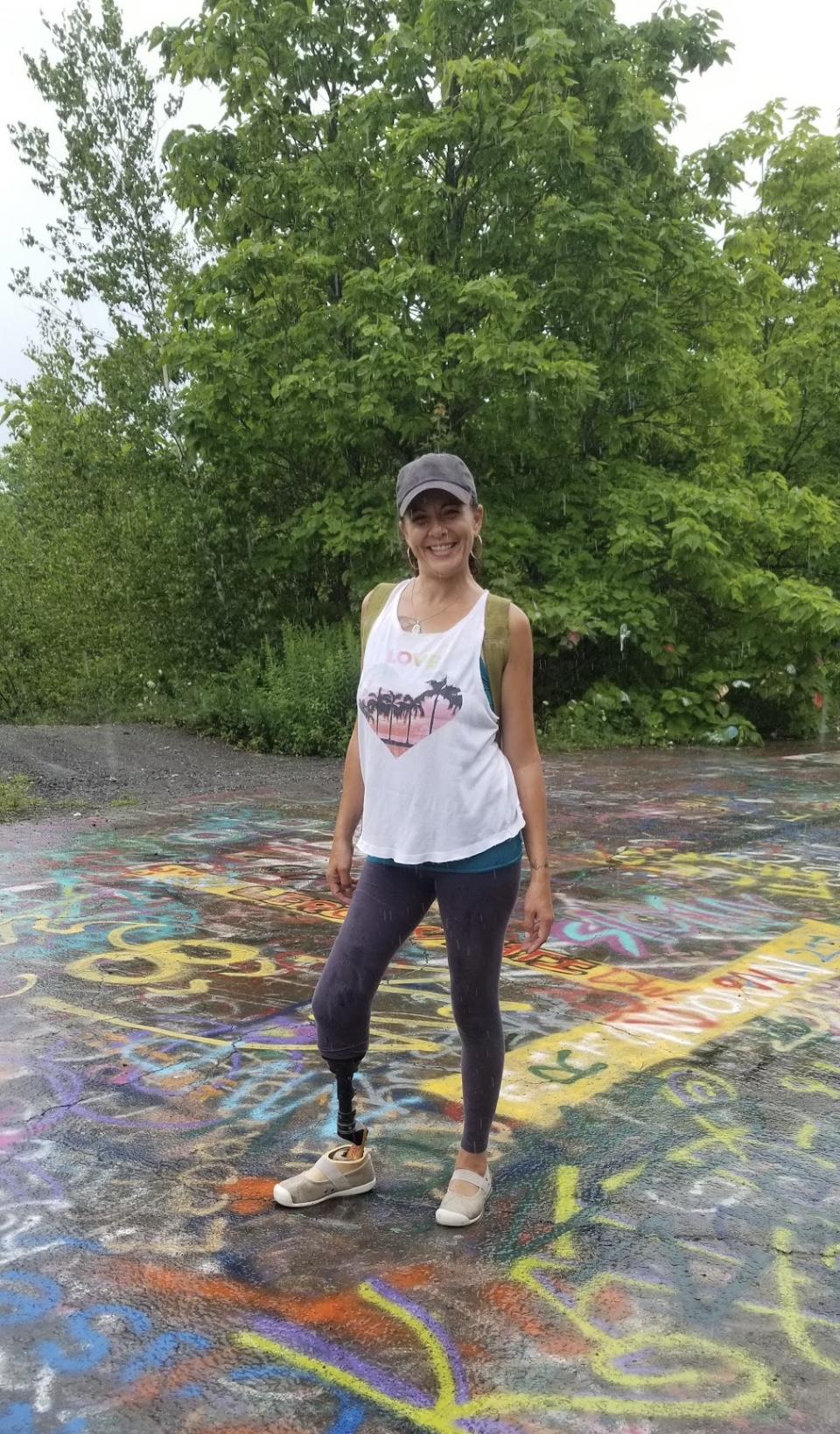
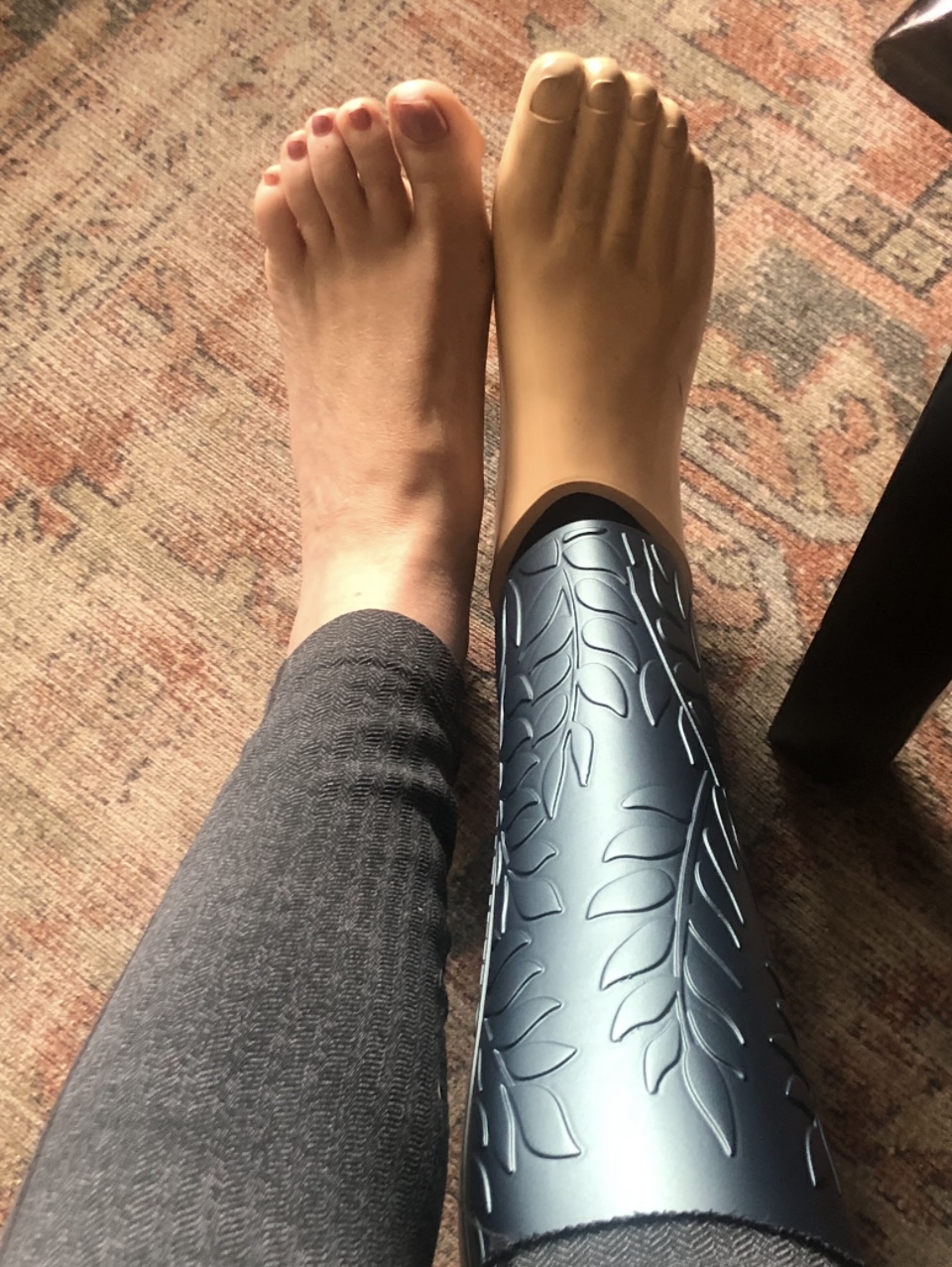
    In 2023, I finally got a cosmetic cover for my prosthetic that matches the shape of my intact leg. I no longer have to cut my pants. Most people don’t realize I’m an amputee—especially in winter, with boots and jeans. Even in summer, when I wear long skirts or dresses (I don’t wear shorts), people often don’t notice. It still amazes me. And now, if someone flirts, I don’t immediately feel distrustful. That has been really nice. Even though I still haven’t dated anyone.

    I don’t work anymore. My last job was in 2019 at Wolfe’s Neck Center for Agriculture and the Environment in Freeport, Maine. I loved it. I worked seasonally at the farm store and connected with people. Then 2020 happened. The farm store closed that year, and I moved.

    Since my amputation, I’ve had repeated Lyme infections. Three to be exact. Chronic pain, post-Lyme syndrome, osteoarthritis, COPD, and sheer exhaustion have significantly limited my ability to engage with the world.

    So here I am: objectively isolated.

    And because of that, I live with an ongoing fear of dying alone in my apartment and not being discovered.

    Realistically, I think it would take a week or two, which is far too long. I now see my CPTSD therapist every other week instead of weekly because I’m “better.” My coping skills are better. But it also means there’s a longer gap before someone would notice my absence.

    I’d like to believe my neighbors would notice. I just don’t know that they would. “Like a good neighbor, stay over there!” 

    I don’t fear death itself. What troubles me is the aftermath—the idea of someone finding my body days or weeks later. And the thought of my dog, Honey Bea alone with me after I’m gone. She isn’t a barker. Would she be forced into the unthinkable just to survive?

    That fear is real, and I live with it. It doesn’t consume me as much as it did, but it’s still a fear.

    Social isolation has well-documented health impacts. It’s linked to physical decline, cardiovascular disease (thankfully not an issue for me, despite my father’s history), and a significantly increased risk of dementia. I don’t know my genetic risk. My Grammy died young. I’m estranged from my mother and have no insight into her cognitive health. My father died in 2011, and I know nothing about his family or genetic history besides his stroke and heart disease. 

    Isolation also affects mental health. Even without loneliness, studies show it can contribute to depression, anxiety, and a sense that life lacks meaning.

    I don’t feel that life lacks meaning.

    I believe life has profound meaning. I believe our souls choose each existence to learn specific lessons—and if we don’t learn them here, we repeat them in the next. Despite everything I’ve lived through—trauma, loss, grief, suffering—I believe there is purpose beyond all of that in being alive.

    I hope that through this blog, through finally finishing my memoir, and—Universe willing—publishing it before I leave this existence, I’ll find connection. Belonging. I’m also actively pursuing volunteer opportunities that may help bridge that gap.

    And maybe, in doing so, I’ll silence the fear of the lonely death.

    Fear is a liar… right?

    Please like, comment, share, and subscribe to my blog. Thank you for being here.

    2 responses to “The Lonely Death – The Kodokushi Phenomenon.”

    1. Tristan Burgess Avatar
      Tristan Burgess

      I appreciated reading this, thank you so much for sharing your experience and perspective. I resonate with what you wrote here “I believe life has profound meaning. I believe our souls choose each existence to learn specific lessons—and if we don’t learn them here, we repeat them in the next. Despite everything I’ve lived through—trauma, loss, grief, suffering—I believe there is purpose beyond all of that in being alive.” and I can see the impact that your time in retreat has done for you.

      I see that you live in Maine, if you’re ever interested in making a trip to the Jetavana Thai Forest Buddhist monastery in Temple, NH, I think you would like the vibe and talking to the monks and community there a lot. It’s a wonderful place to do a retreat as well.

      Liked by 1 person

      1. Jenna Rivera Avatar

        Thank you so very much for your thoughtful and kind comment. I’m grateful for your presence here. I would absolutely love to visit the monastery. I just looked it up and it is absolutely beautiful!

        Liked by 1 person

    Leave a reply to Tristan Burgess Cancel reply

  • Devotees and BID and Social Media, Oh my!

    Devotees and BID and Social Media, Oh my!

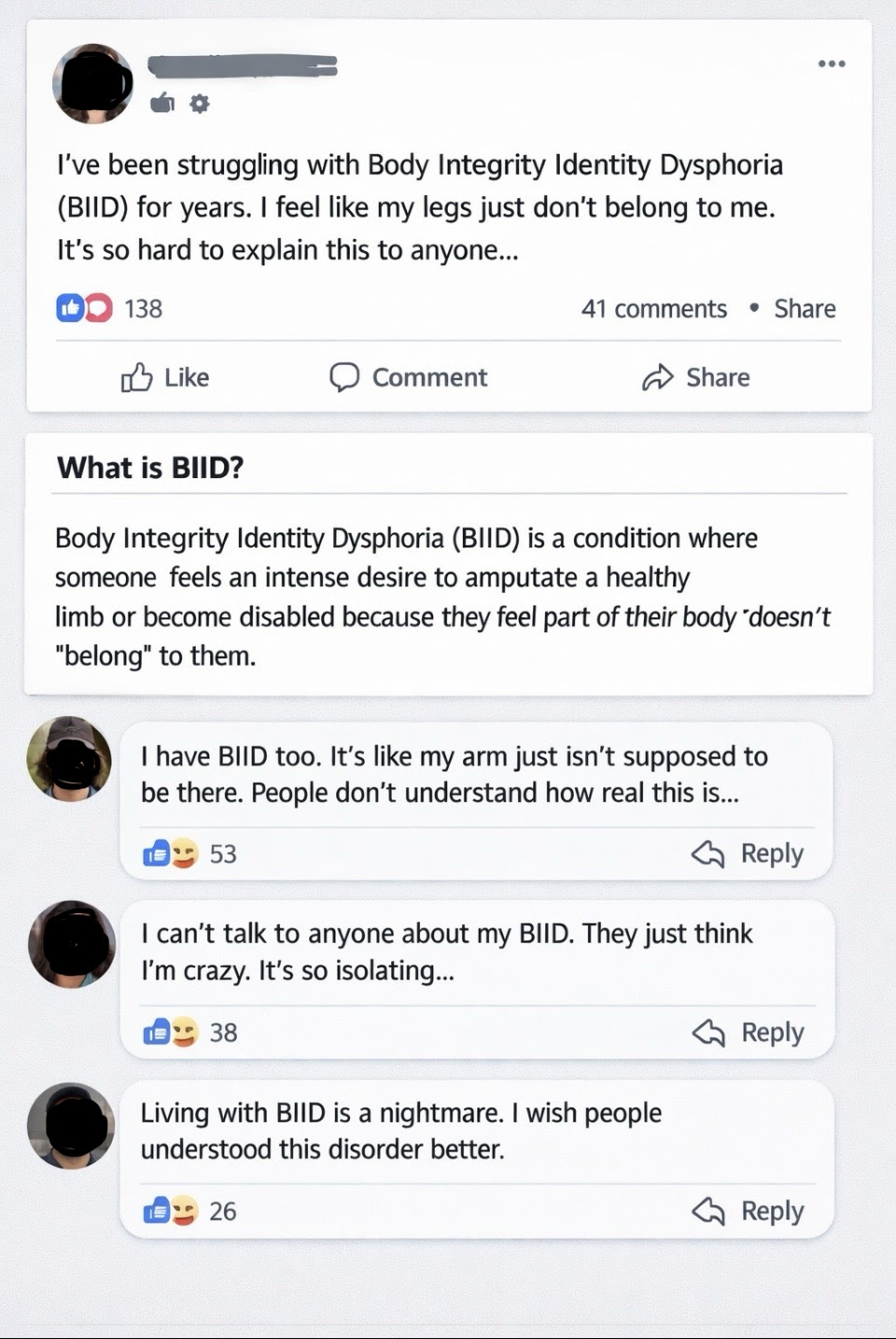
    Today I want to write about amputee devotees and people who experience Body Integrity Dysphoria (BID), sometimes referred to as BIID—Body Integrity Identity Disorder.

    In 2017, about nine months after my amputation, I decided to create a YouTube channel connected to my Instagram account. I hadn’t been very active on Instagram—my last real post before that had been in 2014—but a few months after my amputation in 2016, I began posting again. By 2017, I launched a yoga-focused YouTube channel centered on being an amputee practicing yoga.

    I started uploading videos of myself doing asana with one leg, without a prosthetic, and with my prosthetic. To my surprise, these videos gained thousands of views. My Instagram following grew, and I began receiving emails through my YouTube channel.

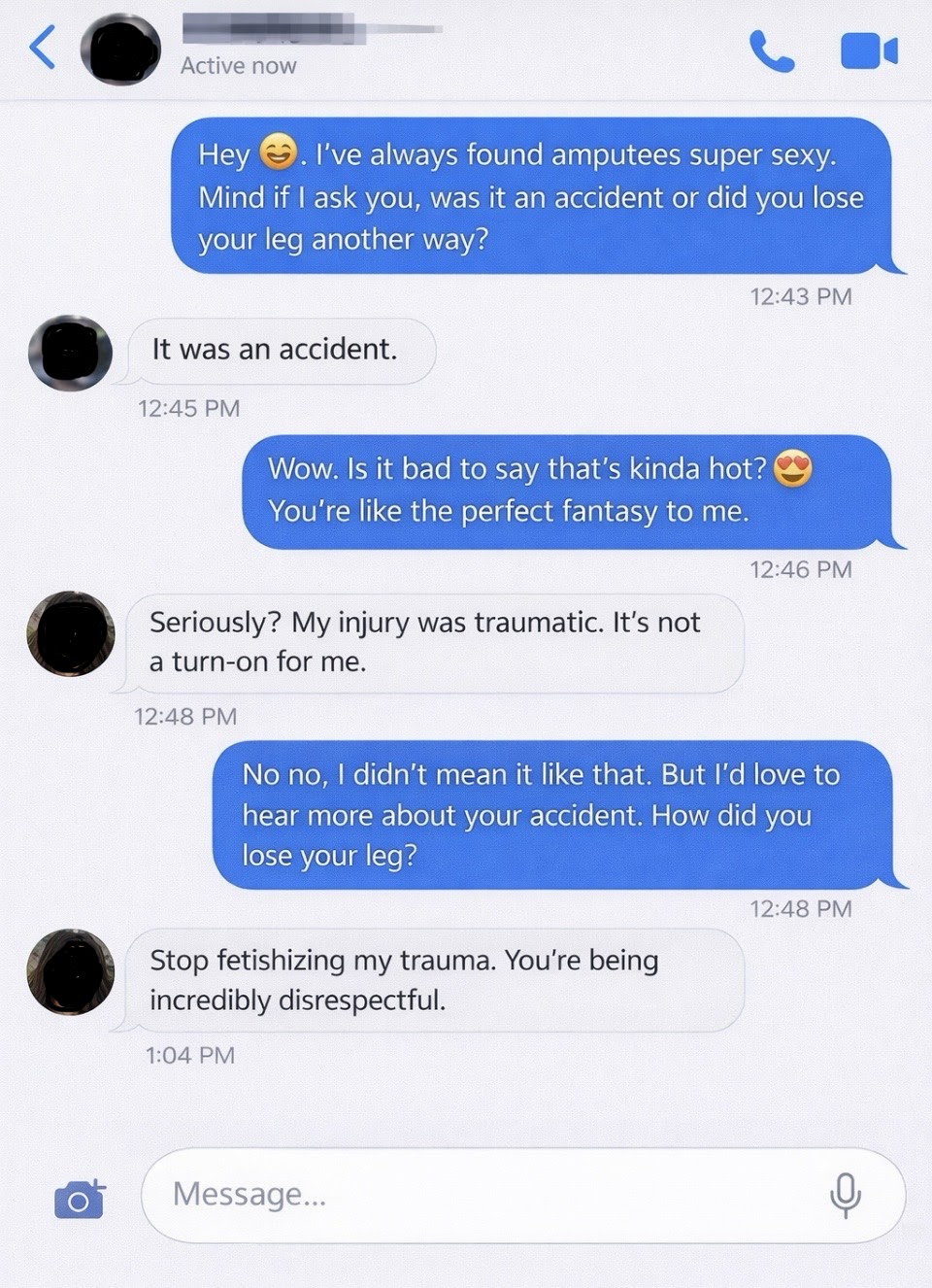
    That’s when I encountered something completely new to me: “devotees.”

    Until then, the only context in which I was familiar with the word “devotee” was religious, specifically in Hinduism. I had no idea the term was also used to describe people who are sexually attracted to amputees and people with debilitating physical disabilities. Very quickly, I was introduced to the world of amputee devotees through unsolicited emails offering significant amounts of money for custom videos meant to satisfy their fetish.

    At first, I was shocked. Then briefly conflicted. Then angry.

    Some of the requests were deeply unsettling and completely at odds with why I had created my platform in the first place. I wasn’t there to be sexualized. I was there to share movement, healing, and life after limb loss.

    Soon after, devotees began appearing in my Instagram messages as well. At the time, my profile was public, and I believed I was connecting with fellow amputees or people seeking inspiration. Instead, I learned that a devotee is someone with a sexual attraction to amputees—a form of attraction often referred to as acrotomophilia.

    As I dug deeper, I learned there are entire fetish subcultures centered on limb difference, often framed as “artistic” or “erotic.” These portrayals overwhelmingly focus on women. While I’m sure male amputees are fetishized as well, the imbalance is noticeable.

    Around the same time, another group began reaching out to me: people with Body Integrity Dysphoria.

    I didn’t know the term then, but I later learned that BID is recognized in the International Classification of Diseases (ICD), though it is not listed as a diagnosis in the DSM-5-TR (the diagnostic and statistical manual of mental health disorders). One reason for this is the profound ethical dilemma it presents—particularly around whether elective amputations should ever be considered as treatment.

    BID involves a distressing mismatch between a person’s mental image of their body and their physical body. Someone with BID may have healthy limbs but feel that they are “not supposed to be there,” and may believe they would feel complete only as an amputee.

    As someone who lives with CPTSD, anxiety, depression, and OCD, I have deep empathy for people who suffer from mental illness, even though BID is not officially considered a mental illness; to me, it most certainly is. I believe BID is real, rare, and profoundly distressing. There is limited research, unclear causes, and ongoing exploration of possible neurological links. I have compassion for anyone living with that kind of internal suffering.

    That said, my compassion has limits—especially when people with BID reach out to me on social media without disclosure or consent.

    Many of these messages came from men overseas who asked how I lost my leg and then went on to describe, in detail, their desire to amputate their own healthy limbs. Some described plans to intentionally injure themselves to force medical amputation.

    I was horrified.

    I didn’t ask to be involved in anyone else’s dysphoria or fetish. Being confronted with these messages—unsolicited—was deeply upsetting. I didn’t want to know these details, and I certainly didn’t want to be positioned as part of someone else’s fantasy or psychological distress.

    At the time, social media communities often referred to people with BID as “wannabees,” a term I found troubling but also reflective of how invasive and relentless the messaging became. The longer I stayed visible online, the more I was bombarded.

    Here’s where I draw a firm line.

    I can hold compassion for mental illness while also saying this: it is not appropriate to contact amputees—many of whom lost limbs through trauma—and ask them to relive that trauma for your curiosity, dysphoria, or sexual interest. It is not acceptable to frame limb loss as something enviable or celebratory to people who never wanted to lose their limbs.

    I also don’t believe in kink-shaming. Attraction is complex, and people are allowed to have preferences. But there is a difference between private attraction and actively fetishizing a marginalized group—especially when that fetish is imposed directly and without consent on the very people it objectifies.

    When a disability becomes the sole focus of sexual interest, when boundaries are ignored, and when amputees are reduced to objects rather than people, it crosses a line.

    Do what you do. Live your life. Seek help.

    But do not involve unwilling participants—especially those whose bodies and lives have already been shaped by loss, trauma, and survival.

    Some things do not need to be shared. And they certainly do not need to be shared with the object of someone else’s fetish or dysphoria. 

    This is the reason I deleted my YouTube channel. I also took a six-year break from Instagram, and I’ve just recently returned. I have weeded through my followers and deleted those who were not respectful of my boundaries.

    Please like, comment, share, and subscribe to my blog. Thank you for being here.

    6 responses to “Devotees and BID and Social Media, Oh my!”

    1. Joe Schreiber Avatar
      Joe Schreiber

      thank you for sharing this. I am also in the reddit amputee group and lost my legs, one at a time, due to crps and mrsa. I am a middle-aged man but get contacted every once in a while by devotees. they are easy to spot quickly, at least as they approach me. i’m not as visible right now online, so they ask bizarre questions. I thought it was somewhat harmless at first, too, but found them to be obnoxious very quickly. I imagine it is far worse for women and some young men, who are the main focus (women more so). I don’t know what to say about BIID. life as an amputee is not fun, especially when you can barely use your legs like me, and they are in constant pain. people with BIID also made it very difficult, indirectly, for me to get my first leg off, when it was destroyed by crps, but I kept getting questions about why I wanted it off. not a fetish, it was nonfunctional and exceedingly painful. thank you for writing. it is a joy to read.

      Liked by 1 person

      1. Jenna Rivera Avatar

        Thank you for your comment, support and for sharing your experience.

        Liked by 1 person

    2. Steve Cragg Avatar
      Steve Cragg

      Hi Jenna, thank you so much for this post. I want to say that I agree with it almost 100%, but I would argue that being a “devotee“ of amputees does not mean that the attraction is purely sexual. Ashamedly, I have been a “devotee” for a very long time, and I have struggled with it my whole life. I don’t understand it, and I have been to numerous counseling sessions, trying to understand and read myself out of it, but it stays with me. The biggest question I run through my mind is “how dare I find something attractive that has been such a traumatic incident for someone else?

      Many are similar to me, who do not care about the trauma losing a limb may have caused a person, and they go full-bore into satisfying their sexual urges. But I want to let you know that many, many admirers are not like that—those who are very respectful of women and do not solicit them for personal gain.

      As a heterosexual man, I am also attracted to many other things about women. I love blonde hair and blue eyes, and I also think the glow of a pregnant woman is one of the most beautiful things in the world, but similar to my attraction to amputees, I don’t just walk up to somebody I don’t know and ask to stroke their hair or touch their belly when they are pregnant. There’s a boundary of respect and compassion that needs to be observed at all times, and unfortunately, it is not always observed.

      Usually, something initially attracts a person to the other person. Something that fancies their interest or gets their attention quickly, and for many men, a person who is significantly different limb-wise is one of them. That is not an excuse for a person to feel like they are entitled and start sexualizing those objects.

      I’m so sorry that you have had to go through this.

      Liked by 1 person

      1. Jenna Rivera Avatar

        I sure hope that was a typo; “Many are similar to me, who do not care about the trauma losing a limb may have caused a person”. I think and hope you meant, The trauma isn’t what attracts you. I don’t think sexual attraction has to be sexual arousal, but the general definition of acrotomophilia is a sexual attraction; sexual attraction is a desire for sex driven by a combination of biological and psychological factors. It often manifests as physical arousal, lust, fantasies, and urges. As you described finding blonde, blue eyes and pregnant women attractive. I want to understand why you used the word “ashamedly”, why are you ashamed if your attraction isn’t sexual in nature? Truly curious. This is a safe place. Thank you for your comment and being vulnerable.

        Liked by 1 person

        1. Steve Cragg Avatar
          Steve Cragg

          I should always proofread better! I meant to say “many who are similar to me do not care about the trauma…”

          As far as the reference to shame, I was trying to convey that I am ashamed that my attractions cause others, such as yourself, to feel hurt or victimized or any other way than what you are comfortable with. Whether it’s sexual or not, I get upset that my attractions, desires, etc., would ever cause another human being distress or discomfort. And finally, yes, there IS a sexual component to the attraction,  but there are many other components, and sexuality is not always the primary one.

          Thank you for taking the time to respond to me and read what I said! Sorry for the typo!

          Liked by 1 person

        2. Jenna Rivera Avatar

          I don’t think it was a proofreading issue. I think I know what you mean, but it reads as if you and other devotees don’t care about someone’s trauma in general. As if you and others have zero empathy for someone who has suffered trauma. But what I think you mean to say, is that you and other devotees are not attracted to the amputee’s trauma. When I proofread my writing, I like to read it aloud, to see what it sounds like. I may know what I mean, but does the person reading know what I mean? Either way, I am glad you’re here, reading my work and contributing from your perspective. Thank you.

          Liked by 1 person

    Show some LOVE

  • No Witness

    No Witness

    If no one is there to witness your struggle, is it real?

    Imagine going through an amputation completely and utterly alone. No one to hug you. No one to hold your hand. No one to witness your struggle. No one to hold you while you grieve. No one to comfort you in pain. No one to bring you a glass of water. No One – literally. Not metaphorically. Not the loneliness you feel while surrounded by people, but the stark fact of objective reality. THERE IS NO ONE HERE!

    For about nine months before my amputation in May of 2016, I was living in a selfless service program, working in the café at a yoga retreat center. I didn’t earn an hourly wage; instead, I received a small stipend, as it was considered a school. In exchange, I lived in a small dorm room in the women’s wing of the ashram.

    In February of 2016, after a bone scan through nuclear medicine, I learned that I had osteomyelitis, a serious bone infection that required amputation. My last surgery was in 2012, when I had a total ankle replacement and most likely when the osteomyelitis originated.

    I chose a surgery date in May, which gave me about twelve weeks to get my life in order. I needed to move. I needed somewhere accessible and affordable, since I had been on Social Security Disability for about six years and had minimal income.

    The housing I found was about 55 miles away from the people who had become my community at the ashram/yoga retreat center in the Poconos. It was a double-wide modular home that had been divided into two apartments. I lived in the back unit, which was the original primary bedroom with an attached bathroom. That room functioned as both my bedroom and living room, and I had a small, charming kitchen. I loved the space. The only downside was the distance from my new people.

    At that time, I had been estranged from my mother for about five years and had no contact with her. Our last interactions included phone conversations in which she told me she wished I were dead because life would be easier. We stopped speaking entirely. My younger sister and I were also no longer in contact. To this day, I don’t fully understand why. I know my volatile relationship with our mother put her in a difficult position, and I understand her loyalty to our mother since she has always been close to her. However, I still struggle with the sense of abandonment.

    I was also without my second husband, though we were still legally married; we had been legally separated since 2013. I hadn’t seen or had any contact with my (step) children in over a year by the time of my amputation.

    During the twelve weeks leading up to surgery, I had extraordinary support from an older holistic pharmacist and his wife, who helped prepare me physically, emotionally, and spiritually. They gave me loving parental comfort. The surgery and recovery were the smoothest I had ever experienced: no infections, no complications, which was remarkable given my long history of surgeries with complications and infections. Unfortunately, that relationship imploded while I was still in the hospital over the use of cannabis for pain management.

    Leading up to the amputation felt like a doomsday countdown, even though I was ready to let go of the trauma, pain, infections, and toxicity associated with my leg. I had faced the possibility of amputation three times over the previous twenty years. By this point, I had been mentally ready for it for several years, and the timing felt right.

    Despite the complexity and loss surrounding that period, it was ultimately a beautiful experience of release. Still, the fear leading up to it was intense. Everything I thought I knew about amputation after twenty years of research turned out to be completely wrong.

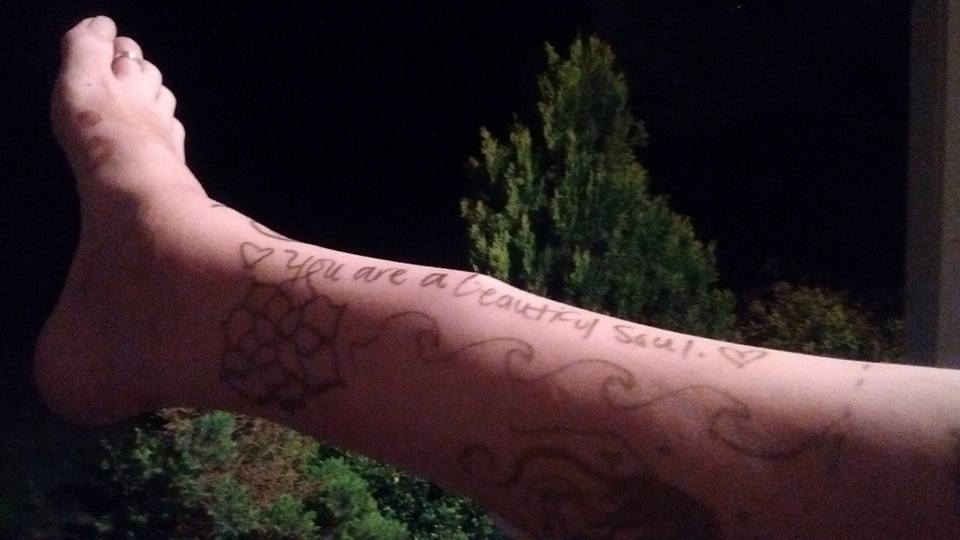
    The night before surgery, I had a wonderful dinner with friends. We drank, laughed, smoked cannabis, and covered my leg with drawings, jokes, words, and sacred geometry. It was joyful and meaningful. I stayed that night with my favorite person.

    The next morning, Thursday, May 12, the older couple picked me up and drove me forty-five minutes to the hospital for the scheduled below-the-knee amputation of my right leg.

    I remember being taken back to surgery prep. I sat on the bed and held my tiger iron crystal; my favorite person gifted it to me, which went into surgery with me as a “religious talisman” and was placed under me during the amputation. I sat and had the most beautiful meditation before getting IV’d and all the pre-surgery procedures. This surgery was the best surgery I’d ever had—and by that point, I’d had dozens. Every prior surgery had come with complications and infections; this one didn’t. I truly believe that the drastic lifestyle changes I made beforehand, along with the support of the holistic pharmacist and his wife, made an enormous difference in my physical healing.

    Before the amputation, I did a long cellular healing hypnosis session that lasted for hours. It wasn’t recorded, so I don’t know exactly what happened during it, but I know it mattered. I also did bioacoustic healing with a budding practitioner at the yoga retreat center where I was living. I healed beautifully. My surgeon did an excellent job, and I was only in the hospital for six days.

    Three days post-amputation, I wanted to come off morphine. I had warned everyone in my life long before that morphine made me a nasty human being. My amputation was on a Thursday, and that Sunday, I told my nurse I wanted to stop taking it. She was at her portable computer, typing, and whipped her head around and said, “Are you sure?” I said yes.

    She suggested Dilaudid, and I told her no—that it was one of my allergies. She laughed and said she would have known that before giving it to me, since it was clearly listed in my chart. Dilaudid causes me anaphylactic shock—my throat swells, I can’t swallow—and it’s terrifying. She asked what I wanted instead, and I said Vicodin. She didn’t think it would be enough. I told her it would be, that it affected me the way morphine should, and that I was a much nicer person on it.

    So I switched to Vicodin. I was still receiving blood thinner injections in my stomach. None of it helped with the phantom itching (the worst), stabbing, electricity (think high voltage taser), all my new life-mates. All unbelievable mind fuckery!

    I was still on my husband’s Department of Defense health insurance—we were legally separated—and while I was still heavily medicated, a woman came into my hospital room and essentially sold me on a rehab facility. It felt like a sales pitch. She left me a brochure, and I agreed to go because it was close to the yoga retreat center, so my people could visit.

    Six days post-amputation—Wednesday, May 18—I was transported to the rehab facility in an ambulance-like transport van. When I arrived, I asked for a walker. They gave me a walker with no wheels and walked me a long distance to the back of the building, where my room was.

    It was a shared room. When I looked into the shared bathroom, I was horrified. There was feces smeared everywhere—on the walls, the toilet, the sink. I asked what the hell I was looking at. They told me my roommate was a “known feces smearer.”

    INCREDULOUS! I was six days post-op from a below-knee amputation. I was not staying there! I started hopping toward the front desk using the walker, furious, shocked, and disgusted. At the desk, they told me that if I left, it would be against medical advice, and my insurance might not pay. I told them I hadn’t signed a single piece of paperwork and had been there for seven minutes—they couldn’t bill anything.

    I asked where I could smoke. They said I could smoke in the grass near the field by the road, but I wasn’t allowed to take the walker off the porch. So I left the walker behind, hopped into the grass on one leg, and scooted myself on my butt about a hundred feet into the field. Thankfully, it was May.

    I called and texted my favorite person and a few others. My favorite person couldn’t get to me for about three hours due to work. I sat there rolling lavender, mullein, and lobelia cigarettes, desperately wanting nicotine. I had quit smoking to help my bones heal—something I’d never done before any previous surgery.

    When he finally arrived, he was panicked. I had no walker, no crutches, nothing. I hadn’t been formally discharged—I’d been transferred from the hospital to rehab, where I was supposed to receive mobility equipment. I got none of it. I made him stop anywhere so I could get a pack of cigarettes. I was not ok.

    We went back to the hospital where I had just been discharged, looking for some type of mobility device. No one would give me a walker or crutches. To this day, I’ve never officially complained about any of it, though I probably should—even nearly ten years later.

    Before my amputation, I’d attended one amputee support group, but I’d been turned off by the political tone and lack of supportive energy. Still, I called the group leader and explained what had happened—that I was going home instead of rehab and had no mobility aids. He said, “I’m bringing you a walker.” And he did. That small act was life-saving.

    We returned to my apartment, which wasn’t ready for me at all. Area rugs were everywhere. My favorite person rolled them up, cleared paths, and set me up as best he could. Later, he told me that night was the most scared he’d ever been for me, leaving me alone, fifty-five miles from anyone, with no car, no license, no neighbors I knew, no groceries, and no leg! I wasn’t supposed to be home yet. I was supposed to be in rehab for weeks.

    He eventually left, and I was alone—this was before grocery delivery, before Zoom, before all the systems people now rely on. I had no contact with the holistic pharmacist and his wife since 3 days post-op in the hospital, which made me very sad. It was just me, freshly amputated, figuring out what the fuck to do, completely and utterly ALONE!

    I have lived alone six days after my amputation, almost ten years. No witness to the highs and lows, no comfort from another human, no help—no one. The first seven months were the hardest. I often went, on average, two weeks without a visitor because my apartment was far from my friends, many of whom did not have cars. I suffered a fracture on the fibula of my residual limb, five weeks to the day post amputation, which complicated everything, including fitting a prosthetic. I was going through full menopause, divorce, and amputation all alone and simultaneously. Those months changed me profoundly: I was transformed through a combination of grace and grit.

    Please like, comment, share, and subscribe to my blog. Thank you for being here.

    2 responses to “No Witness”

    1. colorfulprincess94a48efb09 Avatar
      colorfulprincess94a48efb09

      It’s incredible what you have accomplished while healing from your amputation. I have been in awe of you since the first time I came across your IG account and we became friends. You are one of the strongest people I know. Your ability to hold every emotion and move through it is masterful. Thank you for all that you have taught me 🙏

      Liked by 1 person

      1. Jenna Rivera Avatar

        It’s a beautiful experience to have a reciprocal friendship full of support, compassion, generosity and genuine love. Thank you for showing me that. I love you, dear friend.

        Liked by 1 person

    Show some LOVE

  • 30 years ago…

    30 years ago…

    The Blizzard of January 1996 crippled the Washington, DC area with about 20 inches of snow. January 16, 2026 will be the 30th anniversary of the events that occurred that day.

    It’s strange how the perception of events in your life evolves as you age. But this day is seared in my memory. January 16, 1996, is a date I’ve thought about nearly every day since. I was 22—beautiful, smart, and trapped in an unhealthy, toxic marriage to my first husband. We were “on a break,” as we often were.

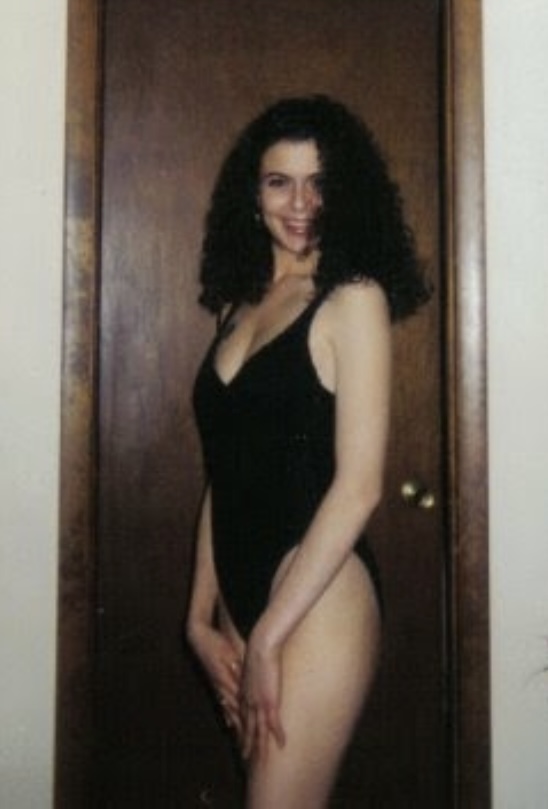
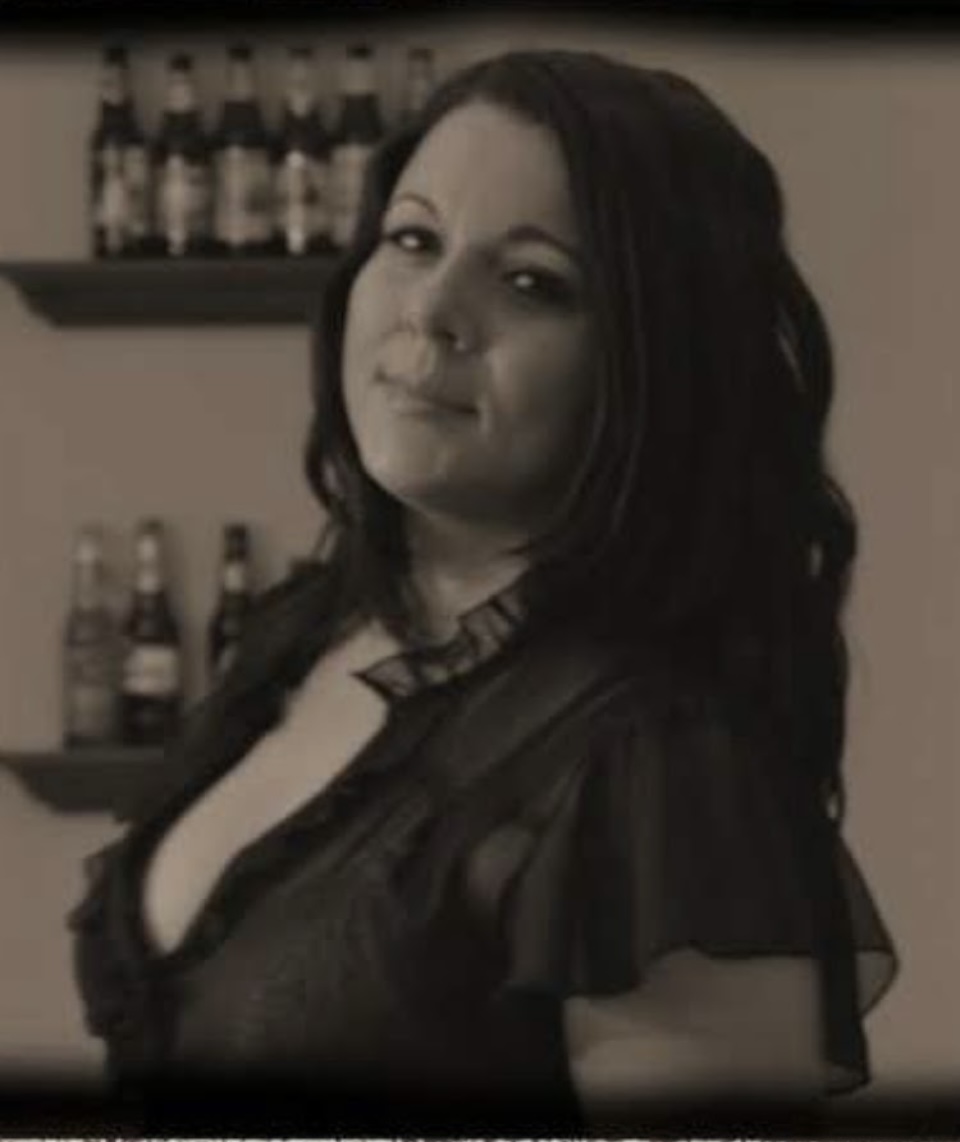
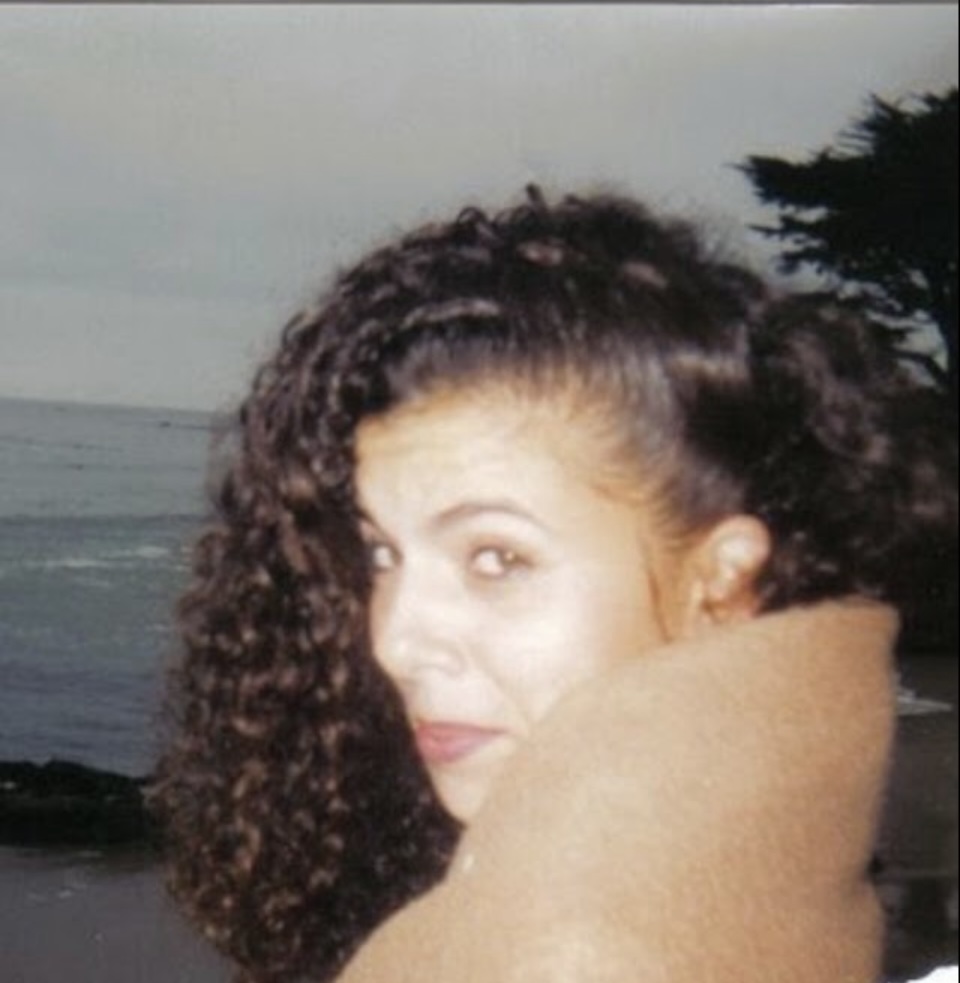
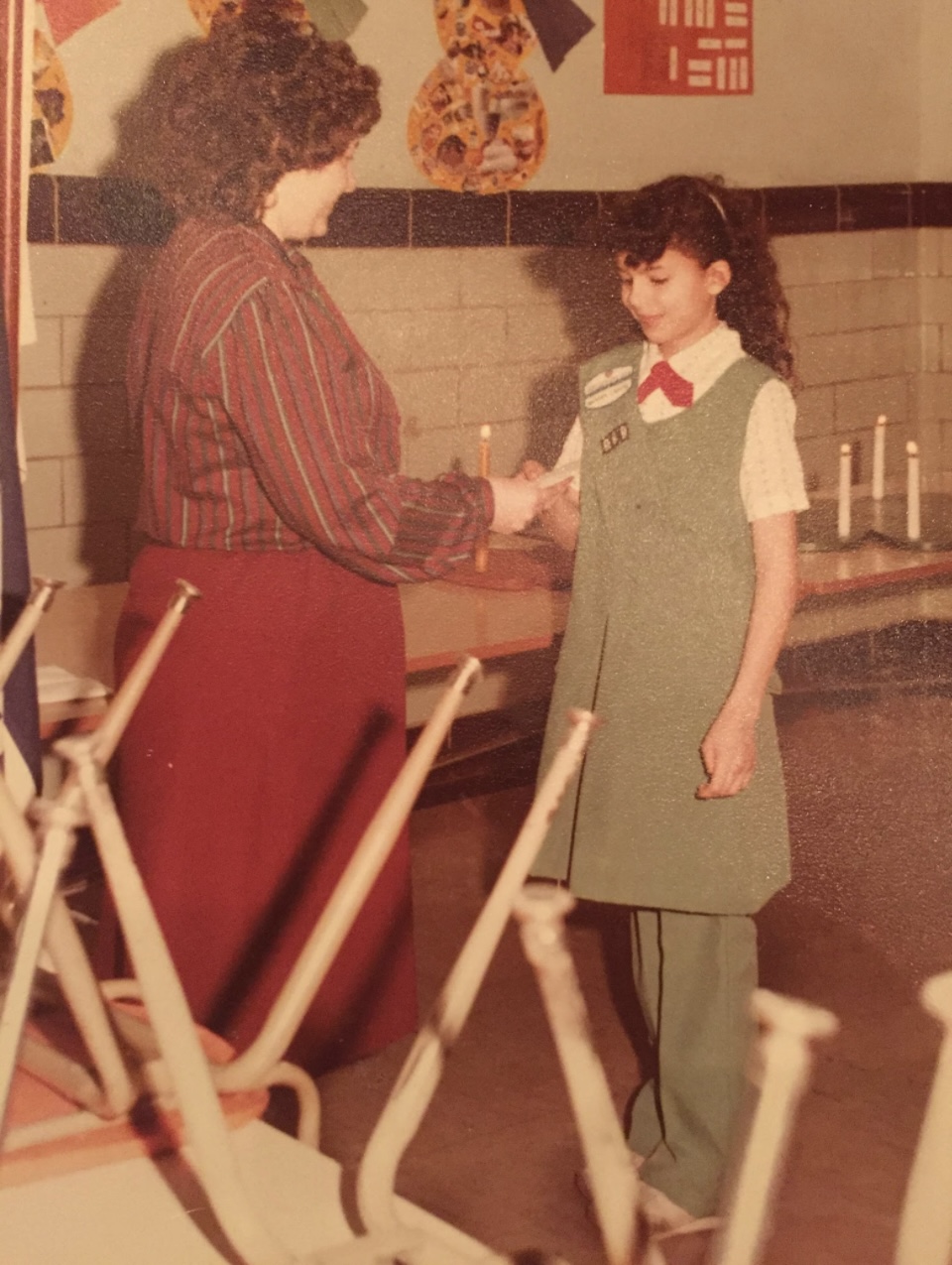
    One of the only photos I have of myself at 22 years old.

    I was staying about 30 miles away at my ex-stepsister’s house, helping care for her newborn son. She was struggling badly with postpartum depression, and I loved and still love babies. I wanted one desperately. So I stayed with the family, night and day. I cleaned, cooked, took care of the baby, and helped any way I could—trying to be useful, trying to belong.

    That afternoon, I was scraping layers of dried hairspray off a small bathroom floor using straight chlorine bleach. The room was closed. I inhaled the fumes for at least 20 minutes. Not long after, I started drinking—something that was normal for me then.

    Later, I decided to see my first love from middle school. We hadn’t seen each other in a couple of years. Naively, I thought we’d just catch up, platonically. We had always talked on the phone and met up when we were in the same area, just as friends. He picked me up that evening and took me to his recently purchased house—impressive for a 23-year-old. We drank beer, and I had too many, as usual. I cooked dinner, because that’s who I am: deeply domesticated.

    After we ate, it became clear he thought I was there for something more intimate. I wasn’t. When I asked him to take me back to my stepsister’s, he became aggressive—not violent, but threatening enough to trigger me. We were both intoxicated. I was especially impaired, a mix of alcohol and chlorine fumes clouding my judgment.

    We argued in the car on a dark, two-lane highway bordered by massive snowbanks from the recent blizzard. I begged him to stop and let me out. He refused and accelerated. I warned him I would jump. He sped up more. The speedometer hit 60.

    I opened the door and dove out.

    I remember the sparks—my silver rings scraping asphalt. I didn’t know my right leg had struck the rear tire as the car kept moving. I landed flat on my back in the middle of Route 6, pitch black, no streetlights.

    I watched his taillights disappear in front of me. Then I saw headlights coming toward me from behind —a Jeep Cherokee. I remember thinking, I hope they see me. Thankfully, they did.

    I never saw the man’s face. He said, “I’m going to pick you up.” As he lifted me, he told me to hold something. I looked down. It was my right foot—detached, resting behind my right hip. My leg was broken completely, hanging by skin and tendons.

    He placed my legs gently into a snowbank and went for help.

    It was 1996—some people had cell phones, but not many. I certainly did not and didn’t know anyone who did. Somehow, a medevac helicopter arrived not long after. I remember the cold, the noise, the muffled sounds, and hearing someone say they were bringing in a “potential amputee.” I stayed conscious the entire time. No pain. Just in complete physical and mental shock.

    At Prince George’s Trauma Center, at least nine people surrounded me. They cut off my jeans, my sweater, and even my right boot. I complained—I loved those jeans and boots! I was drunk, mouthy, and oblivious to the severity of my injuries.

    I had a compound tibia-fibula fracture and a broken, dislocated ankle. While one trauma nurse scrubbed road rash from my back and chest, others quietly straightened my leg—snapping it back into place. I screamed louder than I ever had in my life.

    Because I’d just eaten and was intoxicated, surgery was delayed until the morning. I lay in a hallway for hours. When the registration lady brought surgery consent forms for me to sign, I hesitated—terrified of the bill. I had opted out of gap health insurance with my last employer the month before. 

    “What if I don’t sign?” I asked.

    She said, calmly, “You’ll probably never walk again.”

    I signed.

    Early the next morning, around 6:00 or 7:00 a.m., an orthopedic surgeon came in to talk to me. He had a thick accent and was incredibly kind and funny. He told me he would do his best to save my leg, put hardware in it, and hopefully get me walking again.

    At the time, I didn’t understand the severity of what was happening. I truly had no idea how bad my leg was.

    When I came out of surgery, they told me everything had gone well and that they were able to save my leg, which was what I had asked for. They showed me before-and-after X-rays. The after image showed a thick metal rod, about the width of my thumb, running from my knee to my ankle through my tibia and fibula. There were six screws in my ankle—three on each side—holding it together, and two more screws near my knee securing the rod. You could clearly see that the shattered bone, which had been completely separated, was now held in place. I remember a nurse saying to me, “Superman fell off a horse and will never walk again. You jumped out of a car at 60mph, and you WILL walk again!”

    I stayed in the hospital for only a few days. At one point, the driver came to see me and asked, “Why did you jump?” Everything was framed as a suicide attempt. It wasn’t exactly that—it was about getting away, by any means necessary. If that meant I died, so be it.

    He left, and shortly after, my husband arrived. I remember wondering how they missed each other. My husband asked what I had done and why. He didn’t know the circumstances, and I never told him. I just said I jumped out of a car going 60 miles an hour. I don’t even know if he knew who was driving.

    I was discharged after a few days, and oddly, I never went to a psych ward or had a psych evaluation despite this being a perceived, significant suicide attempt—the most serious of my life at that point. I had overdosed at 15, cut my wrists at 18, and now I had jumped from a moving car. That narrative would stand for nearly 25 years.

    I went back to my apartment with my husband, near my mother and sister, who was nine at the time. I split my time between my home and my mother’s house, healing and relearning how to walk. I don’t remember doing formal physical therapy. At 22 years old, I used a walker. A so-called friend laughed at me all the time because I was 22 with an old lady walker. It took about six months before I could walk again.

    Walking wasn’t easy. I had very little ankle flexibility, so I walked mostly on the ball of my right foot, rarely putting my heel down. Ironically, that worked out later when I wore heels at work. I was in pain for a long time, but I stayed active and lived a mostly normal life.

    You could always visibly see a sharp piece of bone pushing against my skin—it was never shaved down or smoothed. That always bothered me. I had already hated my legs most of my life. As a kid, I was bullied for being tall and thin—called names, teased for my “chicken legs.” Even in adulthood, my body was always commented on and asked if I was anorexic. I was just long, skinny, and lanky.

    The irony is that I hated my legs, and then I ended up with a painful, badly damaged, and disfigured one. The events from that day are the reason I became an amputee 20 years and four months later. That was January 16, 1996—30 years ago, next month.

    It’s been quite a journey.

    Please like, comment, share, and subscribe to my blog. Thank you for being here.

    Show some LOVE